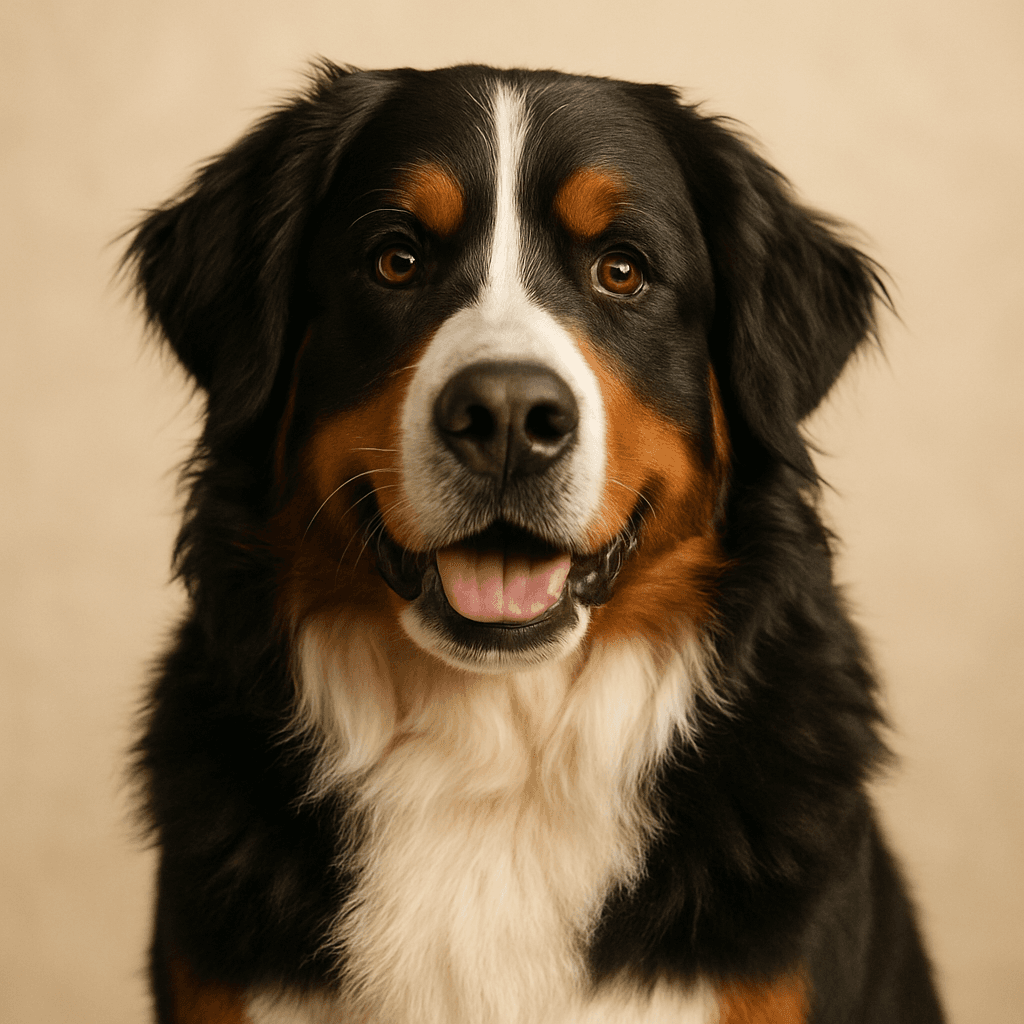
Bernese Mountain Dog
Complete UK breed guide
Quick answer
The Bernese Mountain Dog is a large, gentle working breed with a characteristically short lifespan of 7 to 9 years and very high cancer rates. Hip and elbow testing of both parents is essential. Insurance is among the highest of any breed.
Quick Facts
- Size
- Large
- Weight
- 36–54 kg
- Lifespan
- 7–10 years
- Breed Group
- Working
- Exercise
- 60–75 mins/day
- Activity Level
- Moderate
- Grooming
- High
- Monthly Cost
- £150–£240/month
- Temperament
- —
- Good with Children
- Yes
- Good with Dogs
- Yes
- Good for First Timers
- Yes
- Suits Flats
- No
Breed Overview
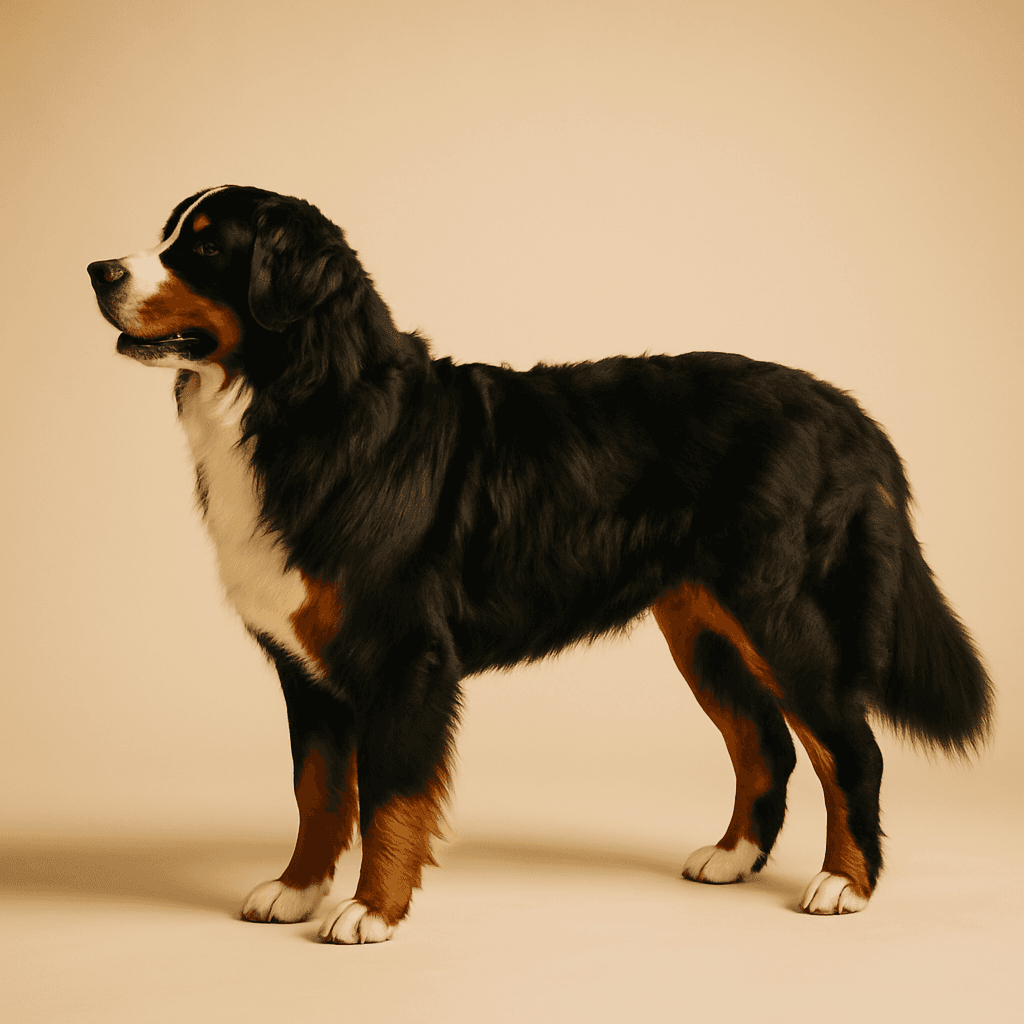
The Bernese Mountain Dog is a large, gentle and strikingly beautiful working breed from the canton of Bern in Switzerland, registered by the Kennel Club in the Working Group. Developed as a draft and farm dog in the Swiss Alps, the modern Berner retains the breed's characteristic gentle temperament, striking tricolour coat and devoted nature.
They are exceptional companions for owners who go in fully prepared. Their temperament is consistently warm, gentle and family-oriented. They tend to be excellent with children, get on well with other animals, and respond well to training. For owners who can meet their needs, the Berner is among the most rewarding large breeds available.
The health picture is the defining challenge and must be confronted honestly before buying. Bernese Mountain Dogs have one of the shortest average lifespans of any large breed: typically seven to nine years. The primary driver is cancer. Approximately half of all Berners die from cancer, with histiocytic sarcoma, a malignancy rare in most other breeds but prevalent in Berners, being a major contributor. This is not a rare edge case: it is the statistical expectation for the breed.
Hip and elbow dysplasia affect the breed at very high rates. Both conditions cause chronic pain, compromise quality of life and may require costly orthopaedic surgery. Both parents of any puppy should have KC/BVA hip and elbow assessments, and buyers should ask to see the scores.
The financial reality follows directly from the health profile. Insurance premiums of £80 to £150 per month for comprehensive lifetime cover, combined with large-breed food costs of £60 to £90 per month and the realistic probability of significant veterinary treatment, make the Berner one of the most expensive breeds to own over its lifetime. Non-time-limited lifetime insurance is essential: progressive conditions and cancer treatment will be excluded under annual policies.
Purchase prices from KC-registered, health-tested breeders typically range from £1,500 to £3,000. The Bernese Mountain Dog Club of Great Britain provides guidance on responsible breeders and operates a welfare service. For those who want to adopt, some rescue Berners become available, typically from owners who could not manage the costs or health needs that emerged.
For owners who go in with clear eyes about the lifespan, health and financial commitments, the Bernese Mountain Dog offers a depth of companionship that is hard to find elsewhere. The grief that typically follows at seven to nine years is profound precisely because what precedes it is so rewarding. Know what you are taking on, prepare fully, and this is a breed of exceptional character.
Temperament & Personality
Bernese Mountain Dogs are gentle, loyal and affectionate dogs with a calm, good-natured temperament. They are devoted to their family and tend to be excellent with children, typically tolerating the attention of young children with patience. Their size means this should be monitored with very young children.
They are sociable dogs that typically get on well with other dogs and animals when properly socialised. Their temperament is consistently described as steady, patient and willing.
They bond closely with their people and can develop separation anxiety if not prepared for periods alone from puppyhood. They are not suited to a lifestyle in which the dog is left alone for extended periods on a regular basis.
Berners are intelligent and responsive, enjoying training and work. They are not high-drive dogs in the way working breeds are: they are content, thoughtful dogs that enjoy engagement without the intensity of herding or sporting breeds.
They can be slow to mature, retaining puppy behaviour well into their second year. This combines with their size to make early training investment particularly important.
The most difficult aspect of Berner temperament is not the dog's personality itself but the owner's emotional experience: a breed with a typical lifespan of seven to nine years and a very high cancer rate asks owners to accept significant grief as a near-certainty. Those who have owned Berners consistently describe them as among the most rewarding breeds they have known, but equally describe the loss as profound.
Training
Berners are gentle, willing and responsive dogs that train well with positive reinforcement. They are sensitive and do not respond well to harsh methods.
Four priorities for a new Berner owner:
- Loose lead walking. A 50kg dog that pulls is dangerous for most adults and children. Begin loose lead training from the first day using a front-clip harness. The habit is far easier to establish in a puppy than to correct in an adult.
- Joint protection from the start. Avoid repetitive impact exercise, jumping and stair climbing in puppyhood. This is not just a training consideration but a lifelong health investment given the breed's orthopaedic disease rates.
- Socialisation. Comprehensive positive exposure during the 8 to 16 week window. Well-socialised Berners are confident and calm around people, other dogs and novel environments.
- Basic obedience. Sit, stay, down, come and leave it using positive reinforcement. Berners are responsive and enjoy the engagement of training sessions.
Common mistakes: Allowing a Berner puppy to jump repeatedly because it is gentle and the habit seems harmless. A 50kg adult with an established jumping habit is a significant management problem and puts strain on developing joints.
Exercise Needs
Berners are working draft dogs that enjoy moderate activity. They are not high-endurance athletes but require daily exercise for physical and mental wellbeing.
Adult Berners: One hour of exercise per day is appropriate, delivered in one or two walks. Berners enjoy walking in varied terrain and carrying light loads (draft work), which engages both their physical and mental capacities.
Heat sensitivity: This is critical. Berners have a thick double coat and can overheat rapidly in warm weather. Do not exercise in the heat of the day. In summer, early morning or evening walks are essential. Watch for panting, slowing and reluctance to continue: these are early signs of overheating. Always carry water.
Joint care: Given the breed's high rate of hip and elbow dysplasia, avoid repetitive impact exercise (jumping, stairs) particularly in puppies. Swimming is an excellent low-impact alternative.
Mental stimulation: Berners respond well to carting, tracking, obedience work and nosework. Mental engagement is as important as physical exercise.
Puppies: Particularly careful management of exercise is required in puppies to protect developing joints. Avoid repetitive on-lead walks until the growth plates close, typically around 18 months for large breeds. Short, free play sessions on soft ground are preferred.
Health & Vet Costs
The Bernese Mountain Dog carries one of the most challenging inherited health profiles of any popular pedigree breed, centred on a very high cancer rate and significant orthopaedic disease.
Cancer is the leading cause of death in the breed. Approximately half of all Berners die from cancer. Histiocytic sarcoma (a malignancy of histiocyte cells) is particularly prevalent in the breed and is extremely rare in most other dogs. Mast cell tumours, osteosarcoma and lymphoma are also seen at elevated rates. Cancer typically presents in dogs aged five to eight years, contributing directly to the breed's short average lifespan.
Hip and Elbow Dysplasia affect the breed at very high rates. The KC/BVA Hip Scoring and Elbow Grading schemes assess breeding dogs. Both parents should have hip and elbow scores before breeding. Buyers should ask for scores on both parents. Severe hip or elbow dysplasia causes chronic pain, lameness and may require surgery costing £3,000 to £7,000 per joint.
Bloat (GDV) is a risk in this deep-chested breed. See nutrition section.
Progressive Retinal Atrophy and other hereditary eye conditions occur. The BVA/KC Eye Scheme tests breeding dogs.
Monthly insurance typically costs £80 to £150. Average lifespan is 7 to 9 years. This is significantly shorter than most comparable-sized breeds.
Protect your Bernese Mountain Dog with the right insurance
Vet costs are rising. Lifetime cover means long-term conditions stay covered for life -- not just 12 months.
Feeding & Nutrition
Bernese Mountain Dogs are large, working-type dogs with meaningful daily food costs that owners must budget for before acquiring the breed.
Daily feeding: Adult Berners typically need 400 to 600g of a good quality large-breed dry complete food per day, split into two meals. Larger individuals or very active dogs may need more.
Large-breed food: Feed a food formulated for large breeds throughout puppyhood to support correct, controlled growth. Rapid growth in large breed puppies increases the risk of developmental orthopaedic disease. Avoid high-calcium supplements unless specifically recommended by a vet.
Bloat risk: Berners have deep chests and a meaningful risk of gastric dilatation-volvulus (bloat). Feed twice daily. Avoid intense exercise for at least one hour before and after meals. Use a slow-feeder bowl if the dog eats rapidly. Signs of bloat include unproductive retching, distended abdomen and rapid deterioration: this is a life-threatening emergency.
Weight management: Obesity significantly worsens hip and elbow dysplasia, which affects the breed at high rates. A lean body condition throughout life is a genuine health priority.
Puppy feeding: Three to four times daily until 12 weeks, then three times until six months, then twice daily. Use a large-breed puppy food throughout the growth phase.
Feeding your Bernese Mountain Dog
How much to feed, which food types suit this breed, and what to avoid.
Grooming & Care
The Bernese Mountain Dog has a thick, long double coat that sheds substantially, particularly twice a year during seasonal coat changes. Grooming is a significant time commitment.
Brushing: Three to four times per week minimum; daily during seasonal shedding. A slicker brush, wide-toothed comb and undercoat rake are the core tools. Neglected Berner coats mat significantly, particularly behind the ears, around the collar, in the armpits and on the hindquarters.
Shedding: Berners shed heavily. Dog hair on furniture, clothing and floors is a constant reality. Regular brushing reduces but does not eliminate this. Accept this before acquiring a Berner.
Bathing: Every six to eight weeks. The thick double coat takes significant time to dry thoroughly. A high-velocity dryer (available at most professional groomers) speeds the process considerably.
Professional grooming: Every eight to twelve weeks, primarily for bathing, drying and coat maintenance. Cost approximately £60 to £90 per session for a large breed.
Ear care: Check weekly. Clean as needed with a vet-recommended ear cleaner.
Nails: Clip every four to six weeks. Large breed nails grow quickly.
Paws: Check between toes for matting, debris and grass seeds after outdoor exercise.
Costs of Ownership
Bernese Mountain Dogs are expensive to own, combining large-breed food costs, significant insurance premiums, and the realistic likelihood of expensive health treatment during their short lifespan.
Purchase price: £1,500 to £3,000 from a KC-registered, health-tested breeder.
Monthly insurance: £80 to £150 for comprehensive lifetime cover. The breed's very high cancer rate and orthopaedic disease frequency push premiums to among the highest of any breed. Non-time-limited lifetime cover is essential: progressive conditions will recur and be excluded under annual policies.
Food: £60 to £90 per month for a large dog on a good quality large-breed food.
Professional grooming: £60 to £90 every eight to twelve weeks.
Routine veterinary care: Annual vaccination and health check approximately £60 to £80. Orthopaedic monitoring and, if disease is present, management or surgical costs can be very significant.
Total estimated monthly cost: £280 to £450 when insurance, food, grooming and routine care are combined. Cancer treatment and orthopaedic surgery can reach thousands of pounds.
The financial commitment must be assessed honestly before acquiring a Berner. The combination of high insurance, large food costs and realistic medical expenses make this one of the most costly breeds to own over its lifetime.
Is a Bernese Mountain Dog Right for You?
Best suited to: Families and individuals who want a large, gentle and devoted companion and can accept a typically short lifespan; those with space for a large breed; owners with time for moderate daily exercise and significant grooming.
Can work with: First-time dog owners willing to research the health picture thoroughly and budget carefully; households with children who interact appropriately.
Not ideal for: Owners on tight budgets (insurance, food, health monitoring and potential treatment are expensive); those in small urban flats; owners expecting a long-lived breed; those unwilling to accept the emotional cost of a typically short lifespan.
Size and living situation: Berners are large dogs (36 to 50kg). They need space and ideally a garden. They do not suit small urban flats well. They are calm indoors but their size makes tight spaces impractical.
Children and other pets: Berners are typically excellent with children and gentle with other animals. Their size means young children may be unintentionally knocked over by an exuberant puppy.
Alone time: Berners form strong bonds with their family and can develop separation anxiety. Building independence positively from puppyhood is important.
Related Guides
Free newsletter
Get the weekly guide for UK dog owners
Breed spotlights, training tips and health advice delivered every week.