
Bloodhound
Complete UK breed guide

Quick answer
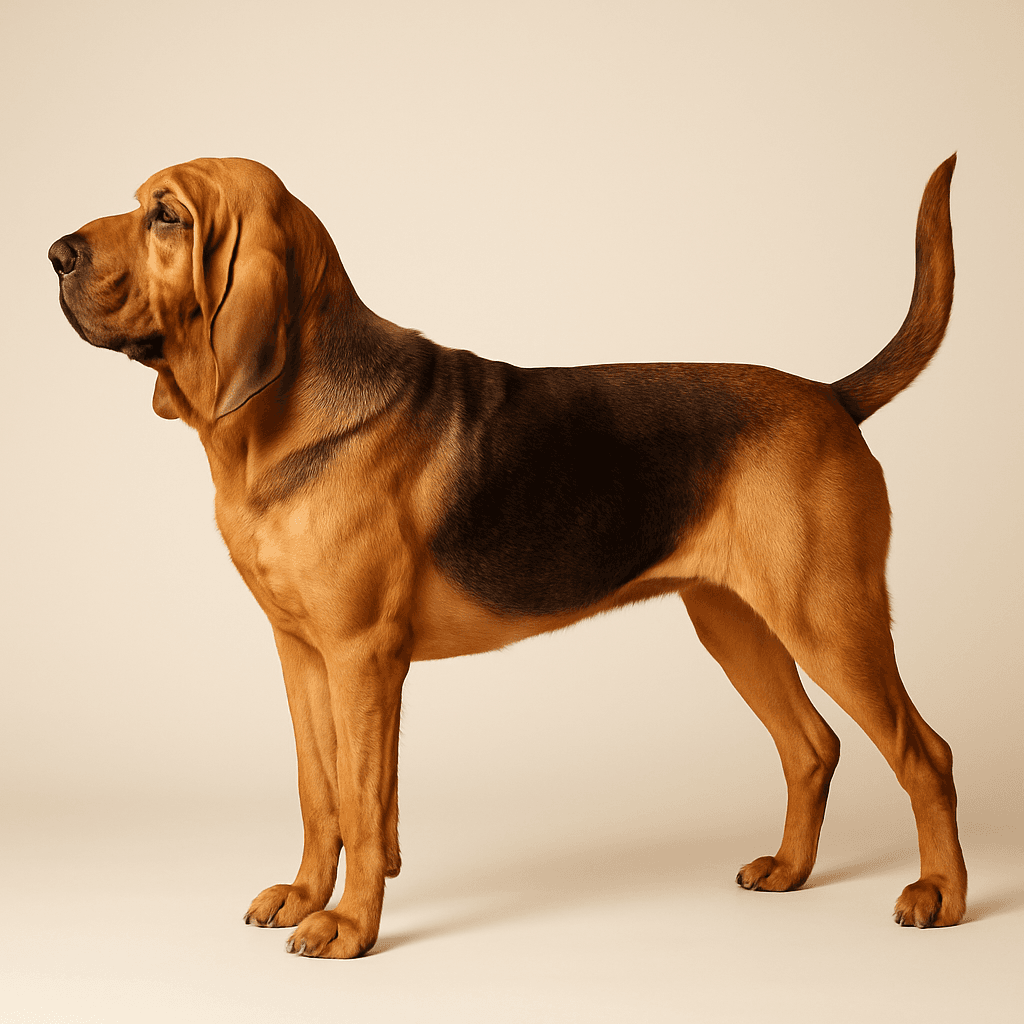
The Bloodhound has the most powerful tracking nose of any breed. A gentle, affectionate giant with a stubborn independent streak, it needs an experienced owner, significant ear care, weight management and secure fencing. KC Hound Group.
Quick Facts
- Size
- Large
- Weight
- 36–50 kg
- Lifespan
- 10–12 years
- Breed Group
- Hound
- Exercise
- 60–75 mins/day
- Activity Level
- Moderate
- Grooming
- Low
- Monthly Cost
- £130–£200/month
- Temperament
- —
- Good with Children
- Yes
- Good with Dogs
- Yes
- Good for First Timers
- No
- Suits Flats
- No
Breed Overview
The Bloodhound is one of the oldest and most distinctive breeds in the world, and by a considerable margin the dog with the most powerful tracking nose of any breed. The ability of the Bloodhound's olfactory system to identify, isolate and follow a human scent trail days old over enormous distances is without parallel in the animal kingdom, and the breed has been used in formal law enforcement tracking roles - its evidence admissible in court in many jurisdictions - for centuries.
Registered by the Kennel Club in the Hound Group, the Bloodhound is a large, heavily built scent hound with a loose-skinned, deeply wrinkled face, the longest ears of any breed and a mournful expression that has made it one of the most recognisable dogs in popular culture. Behind the famous look is a genuinely gentle, affectionate and patient breed that makes an exceptional companion for households prepared for its specific and non-negotiable requirements.
The gentle character is the Bloodhound's great surprise for first-time owners. This is a sweet-natured, people-oriented, non-aggressive breed that is consistently good with children and gets along well with other dogs. At home, the Bloodhound is calm, affectionate and content. It has none of the guarding instinct or territorial behaviour of the more protective working breeds.
What it also has is an instinct to follow scent that overrides almost every other drive, including the desire to respond to its owner. Once on a trail in open country, a Bloodhound is effectively unreachable. Exercise outside the home must happen in securely enclosed areas.
The voice deserves mention. The Bloodhound's bay is deep, resonant and far-carrying. It is used when excited, when on a trail, and when bored or isolated. In residential areas with close neighbours, this characteristic requires management from puppyhood.
Ear care is the most important regular health management commitment. The extraordinarily long, pendulous ears fold over the ear canal entirely, creating conditions of warmth, moisture and minimal airflow that predispose strongly to ear infection. Ears must be cleaned at minimum weekly and dried thoroughly after every exposure to water.
Skin fold care is the second non-negotiable. The deep facial wrinkles and neck folds trap moisture and develop bacterial and yeast infections if not cleaned and dried regularly.
Drool is not a joke with this breed. The heavy, pendulous lips produce saliva that distributes freely around the home.
Weight management is critical. The Bloodhound's deep-chested build creates predisposition to Gastric Dilatation-Volvulus. Feeding two smaller meals rather than one large one reduces risk. Hip and elbow dysplasia affect the breed. Entropion and ectropion affecting the eyes occur at elevated rates.
Lifespan is typically 10 to 12 years. Insurance of £50 to £100 per month. Purchase prices range from £800 to £1,500. Monthly running costs average £200 to £320.
The Bloodhound Club is the primary UK resource for breed information, health guidance and rescue. Adult rescue Bloodhounds are periodically available and are a genuinely good option for owners who want to skip the demanding puppy phase with a large working breed.
Temperament & Personality
Gentle, affectionate and good-natured. Excellent with children and other dogs. Laid-back and patient at home. Outside the home, the nose dominates and independence takes over. Not a guard breed. Famous for persistence and single-mindedness on a trail.
Training
Highly intelligent but independently motivated - training recall in open country is not reliably achievable. Nose-led - once on a scent, commands become advisory. Positive methods work well for basic training. Bloodhounds are not competitive obedience dogs but respond well to nose work and mantrailing.
Exercise Needs
One to 1.5 hours vigorous exercise daily. Exercise must happen in secure enclosed areas - once on a scent trail a Bloodhound is unreachable. Swimming is excellent. Avoid high-impact activities for puppies - large breeds are vulnerable to growth plate damage.
Health & Vet Costs
Bloat (GDV) is a serious risk in deep-chested dogs. Ear infections are common without regular maintenance. Hip dysplasia, elbow dysplasia and entropion/ectropion affect the breed. Skin fold dermatitis requires management. Lifespan 10-12 years. Insurance £50-£100/mo.
Protect your Bloodhound with the right insurance
Vet costs are rising. Lifetime cover means long-term conditions stay covered for life -- not just 12 months.
Feeding & Nutrition
Feed a large-breed complete food to support joint health. Adults typically need 500-700g dry food daily across two meals. Two meals daily reduces bloat risk. Weight gain must be monitored closely - obesity severely stresses joints and spine. Raised feeders may assist.
Feeding your Bloodhound
How much to feed, which food types suit this breed, and what to avoid.
Grooming & Care
Short coat requires minimal brushing - once weekly. The ears are the critical care commitment: clean weekly, dry thoroughly after water exposure. The skin folds around the face should be cleaned and dried regularly to prevent bacterial infection. Heavy drooling requires routine management.
Costs of Ownership
Purchase price: £800-£1,500. Monthly costs: food £60-£100, insurance £50-£100/mo, ear care products, routine vet. Average £200-£320/mo. Large breed veterinary costs are higher. Insurance essential.
Is a Bloodhound Right for You?
Best for owners with prior experience of large or independent breeds. Needs a secure garden - recall is not reliable. Good with children and other dogs. Requires commitment to ear care, drool management and weight monitoring. Not suited to flats or small properties.
Related Guides
Free newsletter
Get the weekly guide for UK dog owners
Breed spotlights, training tips and health advice delivered every week.