Bullmastiff
Complete UK breed guide
Quick answer
The Bullmastiff is a large, powerful British guard breed developed to apprehend poachers. Loyal and calm with its family, it requires experienced ownership, thorough early socialisation and significant health screening of parents. KC Working Group.
Quick Facts
- Size
- Large
- Weight
- 41–59 kg
- Lifespan
- 7–9 years
- Breed Group
- Working
- Exercise
- 45–60 mins/day
- Activity Level
- Moderate
- Grooming
- Low
- Monthly Cost
- £150–£240/month
- Temperament
- —
- Good with Children
- Yes
- Good with Dogs
- Yes
- Good for First Timers
- No
- Suits Flats
- No
Breed Overview
The Bullmastiff is a large, powerful British working breed developed in the nineteenth century by English gamekeepers crossing the Mastiff with the Bulldog. The purpose was specific: to produce a dog with the size and power of the Mastiff and the tenacity and speed of the Bulldog, capable of silently tracking and pinning poachers without mauling them, until the gamekeeper arrived. The result was a breed of considerable physical capability, natural protective instinct and, in the right hands, outstanding temperament. Registered by the Kennel Club in the Working Group, it remains one of the most purposefully designed guardian breeds in existence.
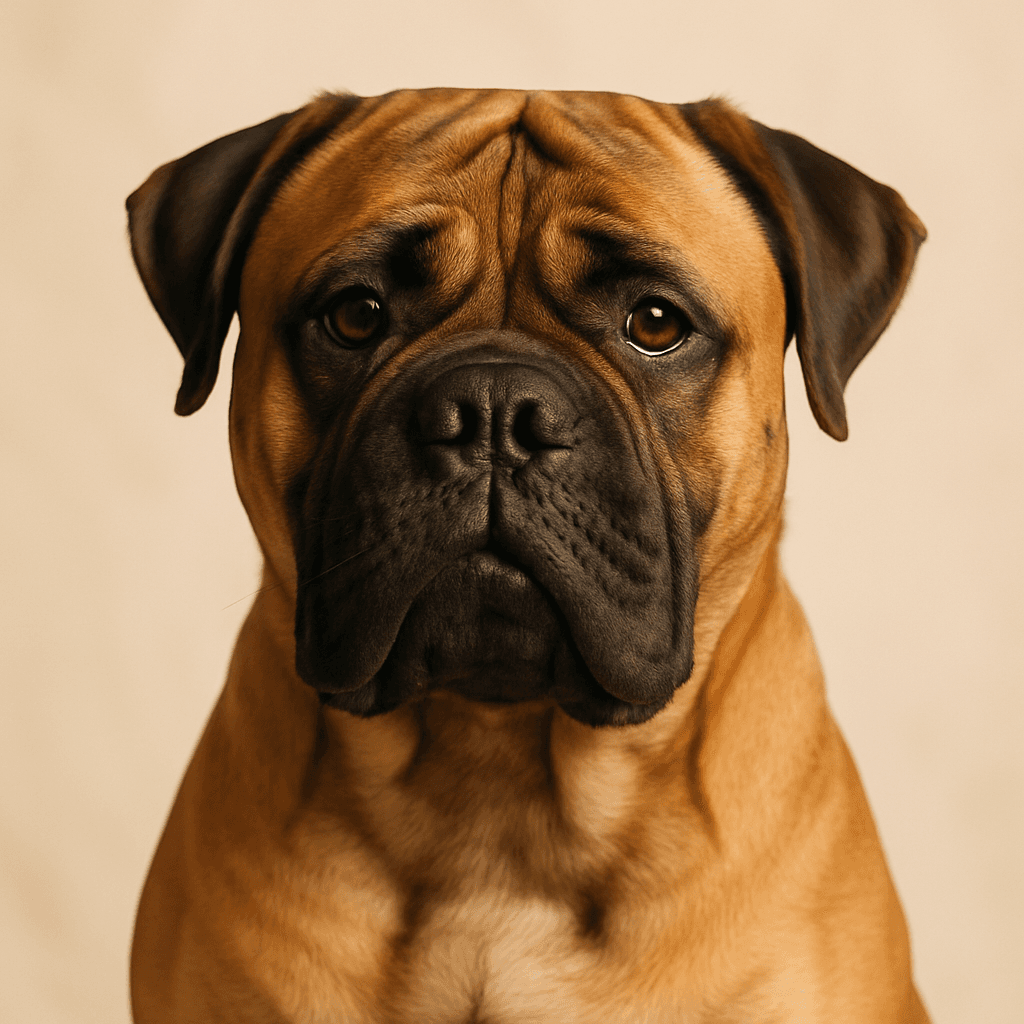
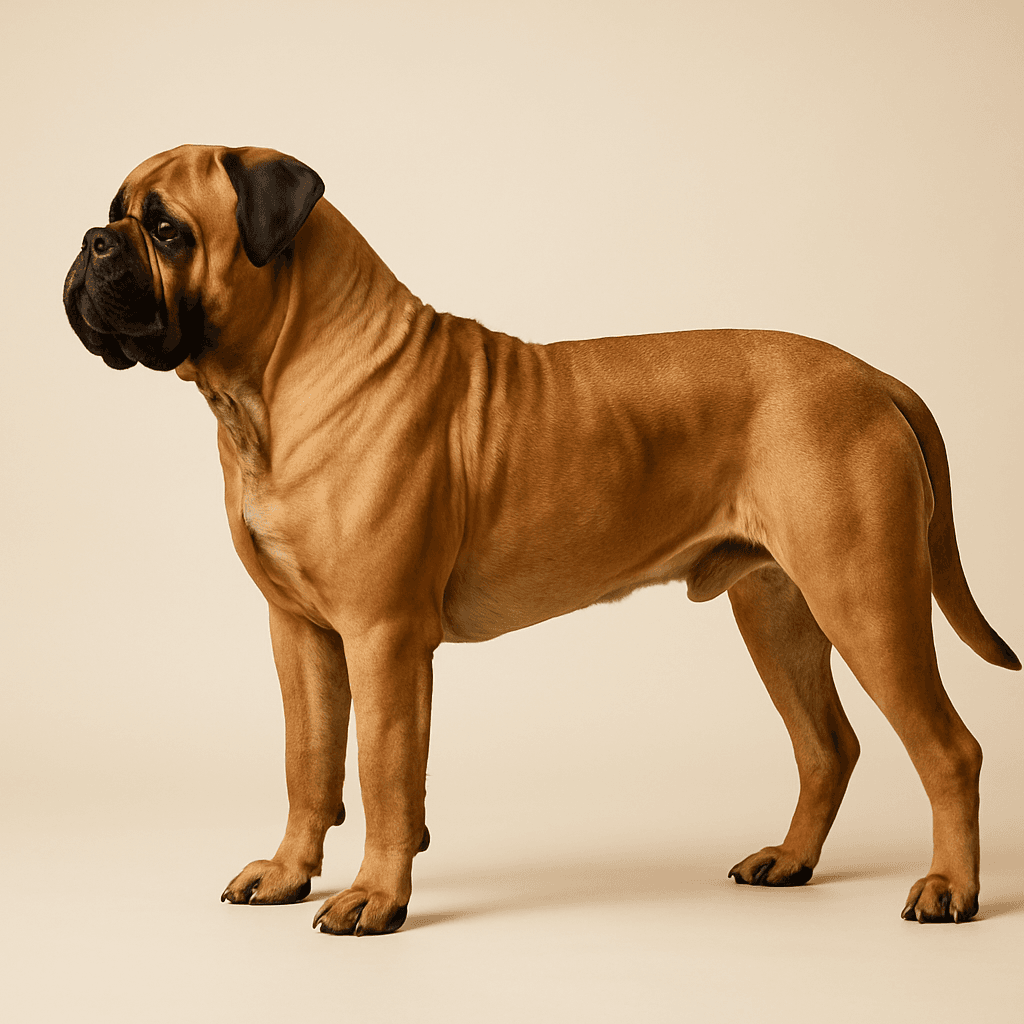
In appearance the Bullmastiff is immediately imposing: a large, square-built dog with a broad, wrinkled head, a short muzzle, a short dense coat in fawn, red or brindle, and a muscular, substantial body that conveys both power and restraint. Adult males typically weigh 50 to 59 kilograms. The combination of size and guardian heritage makes this a breed that requires the full commitment of an experienced, confident owner from day one.
With its family, the Bullmastiff is typically excellent: calm, loyal, affectionate and patient. It bonds deeply with the people it lives with, is generally good with children in the household and has the steady, unhurried temperament that makes it a genuinely pleasant domestic companion. The natural guardian instinct means it is watchful without being hyperactive, and the breed's characteristic "silent watchdog" quality - alert without excessive barking - is valued by many owners.
With strangers the Bullmastiff is reserved. With perceived threats to its household it is prepared to act, and its physical capability means that action is significant. This is precisely what the breed was developed to do, and it cannot be managed away with simple commands. The management response is thorough early socialisation that builds a Bullmastiff capable of distinguishing between genuine threats and ordinary social situations, combined with confident, consistent leadership throughout the dog's life.
Socialisation from puppyhood is the most critical investment in a Bullmastiff's safety and manageability. Broad, positive exposure to different people, animals, environments and situations must begin in the first weeks at home and continue consistently. Gaps in socialisation in a dog of this size and physical capability have consequences that are difficult to reverse.
Exercise requirements are moderate compared to many large breeds. An adult Bullmastiff needs one to 1.5 hours of daily exercise. It is not a high-endurance breed and does not need sustained vigorous activity. What it does need is the mental engagement of consistent training, which also reinforces the owner's leadership position. High-impact exercise - jumping, intense off-lead running - should be restricted during the growth phase to protect developing joints.
Grooming is minimal given the short coat. The skin folds around the face and muzzle, however, require regular cleaning and drying to prevent bacterial and yeast infection. Drool is a daily management reality.
Hip and elbow dysplasia are the primary orthopaedic concerns and both parents must be hip and elbow scored before breeding. Bloat is a serious risk in this deep-chested breed. Cancer rates in the Bullmastiff are elevated above the average for large breeds. Subaortic stenosis and other cardiac conditions have been reported. Cystinuria - a hereditary condition causing urinary stones - has a DNA test available and breeding stock should be tested. Lifespan is typically 7 to 10 years, which is short even by large breed standards and reflects the breed's genuine health challenges.
Purchase prices range from £1,000 to £2,500. Insurance of £60 to £120 per month reflects an elevated health risk profile. Monthly running costs average £230 to £400.
The Bullmastiff Association is the primary UK resource for breed information, health testing requirements, responsible breeders and rescue contact.
Temperament & Personality
Calm, loyal and deeply devoted to family. Naturally protective without excessive aggression. Can be dominant with other dogs, particularly same-sex. Reserved with strangers. Confident and self-assured. Needs a calm, experienced owner - not suited to anxious or passive handling.
Training
Intelligent and trainable with calm, consistent positive methods. The breed responds to an owner it respects and clear, fair leadership. Puppy training classes and early obedience are non-negotiable for a dog of this size. Does not respond well to harsh or coercive handling.
Exercise Needs
Moderate exercise: one to 1.5 hours daily. Not a high-endurance breed. Avoid intense exercise in heat. Restrict high-impact exercise for puppies during growth phases to protect developing joints. Mental stimulation and training as important as physical activity.
Health & Vet Costs
Hip and elbow dysplasia are significant concerns - both parents must be hip and elbow scored. Bloat (GDV) is a serious risk. Cancer rates are elevated in the breed. Subaortic stenosis and other cardiac conditions reported. Cystinuria DNA testing available. Lifespan 7-10 years. Insurance £60-£120/mo.
Protect your Bullmastiff with the right insurance
Vet costs are rising. Lifetime cover means long-term conditions stay covered for life -- not just 12 months.
Feeding & Nutrition
Large-breed complete food to manage growth rate and support joint health. Adults typically need 500-700g dry food daily across two meals. Two meals reduce bloat risk. Monitor body condition closely - obesity in a large mastiff breed is very damaging to joints. Avoid rapid eating.
Feeding your Bullmastiff
How much to feed, which food types suit this breed, and what to avoid.
Grooming & Care
The short dense coat requires minimal grooming - brushing once or twice weekly. Skin folds around the face and muzzle must be cleaned and dried regularly to prevent bacterial infection. Ears cleaned weekly. Drool management is an ongoing daily reality.
Costs of Ownership
Purchase price: £1,000-£2,500. Monthly costs: food £70-£120, insurance £60-£120/mo, routine vet. Average £230-£400/mo. Some insurers restrict coverage. Large breed veterinary costs are substantially higher.
Is a Bullmastiff Right for You?
Experienced owners of large or guardian breeds only. Not suitable for first-time owners. Requires confident leadership, thorough early socialisation and consistent training from puppyhood. Space and secure fencing essential. Check insurance availability before purchase.
Related Guides
Free newsletter
Get the weekly guide for UK dog owners
Breed spotlights, training tips and health advice delivered every week.