Cavachon
Complete UK breed guide

Quick answer
The Cavachon is a cross between a Cavalier King Charles Spaniel and a Bichon Frise. It is gentle, sociable and low-shedding. It inherits the Cavalier's serious risk of Mitral Valve Disease and Syringomyelia, which all owners must understand before buying.
Quick Facts
- Size
- Small
- Weight
- 5–9 kg
- Lifespan
- 10–15 years
- Exercise
- 20–30 mins/day
- Activity Level
- Moderate
- Grooming
- High
- Monthly Cost
- £90–£150/month
- Temperament
- —
- Good with Children
- Yes
- Good with Dogs
- Yes
- Good for First Timers
- Yes
- Suits Flats
- Yes
Breed Overview
The Cavachon is a cross between a Cavalier King Charles Spaniel and a Bichon Frise, producing a small, gentle and generally low-shedding companion dog. It is not recognised by the Kennel Club and cannot be KC-registered. Both parent breeds are known for their gentle, people-oriented temperament, and most Cavachons reflect this: they are warm, affectionate and sociable dogs well-suited to family life.
The central health issue that any prospective Cavachon owner must understand is the Cavalier King Charles Spaniel's inherited cardiac disease. Mitral Valve Disease affects the majority of Cavaliers by middle to older age, and this risk passes to the Cavachon cross. It cannot be avoided by choosing a crossbreed: it is present in the Cavalier parent, and a puppy from an unscreened Cavalier parent carries it regardless of the cross. Syringomyelia, a neurological condition caused by the skull being too small for the brain, is similarly inherited from the Cavalier side.
The practical consequence is that Cavachon insurance costs more than comparable small breeds, and ongoing cardiac monitoring is a realistic expectation as the dog ages. Non-time-limited lifetime insurance is essential. This is not a breed where you can self-insure or rely on cheaper time-limited policies.
The Bichon Frise parent contributes a tendency to dental disease, skin allergies and a grooming requirement. Cavachon coats require professional clipping every six to eight weeks and daily brushing to prevent matting. This cost must be budgeted for before acquiring a Cavachon.
For buyers, health testing of both parents is critical. The Cavalier parent should have current cardiac clearance under the British Veterinary Cardiac Society's MVD scheme and MRI Syringomyelia screening. The Bichon parent should have current eye testing. Any breeder who cannot produce documentation of this testing should be avoided.
Purchase prices from responsible breeders typically range from £800 to £1,800. Monthly insurance costs £35 to £70. Lifespan is 10 to 15 years.
The Cavachon is a gentle, adaptable and affectionate companion that suits a wide range of owners. It suits those who want a small companion breed with low shedding. It requires owners who go in fully informed about the cardiac health picture, insure comprehensively from day one, and budget for ongoing cardiac monitoring. Do that, and the Cavachon is a warm and rewarding companion.
A Cavachon purchased from a breeder who has screened both parents rigorously, insured comprehensively from day one, and raised with proper training and socialisation is a genuinely rewarding companion. The breed combines the best temperament qualities of two gentle, people-oriented breeds. The health picture demands preparation and financial planning, but owners who go in fully informed find the Cavachon to be a warm and adaptable small companion throughout its life.
Temperament & Personality
Cavachons are gentle, affectionate and sociable dogs with a calm and friendly temperament inherited from both parent breeds. They are companion dogs in the true sense: they want to be with their people and are happiest in close contact with their family.
They are typically excellent with children, gentle with elderly owners, and get on well with other dogs and usually cats. Their default is friendliness rather than wariness, and they rarely show aggression. This gentle nature makes them appealing family companions.
Their attachment to people is one of their most consistent characteristics and also their greatest vulnerability. Cavachons that are not properly prepared for being alone frequently develop separation anxiety. This is not a breed that thrives on isolation.
They are playful and retain enthusiasm for gentle activity into adulthood, without the high-intensity energy of working breeds. They are adaptable to a range of activity levels and living situations.
Both parent breeds are sensitive to household atmosphere. Cavachons do not respond well to tension, harsh handling or punishment-based training. They thrive in calm, consistent, affectionate environments.
Training
Cavachons inherit the gentle, eager-to-please temperament of both parent breeds and are generally straightforward to train using positive reinforcement methods.
Four priorities for a new Cavachon owner:
- Separation tolerance. Both parent breeds are prone to separation anxiety. Build positive alone time from day one using crate training and gradual departures. Do not allow a Cavachon to develop the expectation of constant company from puppyhood.
- House training. Small breeds can take longer to house train reliably. Consistent routine, frequent trips outside and immediate reward for toileting correctly are the keys.
- Basic obedience. Sit, stay, down, come and leave it using positive reward-based training. Cavachons are responsive and food-motivated.
- Socialisation. Thorough positive exposure to people, environments, sounds and other dogs during the 8 to 16 week window.
Common mistakes: Not building independence early enough. A Cavachon that is with its owner constantly for the first six months and is then suddenly required to be alone for several hours will struggle significantly.
Exercise Needs
Cavachons have moderate exercise needs that reflect their small size and companion breed heritage. They enjoy walks and play without requiring the sustained exercise of working breeds.
Adult Cavachons: 30 to 45 minutes of exercise per day is appropriate for a healthy adult, delivered in one or two shorter walks. They enjoy sniffing walks and gentle play as much as brisk exercise.
Exercise with heart disease: If your Cavachon develops Mitral Valve Disease, your vet may recommend adjusting exercise as the condition progresses. Follow veterinary guidance and monitor for signs of breathlessness, coughing or fatigue during exercise. These are signs the dog's heart is under strain.
Mental stimulation: Short training sessions, puzzle feeders and gentle games provide the mental engagement a Cavachon needs alongside physical activity.
Heat sensitivity: Small dogs can be sensitive to heat. Avoid exercising during the hottest part of the day in summer and always provide fresh water.
Puppies: Short, unforced play sessions and brief walks increasing gradually with age. Avoid excessive exercise on developing joints.
Health & Vet Costs
The Cavachon's most significant health consideration is inherited directly from the Cavalier King Charles Spaniel parent: Mitral Valve Disease and Syringomyelia. Every prospective Cavachon owner must understand these conditions before buying.
Mitral Valve Disease (MVD): The Cavalier parent carries one of the highest rates of inherited heart disease of any breed. MVD causes progressive degradation of the mitral heart valve, eventually leading to heart failure. In Cavaliers, the majority of dogs show signs of MVD by age ten. Cavachons inherit this risk, though the extent is not precisely quantified for the cross. The Cavalier parent used in breeding should meet the requirements of the British Veterinary Cardiac Society's MVD scheme. Ask breeders to confirm this and request documentation.
Syringomyelia (SM) and Chiari-like Malformation (CM): Inherited from the Cavalier parent. This neurological condition causes pain, scratching around the neck and shoulders, and in more severe cases weakness and incoordination. The Cavalier parent should be MRI screened for SM/CM through the breed scheme.
Dental disease: Inherited from the Bichon parent. Daily toothbrushing and periodic professional cleaning are important.
Skin allergies: The Bichon side contributes a predisposition to environmental and food allergies causing itchy skin and ear infections in some individuals.
Eye conditions: Both parent breeds carry some eye condition risk. The Bichon parent should have current BVA/KC Eye Scheme certificates.
Monthly insurance typically costs £35 to £70. Lifespan is approximately 10 to 15 years. The Cavalier's cardiac risk means non-time-limited lifetime insurance is not optional.
Protect your Cavachon with the right insurance
Vet costs are rising. Lifetime cover means long-term conditions stay covered for life -- not just 12 months.
Feeding & Nutrition
Cavachons are small dogs with relatively modest caloric needs, but weight management is important as both parent breeds can be prone to weight gain and excess weight worsens heart disease progression.
Daily feeding: Adult Cavachons typically need 100 to 160g of a good quality dry complete food per day, split into two meals. Quantities depend on the food and the dog's body condition.
Heart health: If your Cavachon is diagnosed with Mitral Valve Disease, your vet may advise on dietary support for cardiac health, potentially including sodium restriction and omega-3 fatty acid supplementation. Follow veterinary guidance.
Dental health: Both parent breeds are prone to dental disease. Dry kibble supports dental hygiene compared to wet food. Daily toothbrushing with dog-safe toothpaste is the most effective preventive measure.
Weight management: A lean body condition is particularly important for a breed with elevated cardiac risk. Overweight dogs with heart disease have worse outcomes. Monitor body condition regularly and adjust feeding accordingly.
Treats: Account for treats within daily caloric intake. Many effective training rewards can be small pieces of the dog's regular food rather than additional treats.
Puppy feeding: Three to four times daily until 12 weeks, then three times until six months, then twice daily.
Feeding your Cavachon
How much to feed, which food types suit this breed, and what to avoid.
Grooming & Care
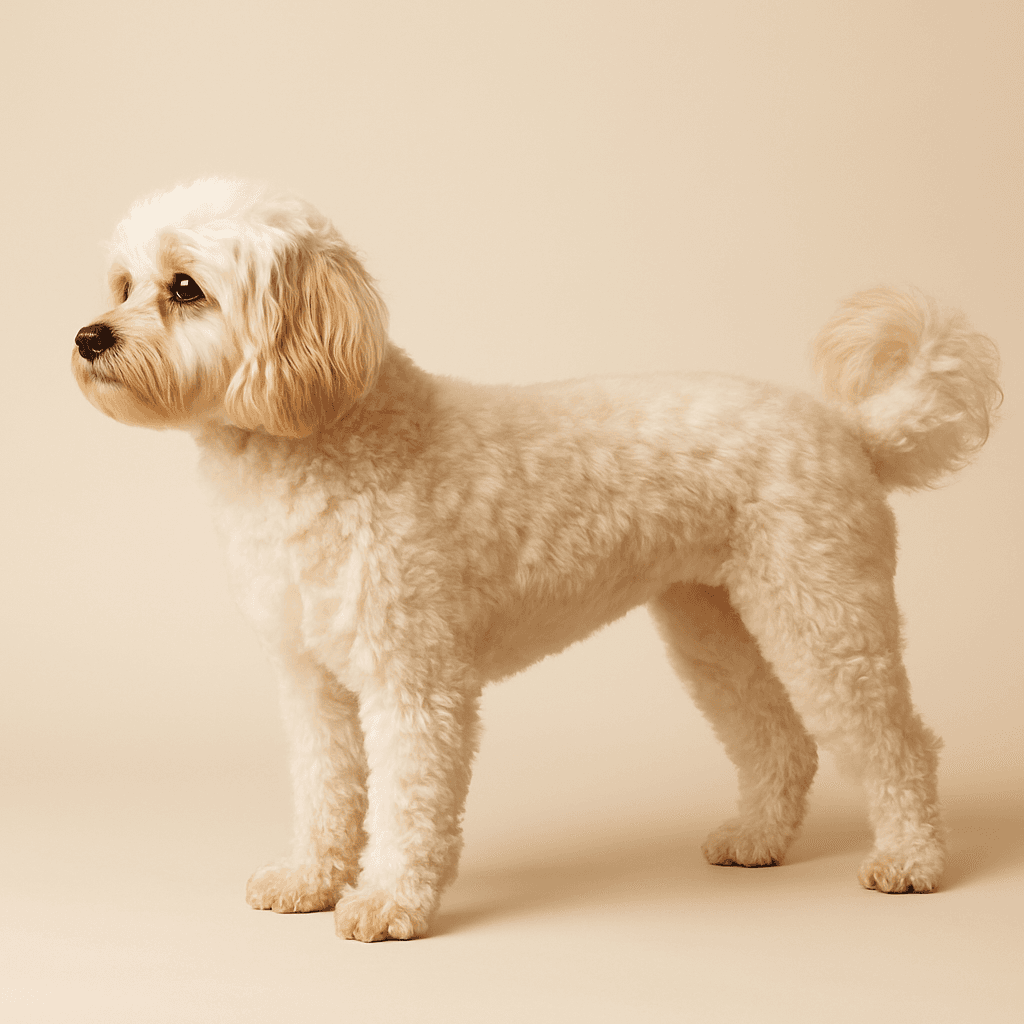
Cavachon coat type varies between individuals depending on which parent's genes are more dominant. Most Cavachons have a soft, wavy or slightly curly coat that is low to moderate shedding.
Brushing: Three to four times per week at minimum to prevent matting, particularly in areas prone to tangling: behind the ears, around the collar and in the armpits.
Professional grooming: Every six to eight weeks. Cavachons require regular clipping to maintain coat health and comfort. Costs are typically £40 to £65 per session. This is a non-negotiable running cost.
Bathing: Every four to six weeks between professional appointments.
Ear care: Both parent breeds are prone to ear infections due to their drop ears. Check weekly for redness, discharge or odour. Clean with a vet-recommended ear cleaner as directed.
Eye area: Clean around the eyes gently with a damp cotton pad to remove discharge. Persistent staining may indicate an eye issue warranting veterinary assessment.
Tear staining: Inherited from the Bichon parent in some individuals. Daily gentle cleaning minimises staining.
Nails: Clip every four to six weeks or as needed.
Costs of Ownership
Purchase price: £800 to £1,800 from responsible breeders. As a crossbreed, there is no KC registration. Health testing of both parents is essential: the Cavalier parent should have cardiac and Syringomyelia MRI screening; the Bichon parent should have eye testing.
Monthly insurance: £35 to £70 for comprehensive lifetime cover. The Cavalier parentage significantly influences insurance premiums due to MVD and Syringomyelia risk. Non-time-limited lifetime cover is essential.
Food: £25 to £40 per month.
Professional grooming: £40 to £65 every six to eight weeks.
Cardiac monitoring: As the dog ages, regular cardiac auscultation and, when the vet recommends it, echocardiography will be needed. Echocardiography costs approximately £200 to £400 per session.
Routine veterinary care: Annual vaccination and health check approximately £60 to £80.
Total estimated monthly cost: £140 to £250 when insurance, food, grooming and routine care are combined. Cardiac care costs add to this as the dog ages.
Is a Cavachon Right for You?
Best suited to: Families, couples and older owners wanting a gentle, affectionate small companion; those who prefer minimal shedding; households where someone is home for most of the day.
Can work with: First-time dog owners who research the health picture thoroughly; flat and apartment dwellers; households with gentle children.
Not ideal for: Owners on a tight budget (heart-related insurance and vet costs can be significant); owners who need a dog that manages long periods alone; those wanting a KC-registered pedigree breed.
Size and living situation: Cavachons are small dogs (5 to 9kg) well-suited to urban and apartment living. They do not need a garden but require daily exercise.
Children and other pets: Gentle and generally reliable with children and other dogs. Usually good with cats when properly introduced.
Alone time: Both parent breeds are strongly companion-oriented. Cavachons frequently develop separation anxiety if not prepared for being alone from puppyhood.
Related Guides
Free newsletter
Get the weekly guide for UK dog owners
Breed spotlights, training tips and health advice delivered every week.