Dandie Dinmont Terrier
Complete UK breed guide
Quick answer
The Dandie Dinmont Terrier is a rare Scottish terrier named after a fictional character, with a distinctive silky topknot, long body and deep-set eyes. Independent, determined and affectionate. On the Kennel Club Vulnerable Native Breed list. IVDD risk in the long body. KC Terrier Group. Lifespan 12-15 years.
Quick Facts
- Size
- Small
- Weight
- 8–11 kg
- Lifespan
- 12–15 years
- Breed Group
- Terrier
- Exercise
- 30–45 mins/day
- Activity Level
- Moderate
- Grooming
- High
- Monthly Cost
- £90–£140/month
- Temperament
- —
- Good with Children
- Yes
- Good with Dogs
- Yes
- Good for First Timers
- Yes
- Suits Flats
- Yes
Breed Overview
The Dandie Dinmont Terrier is one of Britain's most distinctive and historically significant terrier breeds, a small Scottish working dog with a profile unlike any other: the long, low-slung body, large expressive eyes framed by a distinctive silky topknot, and a coat of mixed hard and soft hair in pepper or mustard shades. It is among the oldest of the distinct British terrier breeds and is documented in Scottish history from at least the eighteenth century. Today it holds the distinction of being on the Kennel Club's Vulnerable Native Breed list, with fewer than 100 puppies registered annually in the UK - a status that makes choosing the Dandie Dinmont a meaningful act of breed conservation.
The breed's name is uniquely literary - it was named after the fictional Borders farmer Dandie Dinmont in Sir Walter Scott's 1815 novel "Guy Mannering". Scott based the character on real Scottish farmers who kept small terriers for hunting otter and badger, and the subsequent fame of the novel gave the breed both its name and considerable public attention that contributed to its early formalisation.
The Dandie Dinmont was developed in the Scottish Borders and the Cheviot Hills as a working terrier capable of going to ground after otter, badger and fox in rough hill terrain. Its characteristic long, low body, powerful legs and bold nature were all shaped by the demands of this work. The breed was tough, game and independent in the manner of all working terriers - qualities that remain central to its character today.
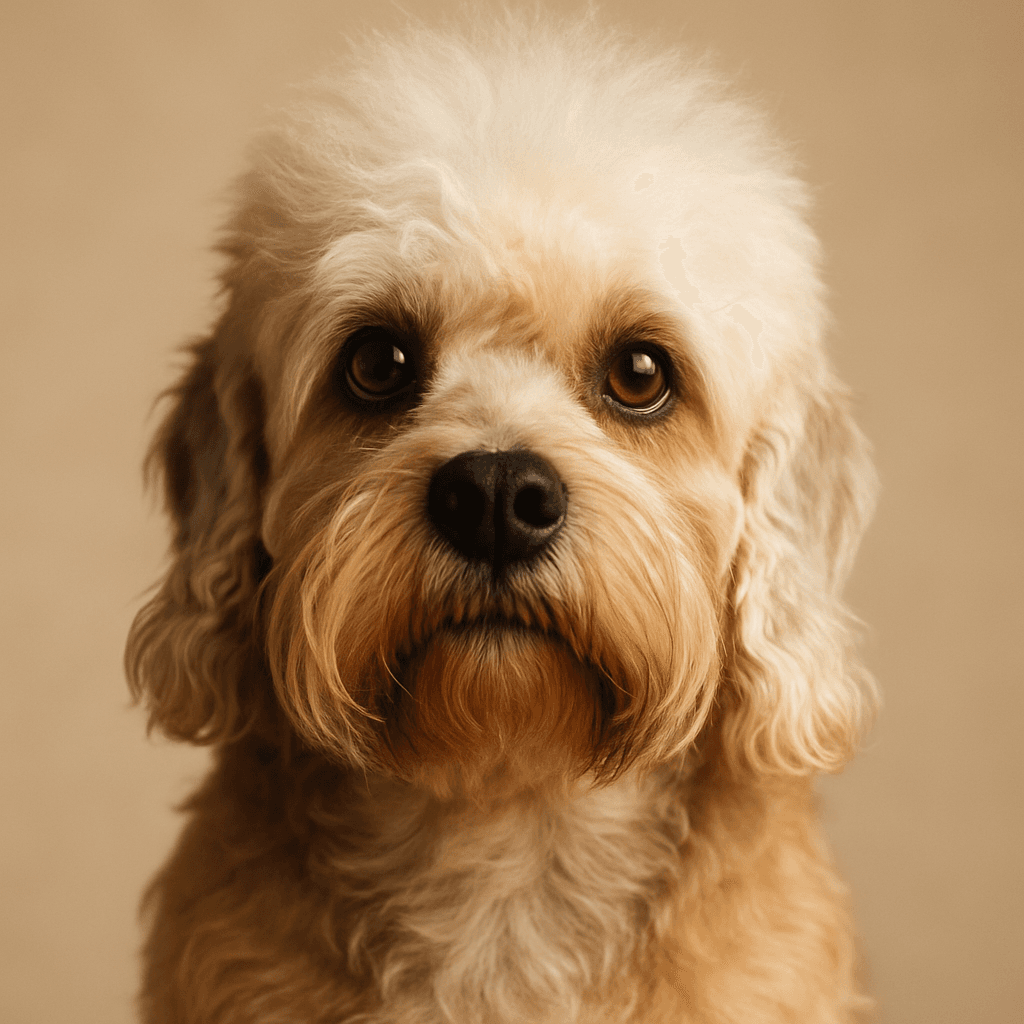
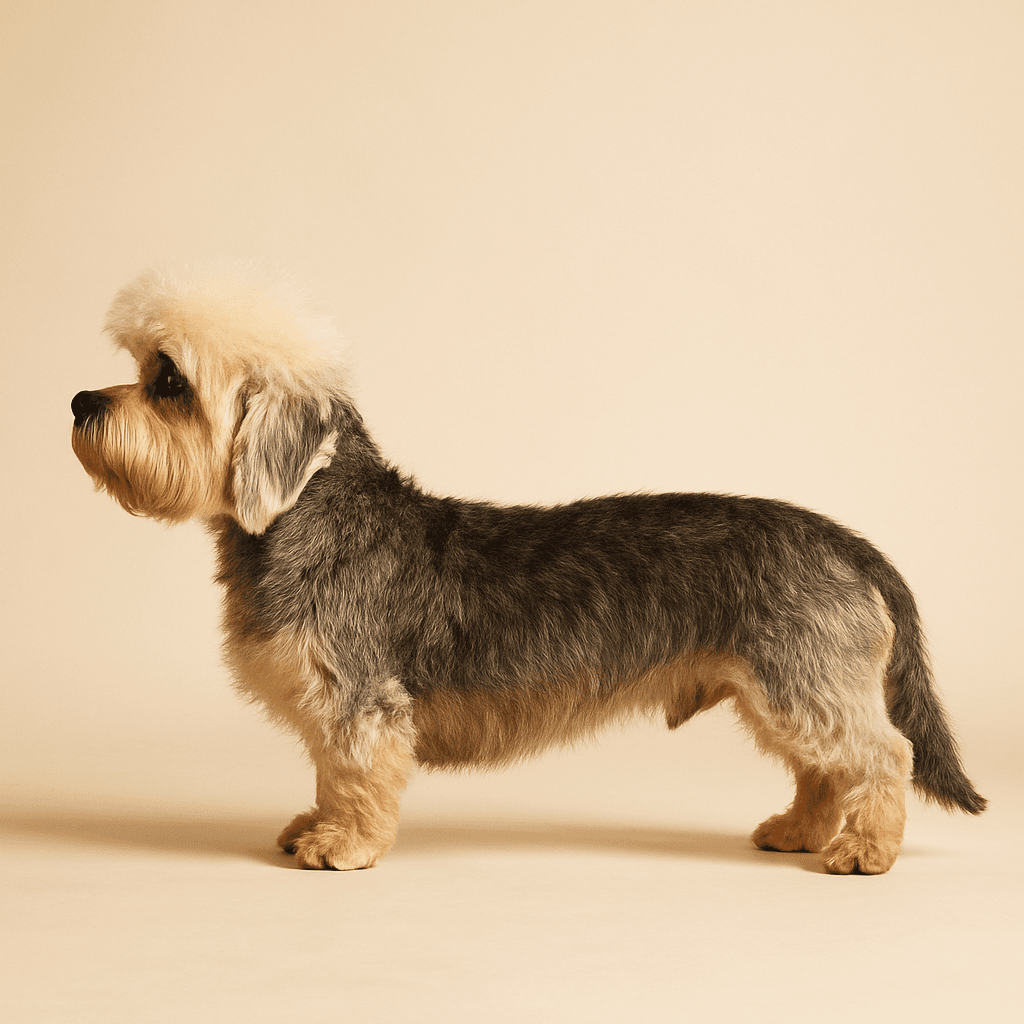
The appearance is immediately distinctive. The head is large and domed in proportion to the body, with a silky topknot of lighter-coloured hair and large, round, bright eyes that give the dog a soulful, almost meditative expression. The long body and short legs create a silhouette similar to the Dachshund, though the two breeds are not closely related. The coat is a mix of soft and harder hair in either pepper (bluish grey to silver) or mustard (reddish brown to pale fawn) shades.
The character is classic terrier: independent, determined, courageous and affectionate with its own family. The Dandie is often described as one of the more gentle and reserved terrier breeds, with a dignified, serious quality that distinguishes it from the more boisterous members of the terrier group. It is nonetheless fully terrier in its independence and its relationship with its own opinions - training requires patience, positive methods and an acceptance that the Dandie will cooperate on its own terms.
The long body creates a structural vulnerability to IVDD - intervertebral disc disease - that deserves the same management approach used with Dachshunds: no jumping from heights, ramps for furniture access, weight management and avoidance of high-impact activities.
Glaucoma is a serious hereditary eye condition in the breed and eye testing of parents is an important health measure for breeders. The Vulnerable Native Breed status means the gene pool is small and careful breeding decisions are essential for the breed's future health.
Purchase prices range from £800 to £1,500, with waiting lists typical given the small number of litters annually. Monthly running costs average £90 to £160. The Dandie Dinmont Terrier Club is the primary resource for breed information, responsible breeders and rescue contact.
Temperament & Personality
The Dandie Dinmont is independent, determined, affectionate and surprisingly gentle for a working terrier. It is dignified and characterful rather than boisterous. Good with older children and typically adaptable to different household types. Reserved rather than aggressive with strangers. Devoted and loyal to its own family.
Training
Dandie Dinmonts are intelligent but independent - typical terrier character. They respond best to positive reinforcement with patience and consistency. They will acknowledge a command on their terms. Early socialisation is important. House training is generally straightforward. Short, engaging sessions work best.
Exercise Needs
Dandie Dinmonts need 45-60 minutes of daily exercise. They enjoy walks and exploration, with their independent terrier nature making them keen investigators of interesting scent trails. A secure garden is important given the prey drive. Avoid excessive jumping to protect the long back.
Health & Vet Costs
IVDD - intervertebral disc disease - is a risk in the Dandie's low-slung body and deserves the same management applied to Dachshunds: no jumping, weight management and ramps. Glaucoma is a serious eye condition documented in the breed - eye testing of parents is important. Hip evaluation is advisable. As a Vulnerable Native Breed the small gene pool is a concern. Lifespan 12-15 years.
Protect your Dandie Dinmont Terrier with the right insurance
Vet costs are rising. Lifetime cover means long-term conditions stay covered for life -- not just 12 months.
Feeding & Nutrition
High-quality small breed complete food. Adults typically need 150-220g dry food daily across two meals. Monitor body condition - can gain weight. Obesity worsens the long-body IVDD risk. Fresh water always available.
Feeding your Dandie Dinmont Terrier
How much to feed, which food types suit this breed, and what to avoid.
Grooming & Care
The distinctive coat - a mix of hard and soft hair - requires regular brushing and professional grooming every 6-8 weeks. The silky topknot is the breed's signature feature and requires particular care. Hand-stripping maintains correct coat texture for showing; clipping is acceptable for pet dogs.
Costs of Ownership
Dandie Dinmont Terrier puppies from KC-registered breeders typically cost £800-£1,500. As a Vulnerable Native Breed with very few litters produced each year, waiting lists are common. Annual ongoing costs average £1,200-£1,800. Supporting this breed means accepting limited availability.
Is a Dandie Dinmont Terrier Right for You?
Families, individuals and older owners who appreciate an independent, characterful terrier. Not a dog for owners wanting easy compliance. Needs secure fencing - strong prey drive. Good with older children. Supporting a Vulnerable Native Breed is a meaningful reason to choose this breed. Rare - research breeders carefully.
Related Guides
Free newsletter
Get the weekly guide for UK dog owners
Breed spotlights, training tips and health advice delivered every week.