Dogue de Bordeaux
Complete UK breed guide

Quick answer
The Dogue de Bordeaux is one of France's oldest breeds - a large, heavy mastiff type with a massive wrinkled head and devoted, calm temperament. Experienced owners only. Significant health risks including cardiac disease and brachycephalic features. Parent health screening essential. KC Working Group. Lifespan 5-8 years.
Quick Facts
- Size
- Large
- Weight
- 54–68 kg
- Lifespan
- 5–8 years
- Breed Group
- Working
- Exercise
- 45–60 mins/day
- Activity Level
- Moderate
- Grooming
- Low
- Monthly Cost
- £160–£260/month
- Temperament
- —
- Good with Children
- Yes
- Good with Dogs
- Yes
- Good for First Timers
- No
- Suits Flats
- No
Breed Overview
The Dogue de Bordeaux is one of France's oldest and most powerful breeds, a massive, heavy mastiff type with one of the largest and most wrinkled heads of any dog breed, a deep-chested body of extraordinary strength and a devoted, patient character that has made it a popular companion for those who can meet its very specific requirements. Registered by the Kennel Club in the Working Group, it became significantly more widely known internationally following its appearance in the 1989 film "Turner and Hooch", and the subsequent increase in demand contributed to the irresponsible breeding that has created the health challenges the breed now faces.
The Dogue de Bordeaux's history in France dates back several centuries, where it was used as a guard dog, property protector and hunting dog for large game. The breed was nearly extinct after World War Two and was rebuilt in the latter half of the twentieth century, in the process losing some of the genetic diversity and careful selection that might have maintained better health robustness.
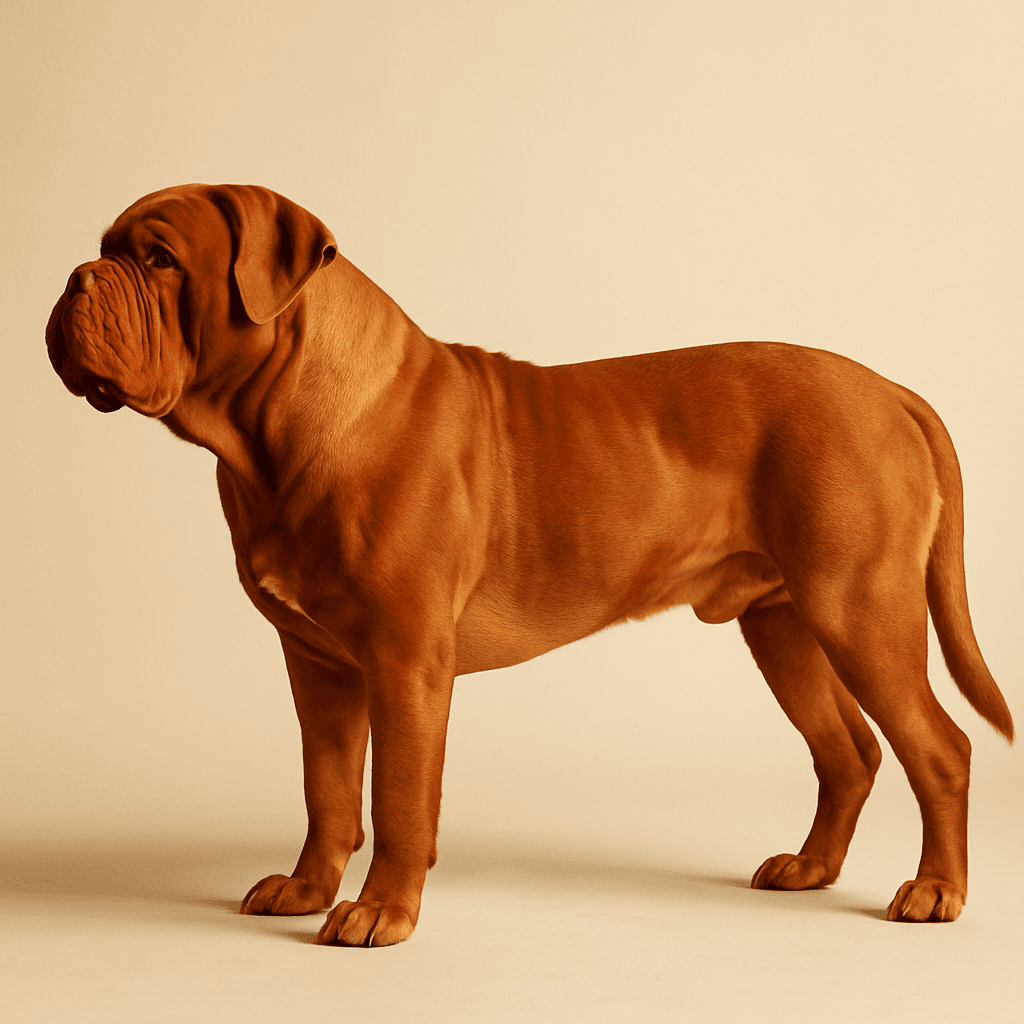
In appearance it is unmistakable: a massive, heavy-boned dog with a huge, broad, wrinkled head dominated by the deep, wrinkled forehead and prominent lower jaw. The coat is short and fawn in various shades. Adult males typically weigh 50 kilograms or more and stand 60 to 68 centimetres at the shoulder. The expression is earnest and gentle - one of the endearing qualities of a breed that looks formidable but is characteristically soft-natured.
The character is the Dogue de Bordeaux's greatest strength. It is typically calm, affectionate and deeply loyal to its family - one of the more gentle-natured mastiff types. It can be excellent with children in the household, patient and tolerant in a way that belies its size. It is protective without being aggressive, watchful without being reactive. In the right household, handled with confidence and commitment, it is a magnificent companion.
The health challenges are the Dogue de Bordeaux's greatest challenge for both the breed and its owners. Cardiac disease - subaortic stenosis and dilated cardiomyopathy in particular - is common and can be fatal. Brachycephalic obstructive airway syndrome can cause breathing difficulties that reduce quality of life and exercise tolerance. Hip and elbow dysplasia are common. Bloat is a serious emergency risk in the deep-chested body. The combination of these conditions contributes to an average lifespan of just 5 to 8 years - shorter than almost any other breed registered with the Kennel Club.
This exceptionally short lifespan is not a minor consideration. It means that owners who become deeply attached to a Dogue de Bordeaux face an average ownership period of half what they might expect from a smaller breed, and the costs of managing multiple health conditions are often concentrated into a relatively brief time. Any prospective owner should think seriously about this reality before choosing the breed.
Health screening of both parents - cardiac assessment, hip and elbow scoring - is the minimum standard before purchasing a puppy. Insurance from day one, covering cardiac and orthopaedic conditions, is essential.
Purchase prices from KC-registered, health-tested breeders range from £1,500 to £3,000. Monthly running costs average £180 to £360. The Dogue de Bordeaux Society UK is the primary resource for breed information, responsible breeders, health testing guidance and rescue contact.
Temperament & Personality
The Dogue de Bordeaux is calm, devoted and affectionate with its own family. Gentle and patient with children it knows. Naturally protective and can be wary of strangers. Not an aggressive breed by temperament but requires confident management given its size. Tends toward strong bonds with one person.
Training
Dogues de Bordeaux are intelligent and respond well to consistent positive training. They are not the most biddable breed but are generally amenable to gentle, patient handling. Early socialisation is critical - a large, poorly socialised Dogue de Bordeaux is very difficult to manage. Professional training assistance is strongly recommended for first-time large breed owners.
Exercise Needs
Dogues de Bordeaux need 1-1.5 hours of moderate daily exercise. They are not high-endurance dogs and should not be over-exercised, particularly in warm weather given their brachycephalic features. Puppy exercise must be strictly limited during the extended growth phase. Adult exercise should be measured and not excessive.
Health & Vet Costs
The Dogue de Bordeaux has significant health challenges. Cardiac disease - particularly subaortic stenosis and dilated cardiomyopathy - is common and cardiac screening of parents is critical. Brachycephalic features can cause breathing difficulties. Hip and elbow dysplasia are common. Bloat is a serious risk. Skin fold infections are an ongoing concern. The very short average lifespan of 5-8 years is the breed's most significant welfare issue. Buyers must understand this before purchase.
Protect your Dogue de Bordeaux with the right insurance
Vet costs are rising. Lifetime cover means long-term conditions stay covered for life -- not just 12 months.
Feeding & Nutrition
High-quality large to giant breed complete food. Adults typically need 500-700g dry food daily across two meals. Two meals reduce bloat risk. Monitor body condition carefully - obesity is severely damaging in a breed already prone to joint and cardiac problems. Fresh water always available.
Feeding your Dogue de Bordeaux
How much to feed, which food types suit this breed, and what to avoid.
Grooming & Care
The short coat is easy to brush weekly. The deep facial wrinkles and lip folds must be cleaned daily - moisture and debris in skin folds causes infection and painful skin fold dermatitis rapidly. Ears need regular checking. Nails must be trimmed monthly. The breed drools significantly - this is a consistent management commitment.
Costs of Ownership
Dogue de Bordeaux puppies from health-tested KC-registered breeders typically cost £1,500-£3,000. Insurance costs are high and must be secured from day one. Annual ongoing costs averaging food, insurance and potential veterinary costs are £2,500-£4,500. The short lifespan means significant veterinary costs are often concentrated in a relatively brief ownership period.
Is a Dogue de Bordeaux Right for You?
Experienced owners of large or mastiff-type breeds. Not suitable for first-time owners. Requires confident handling, thorough early socialisation and significant space. The very short lifespan is an important emotional consideration. Not suited to urban apartments. Insurance can be expensive.
Related Guides
Free newsletter
Get the weekly guide for UK dog owners
Breed spotlights, training tips and health advice delivered every week.