German Pinscher
Complete UK breed guide

Quick answer
The German Pinscher is a sleek, elegant medium-sized German working breed, the ancestor of the Dobermann and Miniature Pinscher. Highly intelligent, alert and energetic - experienced owners only. Hip dysplasia is the primary health concern. Rare in the UK. KC Working Group. Lifespan 12-14 years.
Quick Facts
- Size
- Medium
- Weight
- 14–20 kg
- Lifespan
- 12–14 years
- Breed Group
- Working
- Exercise
- 60–75 mins/day
- Activity Level
- High
- Grooming
- Low
- Monthly Cost
- £110–£170/month
- Temperament
- —
- Good with Children
- No
- Good with Dogs
- No
- Good for First Timers
- No
- Suits Flats
- No
Breed Overview
The German Pinscher is an elegant, athletic and highly intelligent medium-sized working breed from Germany, historically one of the most significant dog breeds in German cynological development and the direct ancestral foundation from which both the Dobermann and the Miniature Pinscher were subsequently developed. One of Germany's oldest working breeds, the German Pinscher was used as a versatile farm and stable dog, guarding property, controlling vermin and serving as a general working companion. Registered by the Kennel Club in the Working Group, it is a rare breed in the United Kingdom but has a dedicated following among owners who appreciate its exceptional working capability and striking appearance.
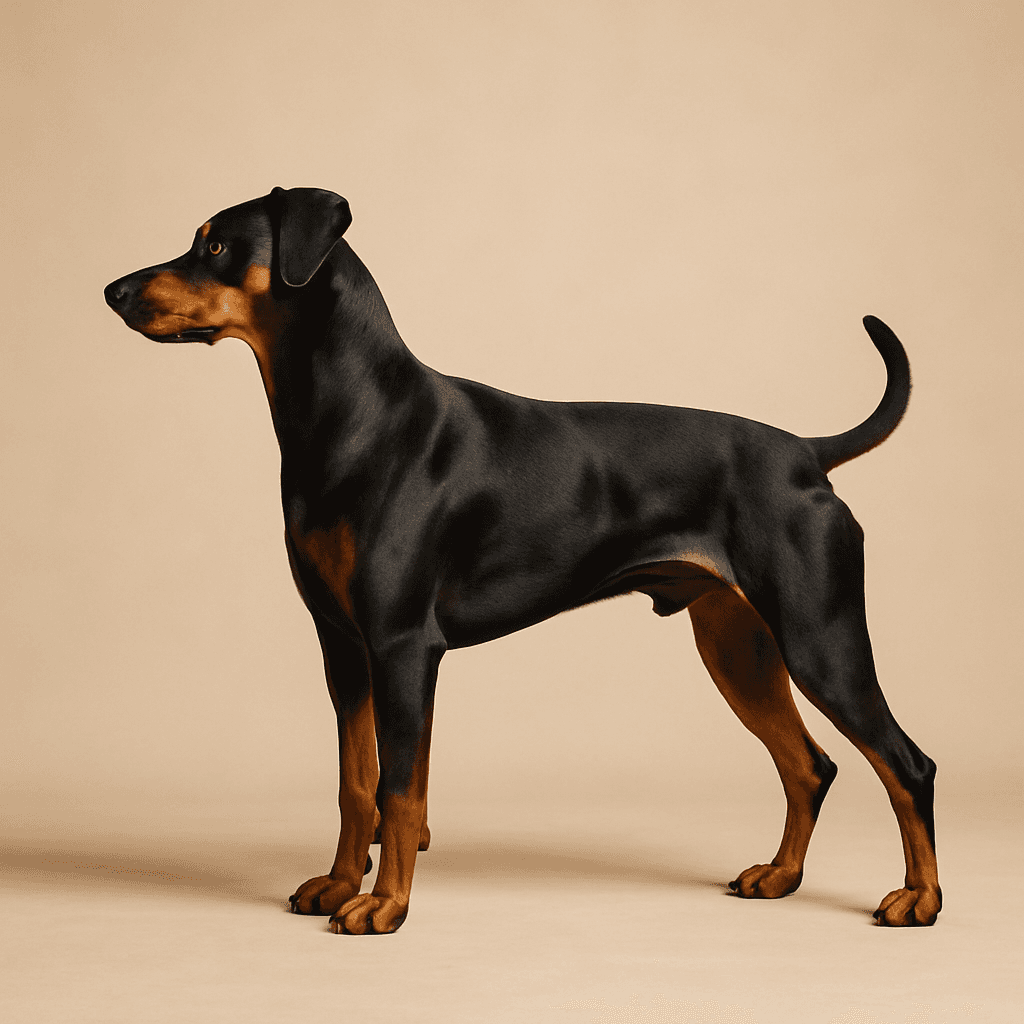
The German Pinscher is a sleek, well-muscled dog with a short, smooth, glossy coat in black and tan, red or fawn. The overall impression is of an elegant, well-proportioned working dog with alertness and energy evident in every aspect of its bearing. Adult males typically stand 45 to 50 centimetres at the shoulder and weigh 14 to 20 kilograms. The body is well-muscled and clean-lined, with none of the exaggerations that affect some working breeds.
The character is that of a serious, capable working dog. The German Pinscher is highly intelligent, alert, energetic and deeply loyal to its family. It has the confident assertiveness of a working guardian breed and the intelligence to match - which makes it exceptional for active, experienced owners and genuinely demanding for those without the knowledge and commitment to channel its abilities appropriately.
The breed has natural guarding instincts and a high prey drive. Early and thorough socialisation is essential to produce a stable, reliable adult temperament. The German Pinscher is not aggressive by nature, but it is confident and capable, and it takes its protective role seriously. It needs clear, consistent leadership from day one.
Training potential is high. The German Pinscher excels in obedience, agility, tracking and protection sport when handled by someone with the skill to direct its intelligence and drive. This same intelligence and drive can make it a challenging pet for the unprepared. Professional training guidance is strongly recommended, particularly for first-time Pinscher owners.
Hip dysplasia and cardiac conditions are the primary health concerns and parents should be tested before breeding.
Purchase prices from KC-registered, health-tested breeders range from £1,000 to £2,000. Monthly running costs average £90 to £160. The German Pinscher Club UK is the primary resource for breed information, health testing, responsible breeders and rescue contact.
Temperament & Personality
Alert, confident, energetic and loyal - the German Pinscher is a serious working dog in a medium-sized package. Devoted to its family. Can be suspicious of strangers. Guarding instincts are natural and active. High prey drive. Not aggressive without cause but assertive and capable. Thrives with clear leadership and a purposeful role.
Training
German Pinschers are highly intelligent and very trainable, but strong-willed and confident - they need consistent, experienced handling. They respond well to positive reinforcement but will test boundaries with weak or inconsistent owners. Early socialisation is essential. Training should begin immediately and continue throughout the dog's life. Professional guidance is strongly recommended.
Exercise Needs
German Pinschers need 1.5 hours of vigorous daily exercise. They are energetic and athletic dogs that need purposeful activity. They excel at dog sports including agility, obedience and tracking. Mental stimulation is as important as physical exercise. An under-exercised German Pinscher will find its own entertainment.
Health & Vet Costs
Hip dysplasia is the primary health concern - both parents should be hip-scored. Hereditary cataract has been documented - eye testing of parents is advisable. Cardiac conditions including dilated cardiomyopathy have been recorded. The German Pinscher Club maintains health testing recommendations. Lifespan 12-14 years.
Protect your German Pinscher with the right insurance
Vet costs are rising. Lifetime cover means long-term conditions stay covered for life -- not just 12 months.
Feeding & Nutrition
High-quality medium breed complete food. Adults typically need 250-350g dry food daily across two meals. Monitor body condition - maintain lean athletic build. Fresh water always available.
Feeding your German Pinscher
How much to feed, which food types suit this breed, and what to avoid.
Grooming & Care
The short, dense, glossy coat is very low-maintenance. Weekly brushing with a soft brush keeps it gleaming. Occasional bathing as needed. Ears need regular checking. Nails require regular trimming. Dental care important. Very low grooming commitment.
Costs of Ownership
German Pinscher puppies from health-tested KC-registered breeders typically cost £1,000-£2,000. The breed is uncommon in the UK. Annual ongoing costs including food, insurance and routine care average £1,200-£1,800.
Is a German Pinscher Right for You?
Experienced owners of working or guardian breeds. Not suitable for first-time owners. Needs 1.5 hours vigorous daily exercise plus mental stimulation. Good with older children in experienced households. Strong prey drive and guarding instincts. Early socialisation essential. Rare in UK - research breeders carefully.
Related Guides
Free newsletter
Get the weekly guide for UK dog owners
Breed spotlights, training tips and health advice delivered every week.