Giant Schnauzer
Complete UK breed guide
Quick answer
The Giant Schnauzer is a large, powerful German working breed used extensively in police and military service. Highly intelligent, dominant and energetic - experienced owners only. Hip dysplasia testing essential. Needs 2 hours vigorous daily exercise. KC Working Group. Lifespan 10-12 years.
Quick Facts
- Size
- Large
- Weight
- 25–47 kg
- Lifespan
- 12–15 years
- Breed Group
- Working
- Exercise
- 90–120 mins/day
- Activity Level
- High
- Grooming
- High
- Monthly Cost
- £140–£220/month
- Temperament
- —
- Good with Children
- No
- Good with Dogs
- Yes
- Good for First Timers
- No
- Suits Flats
- No
Breed Overview
The Giant Schnauzer is the largest of the three Schnauzer varieties and one of Germany's most significant working breed developments, a powerful, highly intelligent and formidable dog used extensively in police, military and security work throughout Europe and beyond. Developed in Bavaria in the nineteenth century originally as a cattle and drover's dog, the Giant Schnauzer was subsequently refined as a working guard dog and has become recognised worldwide as one of the most capable working breeds in existence. Registered by the Kennel Club in the Working Group, it is a breed that commands respect and requires experienced ownership.
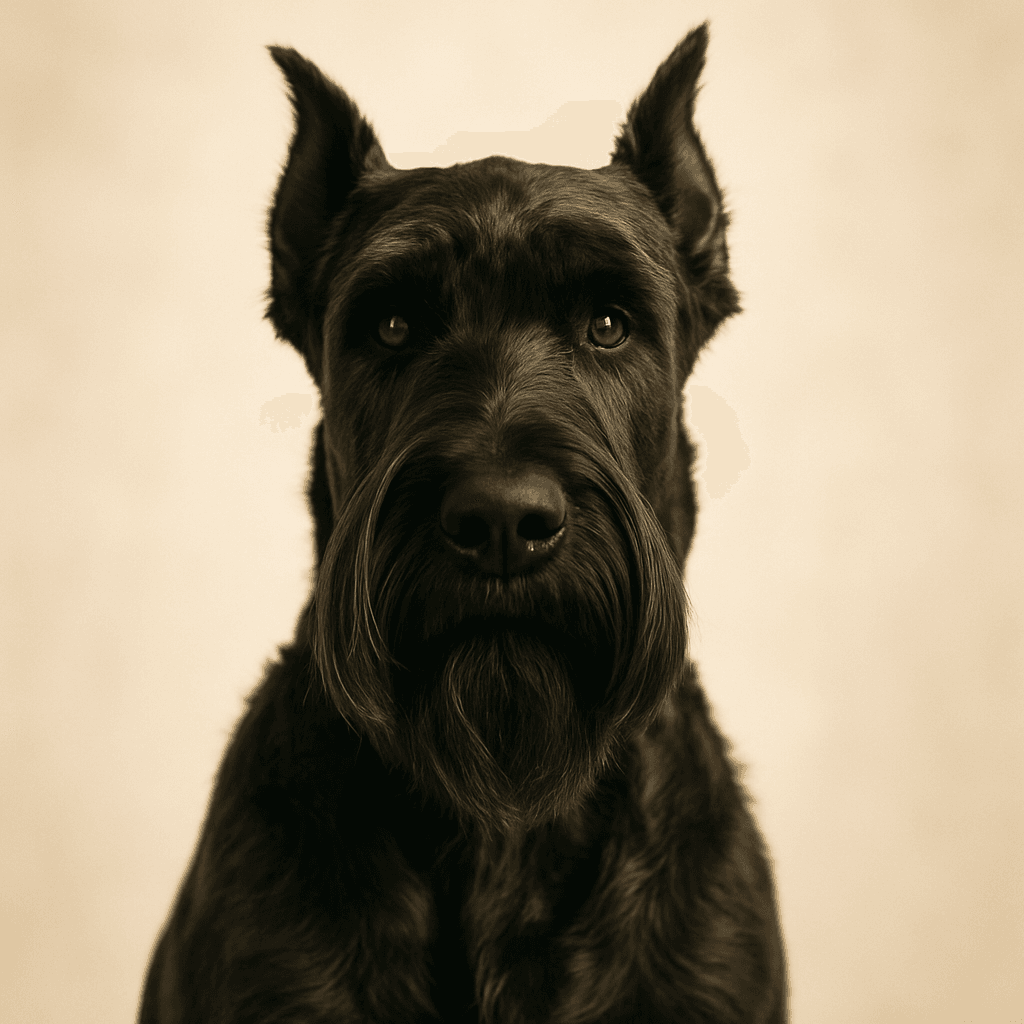
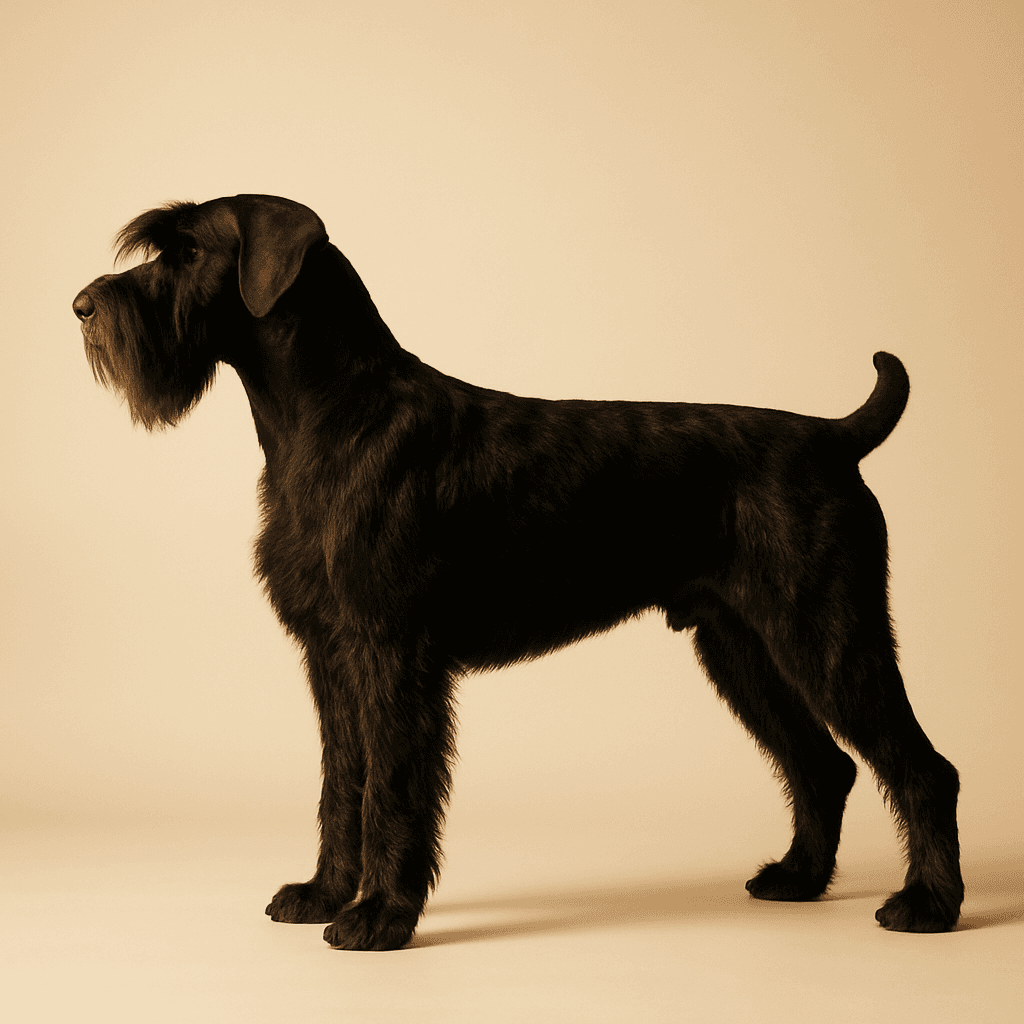
The Giant Schnauzer is a large, powerfully built dog with the characteristic Schnauzer appearance taken to its most substantial expression: a rectangular, well-muscled build, the wiry double coat with harsh outer coat and soft undercoat, the characteristic beard and eyebrows that give the Schnauzer group their distinctive expression, and the overall impression of strength and capability. The coat comes in pure black or salt and pepper. Adult males typically stand 65 to 70 centimetres at the shoulder and weigh 35 to 47 kilograms.
The character is that of a serious, dominant working dog. The Giant Schnauzer is highly intelligent, intensely loyal to its own family, naturally protective and assertive in a way that demands equally confident and experienced leadership. It is not an aggressive breed by nature but it is dominant, capable and confident in its own abilities - a combination that can be problematic in the hands of owners who cannot provide clear, consistent direction from day one.
The breed needs significant daily activity - two hours of vigorous exercise is the minimum and it should include purposeful mental work as well as physical challenge. Giant Schnauzers excel in protection sport, obedience, tracking and any working activity that engages their considerable intelligence and drive. They can be genuinely difficult when under-stimulated.
Socialisation must begin early and be conducted thoroughly. The breed's natural reserve and protectiveness with strangers, combined with its potential for same-sex dog aggression, require careful management.
Hip dysplasia and cardiac conditions are the primary health concerns and both parents should be tested.
Purchase prices from KC-registered, health-tested breeders range from £1,000 to £2,500. Monthly running costs average £150 to £240. The Giant Schnauzer Club UK is the primary resource for breed information, health testing, responsible breeders and rescue contact.
The breed's combination of physical power, intelligence and working capability places it firmly in the category of breeds requiring the highest level of owner experience and commitment.
Temperament & Personality
Powerful, confident, loyal and alert - the Giant Schnauzer is a formidable working dog. Devoted to its family but not openly friendly with strangers. Dominant and assertive. Natural protective instincts. High drive and energy. Can be aggressive toward other dogs, particularly of the same sex. Needs very clear leadership and boundaries throughout its life.
Training
Giant Schnauzers are highly intelligent and extremely trainable - among the most capable of all working breeds. They respond to positive, consistent training with firm leadership. They are strong-willed and will dominate an uncertain owner. Training must begin from day one and continue throughout life. Professional training involvement is strongly recommended. They excel in protection sport, obedience and working roles.
Exercise Needs
Giant Schnauzers need 2 hours of vigorous daily exercise as a minimum. This is a serious working breed that needs purposeful, challenging activity. Dog sports including IPO, agility, tracking and obedience provide ideal outlets. An under-exercised Giant Schnauzer is a seriously difficult dog. Not a breed for casual owners.
Health & Vet Costs
Hip dysplasia is the primary health concern - both parents must be hip-scored. Osteochondritis dissecans (OCD) has been documented. Dilated cardiomyopathy occurs in the breed. Hypothyroidism has been recorded. Bloat is a risk in deep-chested large breeds. The Giant Schnauzer Club UK maintains health testing recommendations. Lifespan 10-12 years.
Protect your Giant Schnauzer with the right insurance
Vet costs are rising. Lifetime cover means long-term conditions stay covered for life -- not just 12 months.
Feeding & Nutrition
High-quality large breed complete food. Adults typically need 450-600g dry food daily across two meals. Monitor body condition carefully - maintain lean, muscular condition. Obesity worsens joint problems. Fresh water always available.
Feeding your Giant Schnauzer
How much to feed, which food types suit this breed, and what to avoid.
Grooming & Care
The harsh, wiry double coat needs hand-stripping twice yearly or professional clipping every 8-10 weeks. The coat mats without regular grooming. Brush twice weekly between professional appointments. The distinctive beard and eyebrows need regular trimming and cleaning. Ears need regular checking.
Costs of Ownership
Giant Schnauzer puppies from health-tested KC-registered breeders typically cost £1,000-£2,500. Annual ongoing costs including food, grooming, insurance and routine care average £1,800-£2,800.
Is a Giant Schnauzer Right for You?
Experienced owners of large working or guarding breeds only. Not suitable for first-time owners. Dominant character requires confident, consistent leadership from day one. Needs 2 hours vigorous daily exercise plus significant mental stimulation. Early and extensive socialisation essential. Not suited to homes with small children or other pets unless raised together.
Related Guides
Free newsletter
Get the weekly guide for UK dog owners
Breed spotlights, training tips and health advice delivered every week.