Great Dane
Complete UK breed guide
Quick answer
The Great Dane is one of the tallest dog breeds, with a typical lifespan of 8 to 10 years. It carries high risks of gastric dilatation-volvulus and osteosarcoma. Food, insurance and space costs are very high. Health testing of parents is essential.
Quick Facts
- Size
- Giant
- Weight
- 45–90 kg
- Lifespan
- 7–10 years
- Breed Group
- Working
- Exercise
- 60–75 mins/day
- Activity Level
- Moderate
- Grooming
- Low
- Monthly Cost
- £200–£320/month
- Temperament
- —
- Good with Children
- Yes
- Good with Dogs
- Yes
- Good for First Timers
- No
- Suits Flats
- No
Breed Overview
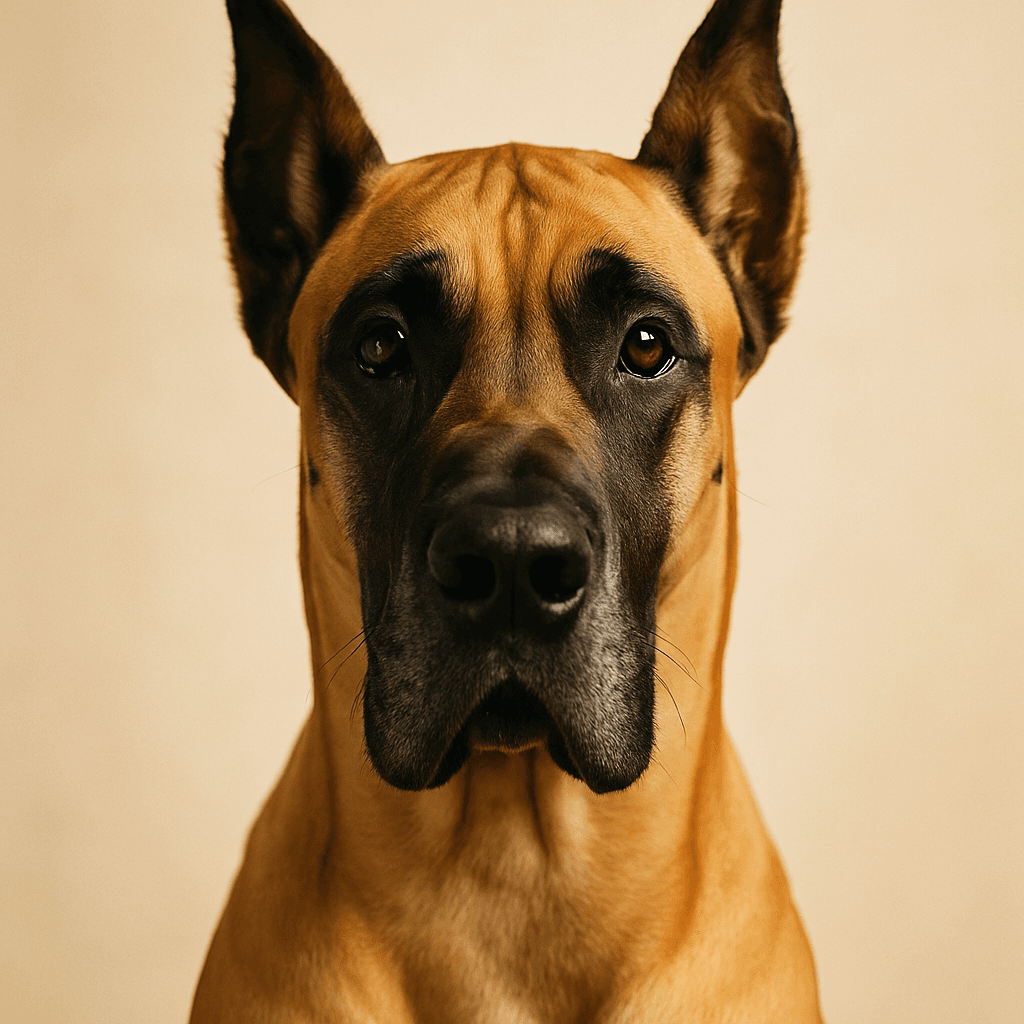
The Great Dane is one of the world's largest and most striking dog breeds, registered by the Kennel Club in the Working Group. Despite their commanding size, Great Danes are gentle, affectionate and people-oriented companions whose temperament consistently surprises those who encounter them expecting a formidable dog and find instead a devoted, gentle giant.
The practical realities of Great Dane ownership must be confronted clearly before buying. Size translates directly to cost: food bills of £70 to £120 per month, insurance premiums of £80 to £180 per month, oversized beds, large cars, and homes with genuinely sufficient space are not optional considerations. They are baseline requirements for responsible ownership.
The health picture reinforces this financial message. Great Danes have one of the highest rates of gastric dilatation-volvulus (bloat) of any breed. GDV is a life-threatening emergency requiring immediate surgery costing £3,000 to £6,000. Prophylactic gastropexy at neutering to prevent the rotation component is seriously considered by many Great Dane owners and vets. Osteosarcoma occurs at very high rates in giant breeds. The typical lifespan is 8 to 10 years.
Puppy rearing requires specific nutritional management. Giant-breed puppy food supporting slow, controlled growth is not optional: rapid growth from inappropriate nutrition causes developmental bone and joint disease. No calcium supplementation. No adult food in the puppy phase.
For owners who go into Great Dane ownership fully prepared, the reward is exceptional. The breed's gentle, devoted temperament and unique physical presence create a depth of relationship that owners describe as unlike any other breed. The lifespan is shorter than many would wish, but those years are full.
Purchase prices from KC-registered breeders typically range from £1,000 to £2,500. Total monthly running costs of £300 to £500 are among the highest of any breed. Great Dane Rescue UK rehomes dogs nationally.
Know the costs. Understand the health risks. Prepare your home. Then commit fully, because this breed repays that commitment generously.
Great Dane Rescue UK rehomes dogs nationally. For owners who approach Great Dane ownership with full financial preparation, clear understanding of the health risks, and a home that is genuinely suitable for the breed, this is a dog of extraordinary presence and character. The commitment is real and the costs are high. For those who go in prepared, the reward is equally substantial. The breed asks a great deal. It gives back in equal measure. The years are fewer than you would wish. Make them count by preparing properly from the start.
Temperament & Personality
Great Danes are gentle, affectionate and patient dogs that belie their enormous size. Owners consistently describe them as unaware of how large they are, attempting to sit on laps and leaning against people with the confidence of a much smaller dog. This combination of giant size and gentle nature earns them the nickname 'gentle giant'.
They are people-oriented dogs that bond closely with their family and generally want to be near their people. They are not guard dogs in the reactive or aggressive sense: their size is deterrent enough, and their default temperament is friendly curiosity rather than wariness.
They are good with children when well socialised, though their size means very young children can be accidentally knocked over without any aggressive intent on the dog's part. Children should be taught to interact appropriately.
They are generally sociable with other dogs and animals when properly introduced. Their sheer physical presence means they should be taught appropriate behaviour around smaller dogs from puppyhood.
The most difficult aspect of Great Dane temperament is not the dog's character but the owner's emotional reality: a breed whose average lifespan is 8 to 10 years asks its owners to accept the near-certainty of an early loss. Those who love the breed describe the experience as entirely worthwhile, but this should be considered honestly before committing.
Training
Great Danes are gentle, affectionate and generally willing dogs that train well with positive reinforcement. Their sensitivity means they respond poorly to harsh methods.
Four priorities for a new Great Dane owner:
- Loose lead walking. A 70kg dog that pulls is ungovernable for most people. Begin loose lead training from day one using a front-clip harness. A Dane puppy that is allowed to pull will become an adult that cannot safely be walked.
- Joint protection. No jumping, no stairs in very young puppies, no repetitive impact exercise until growth plates close. This is as much a training discipline as a veterinary consideration.
- Socialisation. Comprehensive positive exposure during the 8 to 16 week window. A giant breed that is anxious or reactive around people and dogs is a significant management challenge.
- Basic obedience. Sit, stay, down, come and leave it. Taught using positive reinforcement methods. A well-trained Great Dane is a joy; an untrained one is a physical challenge for everyone it encounters.
Common mistakes: Allowing jumping up as a puppy because it is harmless at 10kg. At 70kg the same behaviour is dangerous.
Exercise Needs
Great Danes are large, moderately active dogs. Their exercise needs are meaningful but not extreme for their size. The greater management challenge is protecting joints during the critical growth phase.
Adult Great Danes: 30 to 60 minutes of exercise per day is appropriate for most adult Danes. They enjoy walking and some off-lead running but are not endurance athletes. Two walks daily of moderate length suit the breed well.
Puppy joint protection: This is the most important exercise management consideration. Great Dane puppies grow extraordinarily rapidly, and their bones and joints are vulnerable to repetitive impact during this phase. Until growth plates close, typically at 18 to 24 months for giant breeds, avoid: forced running on hard surfaces; stairs (in puppies under six months especially); jumping; repetitive ball throwing. Free, unforced play on grass or soft ground is preferable to structured exercise.
Heat sensitivity: Great Danes can overheat in warm weather due to their mass. Avoid exercise in the middle of the day in summer. Always carry water.
Bloat and exercise: Never exercise intensively immediately before or after feeding. Allow at least one hour either side of meals.
Health & Vet Costs
Great Danes carry two life-limiting health risks that all prospective owners must understand fully.
Gastric Dilatation-Volvulus (Bloat/GDV) is the most immediate threat. Great Danes have a higher rate of GDV than almost any other breed. The stomach fills with gas and rotates, cutting off blood supply. Signs include unproductive retching, distended abdomen and rapid deterioration. This is a life-threatening emergency requiring immediate surgery. Without treatment, death typically occurs within hours. GDV surgery costs £3,000 to £6,000. Prophylactic gastropexy (stomach anchoring at neutering) can prevent the rotation and is increasingly recommended for this breed specifically.
Osteosarcoma (bone cancer) occurs at very high rates in giant breeds. Great Danes are among the most affected. It typically presents as progressive lameness, swelling or pain over a bone. Treatment including limb amputation and chemotherapy is available but expensive and prognosis is guarded. Average survival with treatment is 12 to 18 months.
Dilated Cardiomyopathy (DCM) affects Great Danes at meaningful rates. Annual cardiac screening is advisable.
Hip and Elbow Dysplasia occur in the breed. The KC/BVA Hip Scoring scheme assesses breeding dogs.
Wobbler Syndrome (cervical spondylomyelopathy) affects large and giant breeds including Great Danes, causing progressive neurological signs from spinal compression.
Monthly insurance typically costs £80 to £180. Average lifespan is 8 to 10 years.
Protect your Great Dane with the right insurance
Vet costs are rising. Lifetime cover means long-term conditions stay covered for life -- not just 12 months.
Feeding & Nutrition
Great Danes have significant feeding costs that must be budgeted for before acquiring the breed. They also have the highest bloat risk of almost any breed.
Daily feeding: Adult Great Danes typically need 500 to 800g or more of a good quality large-breed dry complete food per day, split into two meals. Large males at peak weight may need more. This is among the highest daily food quantities of any breed.
Large-breed puppy food: This is non-negotiable. Great Dane puppies must be fed a large-breed puppy food formulated for giant breeds to support controlled, slow growth. Rapid calcium supplementation or high-calorie foods cause developmental orthopaedic disease including osteochondrosis and angular limb deformities. Do not supplement with calcium. Do not feed adult food to puppies.
Bloat (GDV) prevention: Great Danes have the highest rate of GDV of almost any breed. This is a life-threatening emergency in which the stomach fills with gas and rotates. Prevention measures: feed twice daily rather than once; avoid intense exercise for at least one hour before and after meals; use a slow-feeder bowl; consider raised bowls (evidence is mixed but many specialists use them). Signs: unproductive retching, distended abdomen, restlessness, rapid deterioration. This is always an emergency.
Prophylactic gastropexy: Surgical anchoring of the stomach at the time of neutering to prevent the rotation component of GDV. Many Great Dane owners and vets discuss this seriously given the breed's risk profile.
Puppy feeding: Three to four times daily until 12 weeks, then three times daily until six months, then twice daily.
Feeding your Great Dane
How much to feed, which food types suit this breed, and what to avoid.
Grooming & Care
The Great Dane has a short, smooth coat that is easy to maintain with minimal professional grooming required.
Brushing: Once or twice weekly with a rubber grooming mitt or soft bristle brush. Great Danes shed year-round at a moderate rate. Regular brushing reduces household hair.
Bathing: Every six to eight weeks or when dirty. The short coat dries quickly but the dog's size makes bathing logistically challenging at home. A dog wash service, groomer or walk-in shower is practical for most owners.
Skin care: Great Danes have relatively thin skin for their size and can develop pressure sores on bony prominences, particularly elbows, if lying on hard surfaces. Ensure adequate, supportive bedding. A dedicated large orthopaedic dog bed is both a comfort and welfare investment.
Ear care: Check weekly for redness, discharge or odour. Clean as needed.
Nails: Clip every four to six weeks. Large breed nails are substantial and may require a veterinary or groomer visit for clipping if the owner is not confident.
Dental care: Daily toothbrushing with dog-safe toothpaste.
Costs of Ownership
Great Danes are one of the most expensive dog breeds to own, combining very high food costs, among the highest insurance premiums of any breed, and the realistic likelihood of significant veterinary treatment.
Purchase price: £1,000 to £2,500 from a KC-registered breeder.
Monthly insurance: £80 to £180 for comprehensive lifetime cover. The breed's GDV risk, osteosarcoma risk and short lifespan push premiums to the very top of the market.
Food: £70 to £120 per month for a large dog on a quality large-breed food.
Routine veterinary care: Annual vaccination and health check approximately £60 to £80. Prophylactic gastropexy if chosen adds a one-off surgical cost of approximately £500 to £1,000.
Bedding: A suitably large orthopaedic bed is essential and recurring as it wears.
Total estimated monthly cost: £300 to £500 when insurance, food and routine care are combined. GDV surgery (if required) costs £3,000 to £6,000. Osteosarcoma treatment costs are very high and prognosis is often poor.
Budget honestly before acquiring a Great Dane. The combination of short lifespan, expensive insurance and high food costs makes this one of the most financially demanding breeds to own.
Is a Great Dane Right for You?
Best suited to: Owners with genuinely large homes and gardens; those who can absorb high food, insurance and potential treatment costs; experienced large-breed owners who understand the health picture and limited lifespan.
Can work with: First-time owners who research the breed thoroughly and budget honestly; families with older children who interact appropriately with a very large dog.
Not ideal for: Owners in flats or small homes without garden access; those on restricted budgets; owners wanting a long-lived companion; households with very young children who may be accidentally knocked over by a dog of this size.
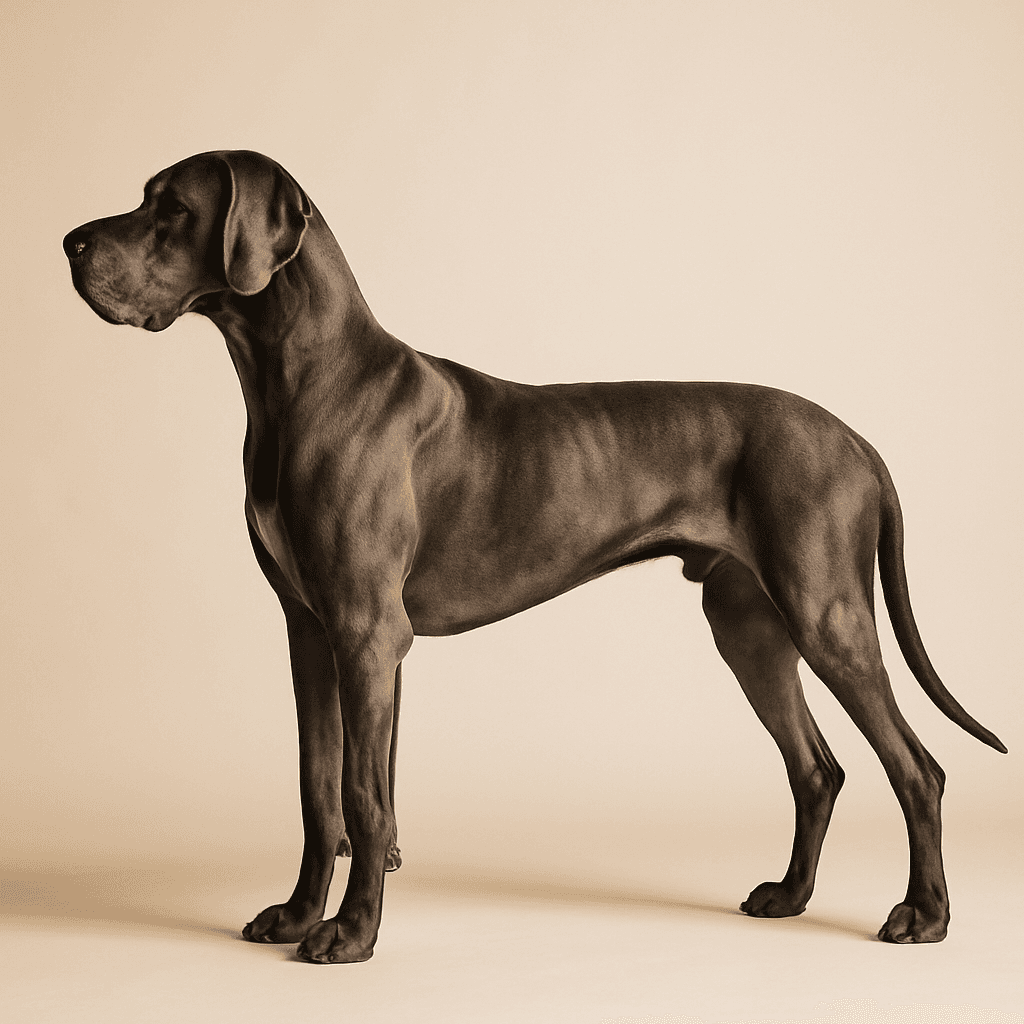
Size and living situation: Great Danes are one of the tallest breeds (70 to 86cm at the shoulder, 54 to 90kg). They need proportionally large beds, sufficient indoor space to move comfortably, and access to a garden. Standard furniture, cars and doorways become logistical considerations.
Children and other pets: Typically gentle with children when well socialised. Their size alone means young children can be knocked over accidentally. Usually good with other dogs and animals when properly introduced.
Alone time: Great Danes form strong bonds with their people. Build independence positively from puppyhood. They are not suited to being left alone for extended periods regularly.
Related Guides
Free newsletter
Get the weekly guide for UK dog owners
Breed spotlights, training tips and health advice delivered every week.