Groodle
Complete UK breed guide

Quick answer
The Groodle (also called Goldendoodle) is a popular Golden Retriever x Poodle cross - friendly, intelligent and often low-shedding. Not a KC-recognised breed. Health testing standards vary widely between breeders. Research breeders carefully and insist on hip scoring and eye testing of both parents. Lifespan 10-15 years.
Quick Facts
- Size
- Large
- Weight
- 20–35 kg
- Lifespan
- 10–15 years
- Exercise
- 60–90 mins/day
- Activity Level
- High
- Grooming
- High
- Monthly Cost
- £130–£200/month
- Temperament
- —
- Good with Children
- Yes
- Good with Dogs
- Yes
- Good for First Timers
- Yes
- Suits Flats
- No
Breed Overview
The Groodle, widely known as the Goldendoodle, is a crossbreed produced from a Golden Retriever and a Poodle - typically a Standard Poodle for larger dogs, or a Miniature Poodle for smaller versions. One of the most popular crossbreeds in the United Kingdom and worldwide, the Groodle was developed with the intention of combining the Golden Retriever's celebrated family-friendly temperament with the Poodle's intelligence and reduced-shedding coat, producing a friendly, trainable companion dog that might suit allergy-sensitive households. The crossbreed is not recognised by the Kennel Club and has no formal breed standard, breed club or mandatory health testing programme.
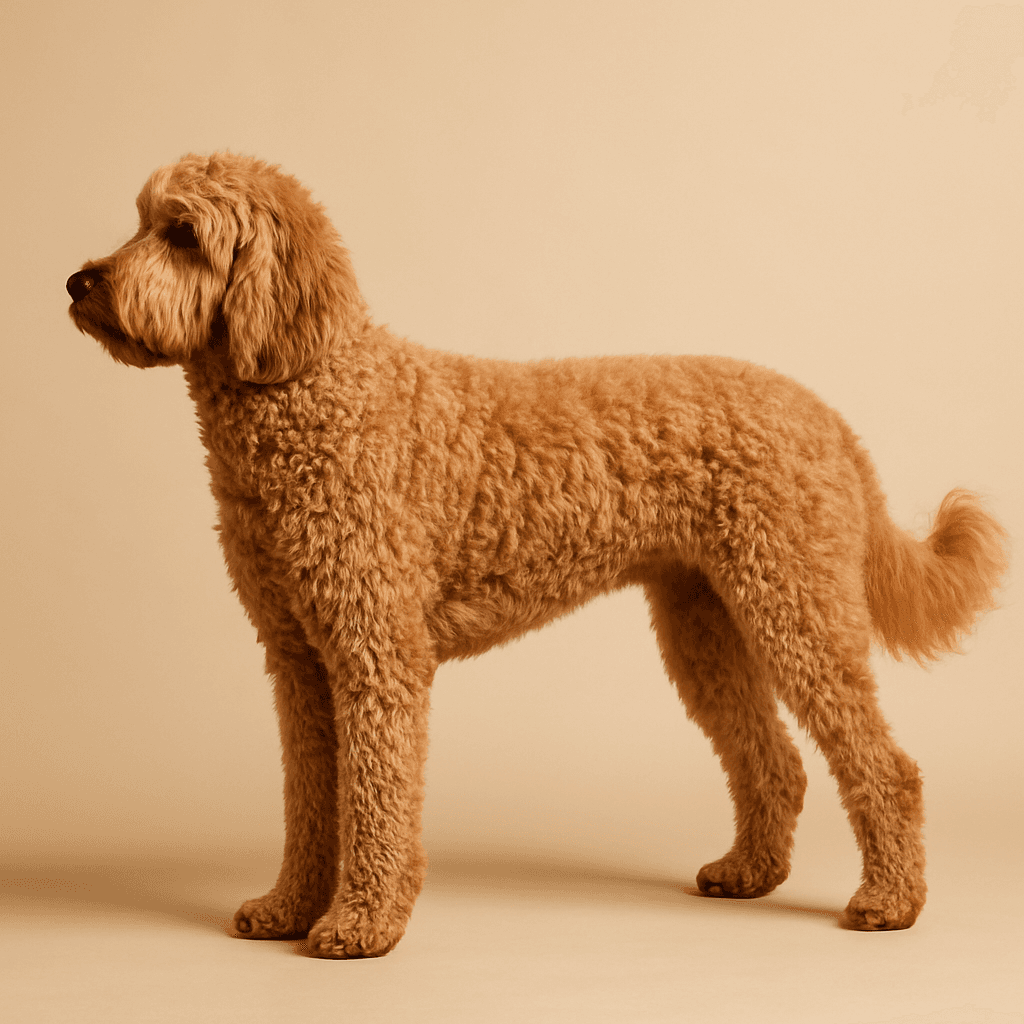
The appearance varies considerably depending on which parent breed's genetics are most expressed in each individual puppy. Coat type can range from a loose, wavy coat more reminiscent of the Golden Retriever to a tight, curly coat approaching Poodle texture. The reduced-shedding characteristic associated with Poodle genetics is not guaranteed in all individuals. Colours include cream, golden, apricot, chocolate, black and parti-colour. Size depends on whether a Standard or Miniature Poodle parent was used - Standard Groodles typically weigh 20 to 35 kilograms and stand 50 to 65 centimetres.
The temperament is typically excellent: sociable, friendly, eager to please and highly trainable. The Groodle generally inherits the Golden Retriever's warmth and sociability alongside the Poodle's intelligence and responsiveness. It is excellent with children, good with other dogs and welcoming with strangers - a genuine family companion breed rather than a guarding or working dog.
The most significant concern for prospective owners is the absence of regulated health testing. Responsible Groodle breeders will hip and elbow score both parent dogs and conduct eye testing, and will be transparent about these results. A substantial portion of the Groodle market, driven by high prices and demand, is occupied by breeders who do not conduct this testing. Prospective purchasers should insist on seeing health certificates for both parents and should walk away from any breeder who cannot provide them.
Grooming needs can be unexpectedly high. A Groodle with tightly curled Poodle-type coat will mat severely without regular professional grooming every six to eight weeks - a recurring cost that surprises many new owners.
Purchase prices range from £1,500 to £3,500 and above. Monthly running costs average £120 to £200. As there is no breed club, Dogs Trust, RSPCA and general rescue organisations are the resources for rehoming and welfare guidance.
The Groodle's combination of trainability, sociability and typically reduced shedding has made it one of the most popular crossbreeds in the UK, provided owners approach the purchase with proper research into breeder health testing standards.
Temperament & Personality
Friendly, intelligent, energetic and sociable - the typical Groodle inherits the best social qualities of both parent breeds. Excellent with children and other dogs. Not a guarding breed. Eager to please and responsive. Can be boisterous when young. Individual temperament varies depending on which parent's character is most expressed.
Training
Groodles are typically highly intelligent and very trainable, combining the biddability of the Golden Retriever with the Poodle's learning ability. They respond exceptionally well to positive reinforcement. Early socialisation and training is important. Generally very manageable for motivated first-time owners.
Exercise Needs
Groodles typically need 1-1.5 hours of daily exercise. They enjoy swimming, retrieving and outdoor activity. Individual needs vary depending on which parent breed's characteristics are most expressed. Generally moderate to high energy.
Health & Vet Costs
Groodles are not a recognised breed and have no formal health testing scheme. Responsible breeders should hip score and elbow score both parents and conduct eye testing - insist on seeing certificates. Hip dysplasia from the Golden Retriever parent and Progressive Retinal Atrophy from the Poodle parent are the primary inherited concerns. Cancer rates in Golden Retrievers are high and may affect crosses. Lifespan 10-15 years.
Protect your Groodle with the right insurance
Vet costs are rising. Lifetime cover means long-term conditions stay covered for life -- not just 12 months.
Feeding & Nutrition
High-quality medium to large breed complete food. Adults typically need 300-450g dry food daily across two meals. Monitor body condition. Fresh water always available.
Feeding your Groodle
How much to feed, which food types suit this breed, and what to avoid.
Grooming & Care
Coat type varies significantly - can range from wavy to tightly curled depending on which parent's genetics dominate. Tightly curled coats require professional grooming every 6-8 weeks to prevent severe matting. Wavy coats need regular brushing. The low-shedding claim is not guaranteed in all individuals.
Costs of Ownership
Groodle puppies typically cost £1,500-£3,500. Prices have been high due to demand. Annual ongoing costs including food, grooming (which can be significant) and insurance average £1,500-£2,500. Professional grooming every 6-8 weeks is a recurring cost for curlier coats.
Is a Groodle Right for You?
Active families and individuals seeking a friendly, intelligent companion. Good with children. Coat type is unpredictable in crossbreeds and grooming needs can be high. Research breeders carefully - the market attracts low-welfare producers. Insist on health testing of both parents. No breed club or KC oversight.
Related Guides
Free newsletter
Get the weekly guide for UK dog owners
Breed spotlights, training tips and health advice delivered every week.