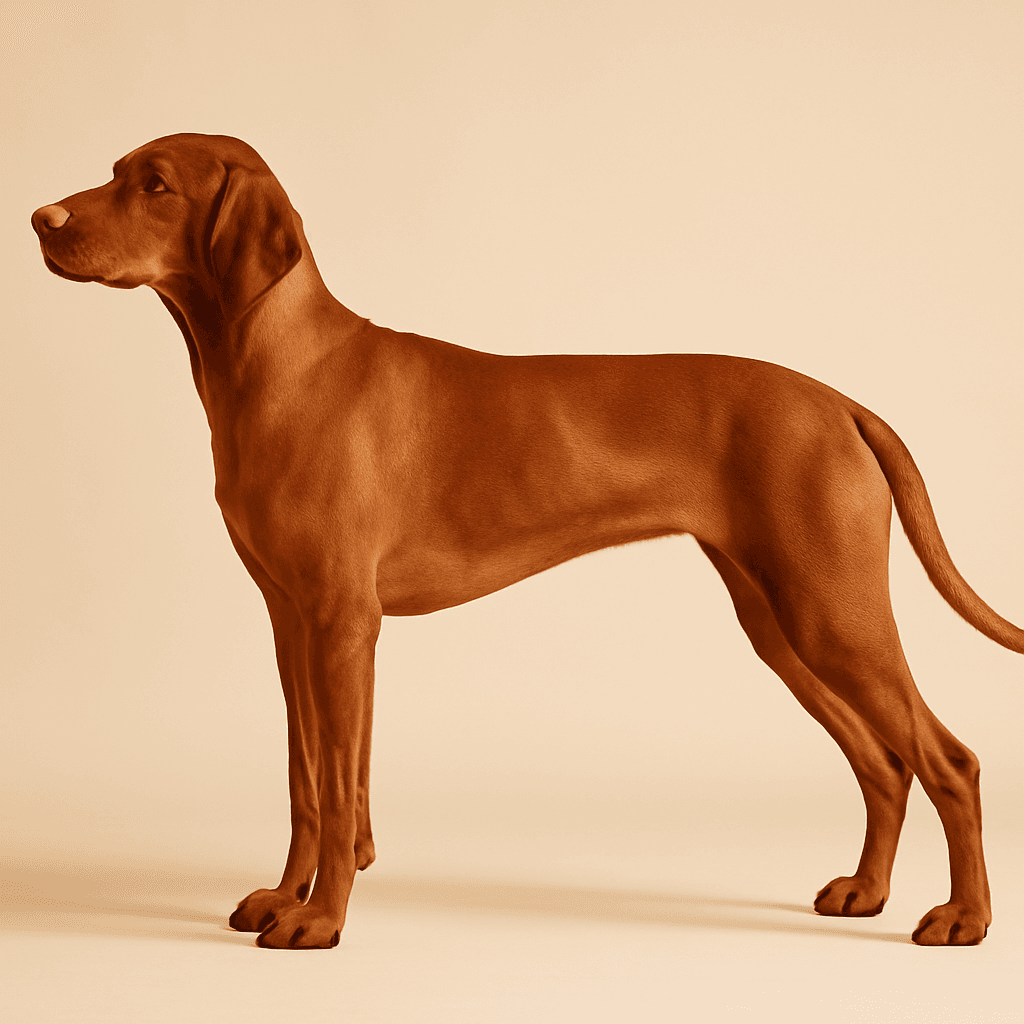
Hungarian Vizsla
Complete UK breed guide

Quick answer
The Hungarian Vizsla is a gentle, loyal gundog needing two hours of daily exercise and near-constant human company. It is highly prone to separation anxiety. It is one of the healthier large breeds but requires significant exercise and mental engagement.
Quick Facts
- Size
- Large
- Weight
- 20–30 kg
- Lifespan
- 12–15 years
- Breed Group
- Gundog
- Exercise
- 90–120 mins/day
- Activity Level
- very high
- Grooming
- Low
- Monthly Cost
- £120–£190/month
- Temperament
- —
- Good with Children
- Yes
- Good with Dogs
- Yes
- Good for First Timers
- No
- Suits Flats
- No
Breed Overview
The Hungarian Vizsla is a lean, athletic gundog from Hungary, registered by the Kennel Club in the Gundog Group. Bred as both a pointer and retriever to work closely alongside a single hunter, the Vizsla is defined by its close partnership with its person. This characteristic partnership instinct, combined with its athletic ability, gentle nature and striking golden rust coat, has made it one of the most popular gundogs in the UK.
The practical requirements are straightforward but significant. Vizslas need a minimum of two hours of vigorous exercise every day, including genuine off-lead running. They need near-constant human company: this is a breed that thrives when someone is home for most of the day and struggles when left alone regularly. These two requirements, taken together, define who the Vizsla suits. For active owners who are home regularly, it is one of the most rewarding medium-large breeds available. For those who cannot meet these needs, it is one of the most commonly rehomed.
Separation anxiety is the most widely reported challenge in the breed. Vizslas that are not trained to tolerate being alone from puppyhood can become severely anxious, destructive and vocal when left. Building independence gradually and positively from day one is the single most important management investment a new Vizsla owner can make.
Health-wise, the Vizsla compares favourably with many large breeds. Hip dysplasia occurs and should be tested for in both parents. Epilepsy appears in some lines. But the breed's overall health and 12 to 14 year lifespan make it one of the more robust large gundog options.
Purchase prices from KC-registered breeders typically range from £800 to £1,500. Monthly running costs of £130 to £230 are modest for a large breed. The Hungarian Vizsla Club provides guidance on responsible breeders and rescue services.
For owners who are active, present and willing to invest in the close partnership this breed seeks, the Vizsla is outstanding. Few breeds return affection, loyalty and working partnership in such generous measure.
The Hungarian Vizsla Club provides guidance on responsible breeders and a rescue service for dogs needing rehoming. For owners who are genuinely active, present and willing to invest in the close partnership this breed seeks, the Vizsla is outstanding. Match its energy, build its independence from puppyhood, and it returns affection and loyalty in generous measure. Few gundogs offer as complete a partnership as the Vizsla does to the right owner.
Temperament & Personality
Hungarian Vizslas are among the most gentle, affectionate and people-oriented of all gundog breeds. They form intense bonds with their owner or family and want to be physically close. They are known for leaning against, sitting on and generally being in contact with their people.
This closeness is one of the most endearing qualities of the breed and also its greatest management challenge. A Vizsla that has not been trained to tolerate being alone will be deeply distressed when left. Separation anxiety in the Vizsla is well-documented and is the most common reason for rescue.
They are sensitive dogs that read their owner's emotional state well and respond to it. Tension, anxiety or uncertainty in the owner tends to be mirrored in the dog. A calm, consistent household produces a settled Vizsla.
Their intelligence and trainability make them highly responsive. They are not stubborn or dominant dogs: they are eager to please and motivated to work with their person. This makes them genuinely enjoyable to train when the approach is positive.
They are good with other dogs and generally sociable. Their prey drive is present but manageable with appropriate socialisation and training.
Overall, the Vizsla is one of the most rewarding gundog companions for owners who match its needs: a dog that gives back in affection and loyalty far more than the exercise it requires.
Training
Vizslas are gentle, sensitive and highly trainable dogs. They respond extremely well to positive reinforcement and are ruined by harsh methods. Training a Vizsla is primarily about building a partnership rather than imposing control.
Four priorities for a new Vizsla owner:
- Separation tolerance. Build from day one. Crate training and gradual alone-time from puppyhood prevents the severe anxiety this breed is prone to. This is the single most important management investment.
- Exercise regime. Establish the daily routine of two or more hours of vigorous exercise early. Consistency is key.
- Recall. Train a reliable recall before extending off-lead freedom. Vizslas are generally responsive but prey drive should be assessed individually.
- Positive reward-based obedience. Sit, stay, down, come, leave it. Gundog training approaches suit the breed. Keep sessions varied and engaging: Vizslas are quick learners that tire of repetition.
Common mistakes: Punitive training methods. The Vizsla's sensitivity means harsh corrections cause anxiety and shutdown rather than compliance.
Exercise Needs
The Vizsla is a high-energy gundog that requires substantial exercise. This is the most important practical consideration before acquiring the breed.
Adult Vizslas: A minimum of two hours of vigorous exercise per day, including genuine off-lead running. Vizslas excel as running and cycling companions and thrive in gundog work, agility, tracking and canicross.
Mental stimulation: Critical. The Vizsla is an intelligent, working-bred dog that needs mental engagement alongside physical exercise. Gundog training, nosework, retrieve games and obedience training all engage the Vizsla's working instincts. A mentally engaged Vizsla is calmer and easier to manage.
Off-lead: Generally manageable off lead with proper recall training. Prey drive exists but is typically less intense than in sighthounds or terriers. Assess individually before trusting off lead near roads or livestock.
Consequences of under-exercise: Destructive behaviour, barking and the exacerbation of separation anxiety. Under-exercise and under-stimulation are the primary causes of Vizsla rehoming.
Cold sensitivity: Vizslas have a short, thin coat and feel cold acutely. A dog coat in cold or wet weather is appropriate, particularly for older dogs.
Health & Vet Costs
The Hungarian Vizsla is one of the healthier large breeds, with fewer widespread inherited conditions than many popular breeds of comparable size.
Hip Dysplasia is the primary orthopaedic concern. The KC/BVA Hip Scoring scheme assesses breeding dogs. Buyers should ask for hip scores on both parents. Ideally, both parents should score below the breed mean.
Epilepsy occurs in some Vizsla lines. Ask breeders specifically about seizure history in their lines. Epilepsy is manageable with daily medication but requires lifelong monitoring.
Hypothyroidism occurs in some individuals.
Seasonal Flank Alopecia causes cyclical hair loss on the flanks, typically in autumn and winter. It is primarily cosmetic and resolves with the change of season.
Eye conditions are monitored through the BVA/KC Eye Scheme.
Monthly insurance typically costs £35 to £70. Lifespan is 12 to 14 years.
Protect your Hungarian Vizsla with the right insurance
Vet costs are rising. Lifetime cover means long-term conditions stay covered for life -- not just 12 months.
Feeding & Nutrition
Vizslas are lean, athletic dogs with a moderate to high daily caloric requirement.
Daily feeding: Adult Vizslas typically need 250 to 380g of a good quality dry complete food per day, split into two meals. Working or very active dogs may need more.
Lean body condition: Vizslas should be lean: defined waist, ribs palpable without pressing, visible muscle tone. An overweight Vizsla is both over-fed and under-exercised. Do not fatten a Vizsla: their athletic build is their natural state.
Protein quality: A high-quality protein food suits the breed. Look for named meat as the primary ingredient.
Bloat awareness: Vizslas have a moderate bloat risk. Feed twice daily. Avoid intense exercise directly before or after meals.
Puppy feeding: Three to four times daily until 12 weeks, then three times until six months, then twice daily. Use a large-breed puppy food during the growth phase.
Feeding your Hungarian Vizsla
How much to feed, which food types suit this breed, and what to avoid.
Grooming & Care
The Hungarian Vizsla has a short, dense, smooth coat that is among the easiest to maintain of any gundog.
Brushing: Once weekly with a rubber grooming mitt. Vizslas shed moderately. Regular brushing reduces household hair.
Bathing: Every six to eight weeks or when dirty. The short coat dries quickly.
Ear care: Drop ears reduce airflow and predispose to infections. Check weekly. Dry ears after swimming. Clean as needed with a vet-recommended ear cleaner.
Nails: Clip every four to six weeks or as needed.
Dental care: Daily toothbrushing with dog-safe toothpaste.
Cold weather: A well-fitting dog coat is appropriate in cold or wet conditions given the breed's thin coat and limited body insulation.
Costs of Ownership
Purchase price: £800 to £1,500 from a KC-registered breeder.
Monthly insurance: £35 to £70 for comprehensive lifetime cover. The Vizsla is a relatively healthy breed, keeping premiums moderate.
Food: £35 to £60 per month for a good quality complete food for a medium to large, active dog.
Routine veterinary care: Annual vaccination and health check approximately £60 to £80.
Grooming: Minimal. Manageable at home.
Total estimated monthly cost: £130 to £230 when insurance, food and routine care are combined. The Vizsla is a relatively affordable large breed to own.
Is a Hungarian Vizsla Right for You?
Best suited to: Very active individuals and families; owners who work from home or have someone present most of the day; those who want a close, sensitive and loyal companion; runners, cyclists and active outdoor enthusiasts.
Can work with: First-time owners who research and prepare thoroughly; households with older children who can engage appropriately with an energetic dog.
Not ideal for: Owners who work full-time away from home; those who cannot commit to two hours of daily exercise; households with small pets as the Vizsla has a moderate to strong prey drive; owners wanting a calm, low-maintenance large breed.
Size and living situation: Vizslas are medium to large dogs (20 to 30kg) that ideally have garden access. They adapt to urban living only if exercise needs are fully met. Their thin coat and sensitive nature mean they are indoor dogs: they should not be left outdoors overnight.
Children and other pets: Generally excellent with children when properly socialised. Sociable with other dogs. Cats and small animals require careful introduction given the prey drive.
Alone time: This is the central management challenge. Vizslas are extremely people-oriented and among the breeds most commonly associated with separation anxiety. Building independence from puppyhood is essential.
Related Guides
Free newsletter
Get the weekly guide for UK dog owners
Breed spotlights, training tips and health advice delivered every week.