Nova Scotia Duck Tolling Retriever
Complete UK breed guide

Quick answer
The Nova Scotia Duck Tolling Retriever (Toller) is the smallest of the retriever breeds, developed in Nova Scotia to lure wildfowl by playful activity at the water's edge - a technique called tolling. Highly intelligent, energetic and trainable. Needs substantial exercise and mental stimulation. KC Gundog Group.
Quick Facts
- Size
- Medium
- Weight
- 17–23 kg
- Lifespan
- 12–14 years
- Breed Group
- Gundog
- Exercise
- 60–90 mins/day
- Activity Level
- High
- Grooming
- Moderate
- Monthly Cost
- £110–£170/month
- Temperament
- —
- Good with Children
- Yes
- Good with Dogs
- Yes
- Good for First Timers
- Yes
- Suits Flats
- No
Breed Overview
The Nova Scotia Duck Tolling Retriever, universally known as the Toller, is the smallest of the recognised retriever breeds and one of the most intelligent and versatile working gundogs in existence, developed over several centuries in the Little River district of Yarmouth County, Nova Scotia, Canada, to assist hunters by exploiting a natural hunting technique known as tolling. Tolling describes the behaviour of certain foxes and other predators that would play conspicuously at the water's edge, attracting curious wildfowl close enough to be shot - by training and selectively breeding dogs to replicate this playful, animated behaviour at the water's margin, hunters could lure birds within range before sending the same dog to retrieve the shot quarry. The breed was recognised by the Canadian Kennel Club in 1945 and has subsequently been recognised internationally. In the United Kingdom it is registered by the Kennel Club in the Gundog Group.
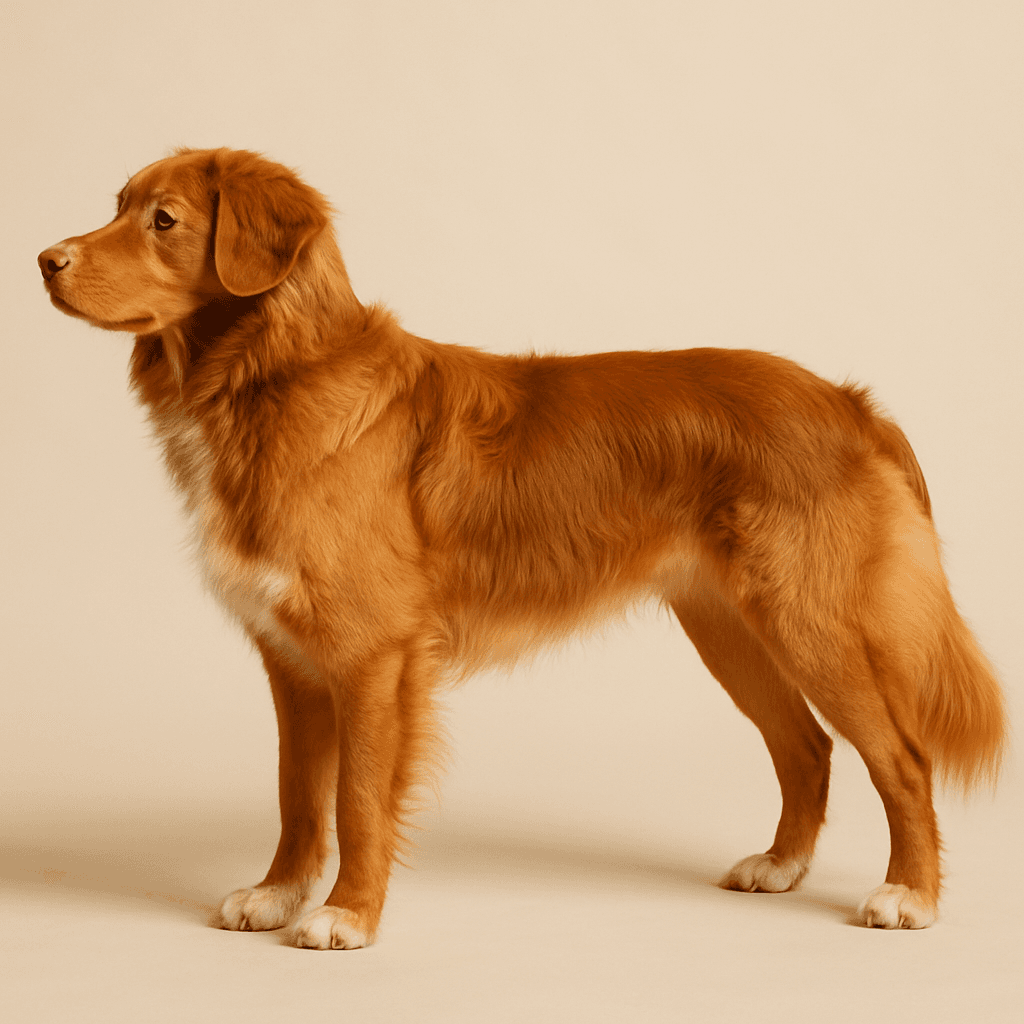
The Toller is a medium-sized, athletic and elegant retriever with a beautiful, dense, water-resistant double coat in shades of golden red to copper red, typically with white markings on the feet, chest, blaze and tail tip. The expression is alert and intelligent. The tail is heavily feathered and carried with a high curve when the dog is excited or working - the characteristic white tail tip acting as the visual lure during tolling activity. Adults typically stand 45 to 51 centimetres at the shoulder and weigh 17 to 23 kilograms.
The character is alert, energetic and intensely engaged - more demanding and intense in temperament than the more familiar Labrador or Golden Retriever, and considerably more suited to active working or sporting households than to a purely domestic companion role. The Toller is affectionate and devoted to its family, good with children and generally sociable with other dogs, but it has a working drive and energy level that requires genuine daily management through vigorous exercise and mental stimulation.
The breed is among the most trainable of all gundogs. It responds with exceptional enthusiasm to positive reward-based training and has excelled in competitive obedience, agility, field trials and nose work. The intelligence that makes it a pleasure to train also means that boredom is genuinely problematic - an under-stimulated Toller will find its own outlets, rarely to the owner's satisfaction.
Health considerations are important. Progressive Retinal Atrophy (prcd-PRA) requires DNA testing of both parents. Collie Eye Anomaly is documented. Hip Dysplasia testing is strongly recommended. Addison's Disease has a higher documented incidence in the breed than the general dog population and owners should be aware of the signs.
Purchase prices from KC-registered, health-tested breeders range from £1,200 to £2,500. Monthly running costs average £90 to £150. The Nova Scotia Duck Tolling Retriever Club UK is the primary resource for breed information, health testing requirements, responsible breeders and rescue contact.
Temperament & Personality
Alert, intelligent, energetic and deeply engaged with its handler. More intense in character than the Labrador or Golden Retriever. Affectionate and devoted to its family. Good with children and sociable with other dogs. The tolling behaviour - playful, exuberant activity - surfaces naturally in many contexts. Not a passive or low-key companion.
Training
Highly intelligent and exceptionally trainable - one of the most capable of all the retriever breeds in formal training contexts. Responds enthusiastically to positive reward-based methods. The breed excels in obedience, agility, field trials and nose work. Boredom produces restlessness and problem behaviour. Needs consistent mental challenge alongside physical exercise.
Exercise Needs
Needs at least 90 minutes of vigorous exercise daily, combining physical activity with mental challenge. The breed was developed for demanding fieldwork and has stamina to match. Swimming is natural and excellent exercise. Nose work, retrieving, agility and field training all engage the working instinct effectively.
Health & Vet Costs
Progressive Retinal Atrophy (prcd-PRA) is a significant hereditary condition in the Toller and DNA testing of both parents is mandatory for responsible breeding. Collie Eye Anomaly has been documented. Hip Dysplasia testing is strongly recommended. Addison's Disease (hypoadrenocorticism) has a higher incidence in the breed than the general dog population. The Nova Scotia Duck Tolling Retriever Club UK maintains health testing requirements.
Protect your Nova Scotia Duck Tolling Retriever with the right insurance
Vet costs are rising. Lifetime cover means long-term conditions stay covered for life -- not just 12 months.
Feeding & Nutrition
Feed a high-quality complete food for an active medium breed. The Toller is lean, athletic and energetic and should be fed to support activity level. Two meals daily. Monitor weight and adjust to workload. Fresh water always available.
Feeding your Nova Scotia Duck Tolling Retriever
How much to feed, which food types suit this breed, and what to avoid.
Grooming & Care
The medium-length, water-resistant double coat requires brushing two to three times weekly to prevent matting and remove debris. The feathering on the ears, legs, chest and tail requires particular attention. Shedding is significant seasonally. Professional grooming several times yearly is helpful. The breed is relatively self-cleaning after swimming.
Costs of Ownership
Purchase price from a KC-registered, health-tested breeder: £1,200 to £2,500. Monthly running costs: £90 to £150.
Is a Nova Scotia Duck Tolling Retriever Right for You?
Suits active families or individuals who can provide substantial daily exercise and mental stimulation. Good with children and generally sociable with other dogs. More intense and demanding than the other retriever breeds - prospective owners should research the breed's exercise and mental requirements carefully before purchasing.
Related Guides
Free newsletter
Get the weekly guide for UK dog owners
Breed spotlights, training tips and health advice delivered every week.