Pointer
Complete UK breed guide

Quick answer
The Pointer is a classic British gundog renowned for its characteristic pointing stance - freezing with one foreleg raised and nose extended toward game. Athletic, gentle and trainable. High exercise requirement. Affectionate family dog. Performs well in field sports and dog sports. KC Gundog Group.
Quick Facts
- Size
- Large
- Weight
- 20–30 kg
- Lifespan
- 12–14 years
- Breed Group
- Gundog
- Exercise
- 90–120 mins/day
- Activity Level
- High
- Grooming
- Low
- Monthly Cost
- £100–£160/month
- Temperament
- —
- Good with Children
- Yes
- Good with Dogs
- Yes
- Good for First Timers
- No
- Suits Flats
- No
Breed Overview
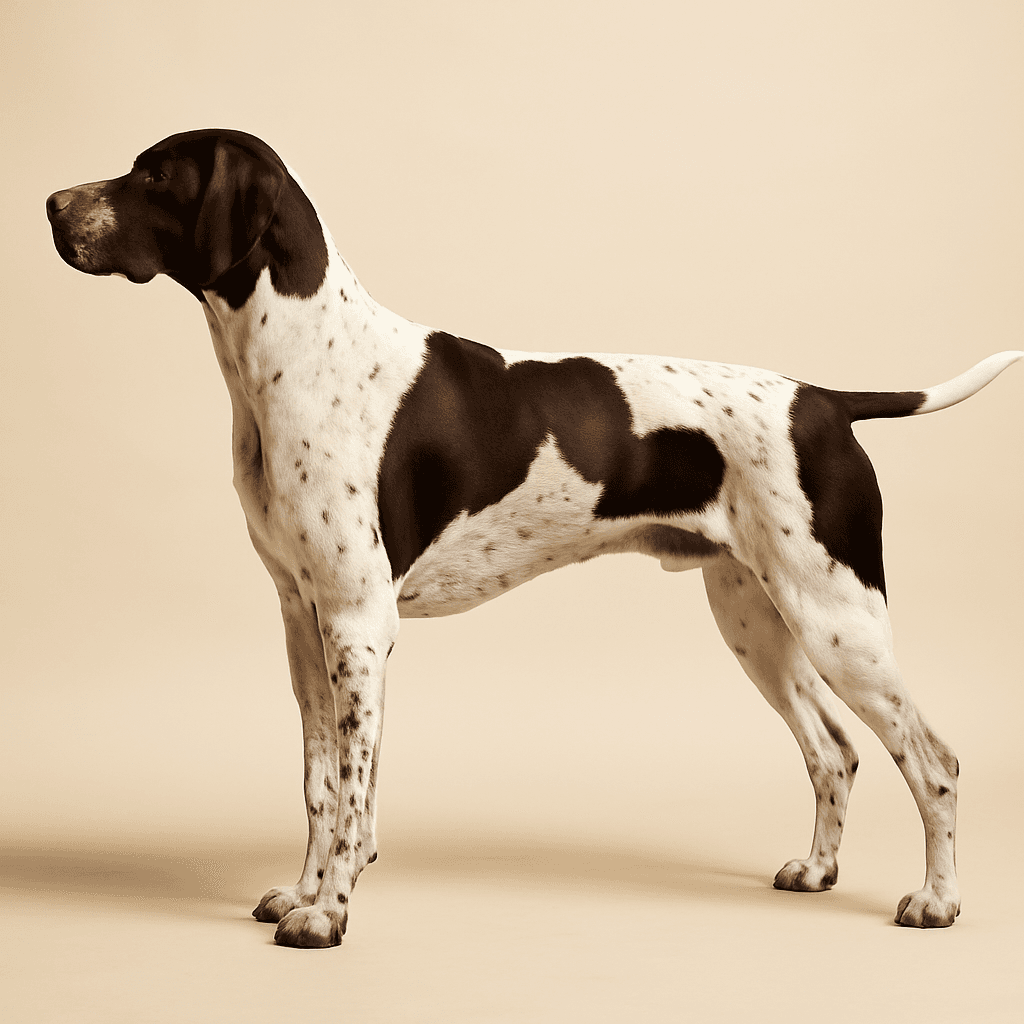
The Pointer is one of Britain's most elegant and iconic gundog breeds, a large, athletic and gracefully built dog developed in England from the seventeenth century onwards for the specific purpose of locating and indicating the position of game - particularly upland birds such as grouse, partridge and pheasant - by standing rigidly still with its nose extended toward the quarry and one foreleg raised in the characteristic pointing stance that defines the breed. The pointing instinct, present in varying degrees in several European breeds but brought to its highest expression in the English Pointer, allows a hunter or falconer to approach the indicated game with confidence before flushing it. The breed was developed from Spanish Pointer stock imported to Britain in the early eighteenth century, crossed with foxhound, greyhound and possibly other breeds to produce the faster, more elegant and keener-nosed English type. The Pointer is registered by the Kennel Club in the Gundog Group.
The Pointer is a large, lean, muscular and elegantly proportioned dog built for sustained athletic performance. The coat is short, hard and glossy in liver, lemon, black or orange, with or without white markings, and sits tightly over the powerful working body. The head is noble and well-defined. The tail is carried level during work. The overall impression is of speed, power and elegance combined. Adults typically stand 61 to 69 centimetres at the shoulder and weigh 20 to 34 kilograms.
The character is gentle, affectionate and even-tempered - a gundog that is as pleasant in the home as it is effective in the field. The Pointer is good with children, sociable with other dogs, devoted to its household and clean and well-mannered indoors when its exercise needs are met. It is not a demanding or difficult companion but it does require substantial daily exercise to remain settled and content. An under-exercised Pointer channels its considerable energy and hunting drive in ways that rarely please a domestic household.
The pointing instinct is hardwired and can manifest powerfully in the presence of birds even in a Pointer that has never been worked. Off-lead exercise where the dog can cover ground brings the pointing behaviour to the surface naturally and is excellent physical and mental exercise for the breed.
Training is generally a pleasure. The Pointer is intelligent, willing and responsive to positive methods, capable of considerable achievement in formal obedience, field trials and dog sports.
Health considerations include Hip Dysplasia testing of both parents. Progressive Retinal Atrophy and Entropion have been documented. Bloat is a risk given the deep chest.
Purchase prices from KC-registered, health-tested breeders range from £800 to £1,500. Monthly running costs average £90 to £150. The Pointer Club is the primary resource for breed information, health testing, responsible breeders and rescue contact.
Temperament & Personality
Gentle, affectionate and even-tempered. Good with children and sociable with other dogs. Devoted to its household. Active and energetic rather than boisterous or demanding. Alert outdoors - the hunting instinct sharpens when in the field or on interesting ground. A clean, elegant and pleasant companion for the active household.
Training
Intelligent, willing and very trainable - a classic gundog with the capacity for considerable achievement in field work, obedience and dog sports. Responds enthusiastically to positive reward-based methods. The pointing instinct is powerful and can manifest at any time in the presence of birds. Early socialisation and consistent training produce a reliably mannered companion.
Exercise Needs
Needs at least 90 minutes of vigorous exercise daily, combining physical activity with opportunities to work or range. The breed was developed for sustained fieldwork and has the stamina to match. Off-lead running in secure areas is important given the pointing instinct that can send the dog covering ground rapidly when scent is detected.
Health & Vet Costs
Hip Dysplasia testing of both parents is strongly recommended. Progressive Retinal Atrophy has been documented in the breed and eye testing is recommended. Entropion (inward-rolling eyelid) has been documented. Bloat is a risk in deep-chested breeds. The Pointer Club maintains health testing guidance.
Protect your Pointer with the right insurance
Vet costs are rising. Lifetime cover means long-term conditions stay covered for life -- not just 12 months.
Feeding & Nutrition
Feed a high-quality complete food for a large active breed. The Pointer is lean and athletic and should be fed to support actual activity level. Two meals daily. Monitor weight. Avoid feeding immediately before or after vigorous exercise to reduce bloat risk.
Feeding your Pointer
How much to feed, which food types suit this breed, and what to avoid.
Grooming & Care
The short, dense, glossy coat is minimal maintenance - a weekly wipe-down or brief brush is all that is required. The coat provides limited weather protection. Nails require regular trimming in a breed that may not wear them down naturally given the terrain on which it exercises.
Costs of Ownership
Purchase price from a KC-registered, health-tested breeder: £800 to £1,500. Monthly running costs: £90 to £150.
Is a Pointer Right for You?
Suits active families or individuals who can provide substantial daily exercise and a degree of sporting or working outlet for the breed's considerable energy and instincts. Good with children and sociable. Not suited to sedentary owners or small homes without outdoor access. Adapts well to family life when adequately exercised.
Related Guides
Free newsletter
Get the weekly guide for UK dog owners
Breed spotlights, training tips and health advice delivered every week.