Puggle
Complete UK breed guide

Quick answer
The Puggle is a cross between a Pug and a Beagle, typically producing a friendly, sociable and playful small to medium companion. The Beagle's muzzle can reduce but does not eliminate brachycephalic risk from the Pug parent. Health testing of both parents essential. Not KC registered.
Quick Facts
- Size
- Small
- Weight
- 7–14 kg
- Lifespan
- 10–15 years
- Exercise
- 30–45 mins/day
- Activity Level
- Moderate
- Grooming
- Low
- Monthly Cost
- £90–£150/month
- Temperament
- —
- Good with Children
- Yes
- Good with Dogs
- Yes
- Good for First Timers
- Yes
- Suits Flats
- Yes
Breed Overview
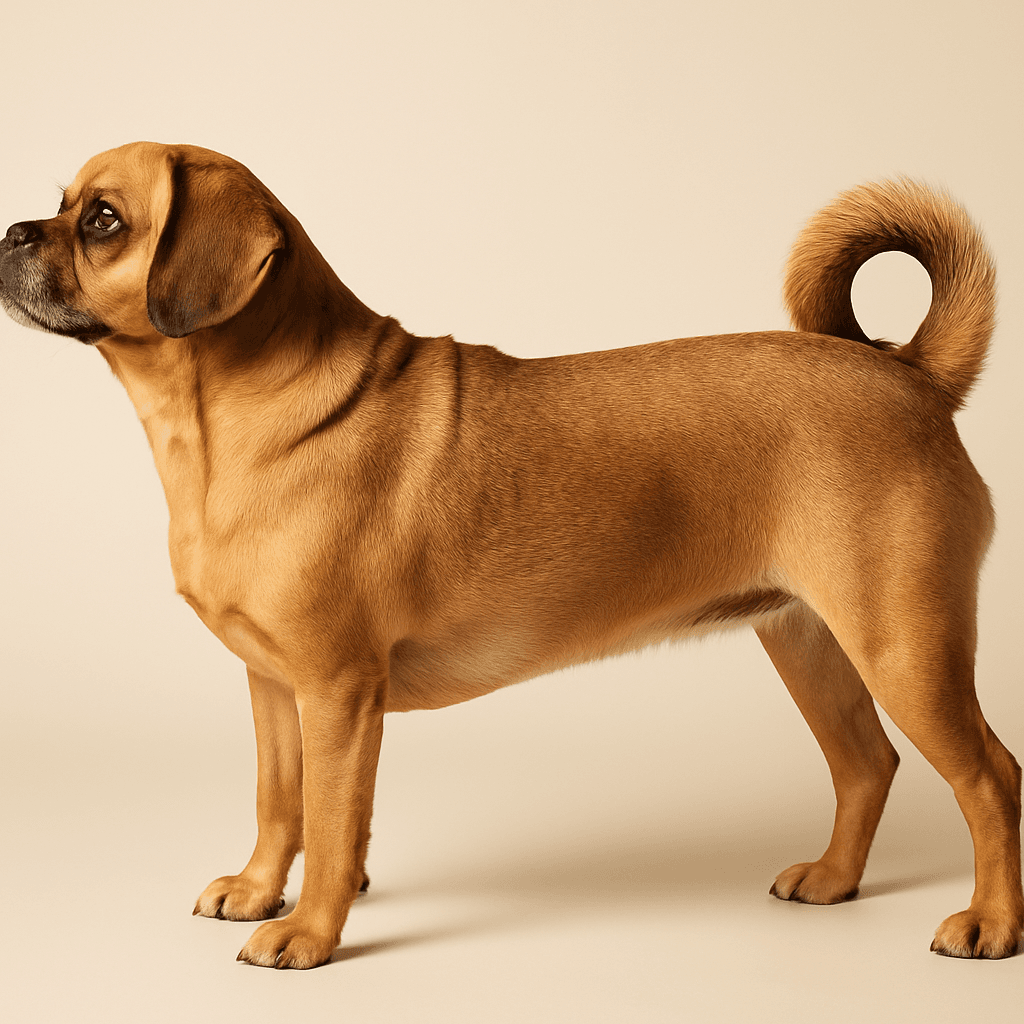
The Puggle is a crossbreed produced from a Pug and a Beagle, two breeds with very different characters and conformation, combining the Pug's affectionate, sociable and good-natured companion personality with the Beagle's curiosity, scenting ability and slightly more active and athletic build to produce a small to medium companion that has been notably popular, particularly in the United States where the cross became widely fashionable in the early 2000s. The cross is not recognised by the Kennel Club and has no formal breed standard, breed club or mandatory health testing programme.
The Pug is an ancient brachycephalic toy breed of Chinese origin with a flat face, compact and cobby body, deeply devoted character and well-documented respiratory and health concerns associated with its extreme conformation. The Beagle is a medium-sized scent hound of ancient British origin used for rabbit and hare hunting, with a merry, sociable character, an extraordinary nose and a more athletic and functional conformation. The combination produces a variable result but typically a dog of more moderate conformation than the purebred Pug, with a somewhat extended muzzle, a compact but less cobby build and a friendly, sociable character.
The critical health consideration with this cross is the extent to which brachycephalic features are inherited from the Pug parent. In many Puggles the Beagle muzzle provides a genuine improvement in respiratory function compared to a purebred Pug. However, this reduction in severity is not guaranteed and is highly variable between individuals. Some Puggles retain a significantly flat face and the associated breathing implications. BOAS grading of the Pug parent is essential, and prospective buyers should observe any puppy carefully for signs of breathing difficulty before committing to purchase.
The Beagle's hunting instinct introduces the characteristic hound nose and the inclination to follow interesting scents with considerable determination. This makes reliable recall more challenging than with many companion breeds and means that off-lead exercise in unsecured areas carries genuine risk. The Puggle tends to be more active and inquisitive than a purebred Pug, which can be a positive for owners wanting a small companion with more energy and engagement.
Both Pugs and Beagles are strongly food-motivated and prone to weight gain. Portion control throughout life is important.
Purchase prices range from £500 to £1,000. Monthly running costs average £65 to £110. Pug rescue, Beagle rescue and general rescue organisations are the most useful contacts for those considering rehoming.
Temperament & Personality
Friendly, sociable, playful and good-natured. Good with children and other dogs. The combination of Pug affability and Beagle curiosity produces an engaging companion. Can be vocal - the Beagle's inclination to bay can surface. Active and curious. Generally easy-going and adaptable.
Training
More trainable than a purebred Pug given the Beagle intelligence and scenting instinct. Responds well to positive reinforcement, particularly food reward given both parents' food motivation. The Beagle hound independence can make recall and sustained attention challenging. Short, engaging training sessions work best.
Exercise Needs
Moderate exercise needs - 45 to 60 minutes daily. More active than a purebred Pug given the Beagle influence. The Beagle nose makes unsecured off-lead exercise risky - the dog may follow an interesting scent with considerable determination. Exercise must be moderated in hot weather given potential flat-face traits from the Pug parent.
Health & Vet Costs
Brachycephalic Obstructive Airway Syndrome from the Pug parent is the primary concern. The extended Beagle muzzle can reduce the severity of brachycephalic features but not eliminate them. Any flat-faced features must be carefully assessed before purchase. BOAS grading of the Pug parent is essential. Hip Dysplasia and eye conditions are documented in both parent breeds.
Protect your Puggle with the right insurance
Vet costs are rising. Lifetime cover means long-term conditions stay covered for life -- not just 12 months.
Feeding & Nutrition
Feed a high-quality complete food for a small to medium breed. Both Pugs and Beagles are prone to obesity - portion control and weight monitoring are essential throughout the dog's life. Two meals daily. Avoid overfeeding.
Feeding your Puggle
How much to feed, which food types suit this breed, and what to avoid.
Grooming & Care
The short, smooth coat requires minimal maintenance - a weekly brush is all that is needed. Facial skin folds, if present given the Pug influence, require regular cleaning to prevent soreness. Ears should be checked regularly given the Beagle's pendulous ear heritage.
Costs of Ownership
Purchase price: £500 to £1,000. No formal health testing scheme exists for the cross. Monthly running costs: £65 to £110.
Is a Puggle Right for You?
Suits families and individuals seeking a sociable, friendly companion. Good with children and other dogs. More active than a purebred Pug given the Beagle influence. The hunting instinct and hound nose from the Beagle parent require management. Adaptable to a range of living situations.
Related Guides
Free newsletter
Get the weekly guide for UK dog owners
Breed spotlights, training tips and health advice delivered every week.