Retriever (Chesapeake Bay)
Complete UK breed guide
Quick answer
The Chesapeake Bay Retriever is a powerful American retriever developed to work in the icy waters of Chesapeake Bay, with a distinctive oily, wavy coat providing exceptional waterproofing. Tenacious, loyal and highly capable. More independent and strong-willed than the Labrador or Golden. KC Gundog Group.
Quick Facts
- Size
- Large
- Weight
- 25–36 kg
- Lifespan
- 10–12 years
- Breed Group
- Gundog
- Exercise
- 90–120 mins/day
- Activity Level
- High
- Grooming
- Moderate
- Monthly Cost
- £130–£200/month
- Temperament
- —
- Good with Children
- Yes
- Good with Dogs
- Yes
- Good for First Timers
- No
- Suits Flats
- No
Breed Overview
The Chesapeake Bay Retriever is a powerful, athletic and tenacious American gundog breed developed in the nineteenth century along the shores of Chesapeake Bay on the mid-Atlantic coast of the United States, specifically to retrieve waterfowl - principally ducks and geese - from the icy, rough and demanding waters of the Bay under challenging hunting conditions that would defeat less robust breeds. The development of the Chesapeake Bay Retriever involved local dogs crossed with dogs rescued from a shipwrecked English brig in 1807 - two Newfoundland-type dogs named Sailor and Canton - and subsequently with various local retriever and hound types to produce a dog of extraordinary waterproof coat, powerful physique and tenacious working character ideally suited to the demanding conditions of the Bay. The breed is the state dog of Maryland and is registered by the Kennel Club in the Gundog Group.
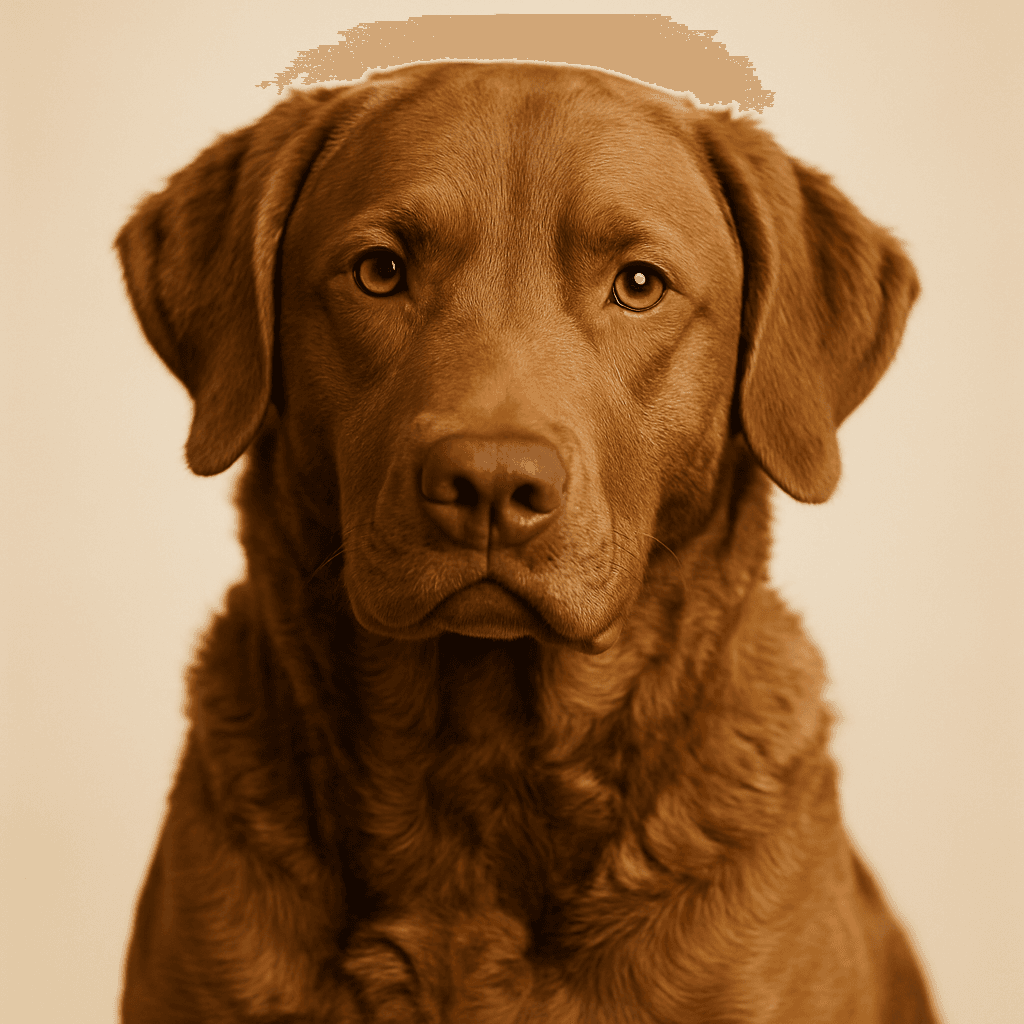
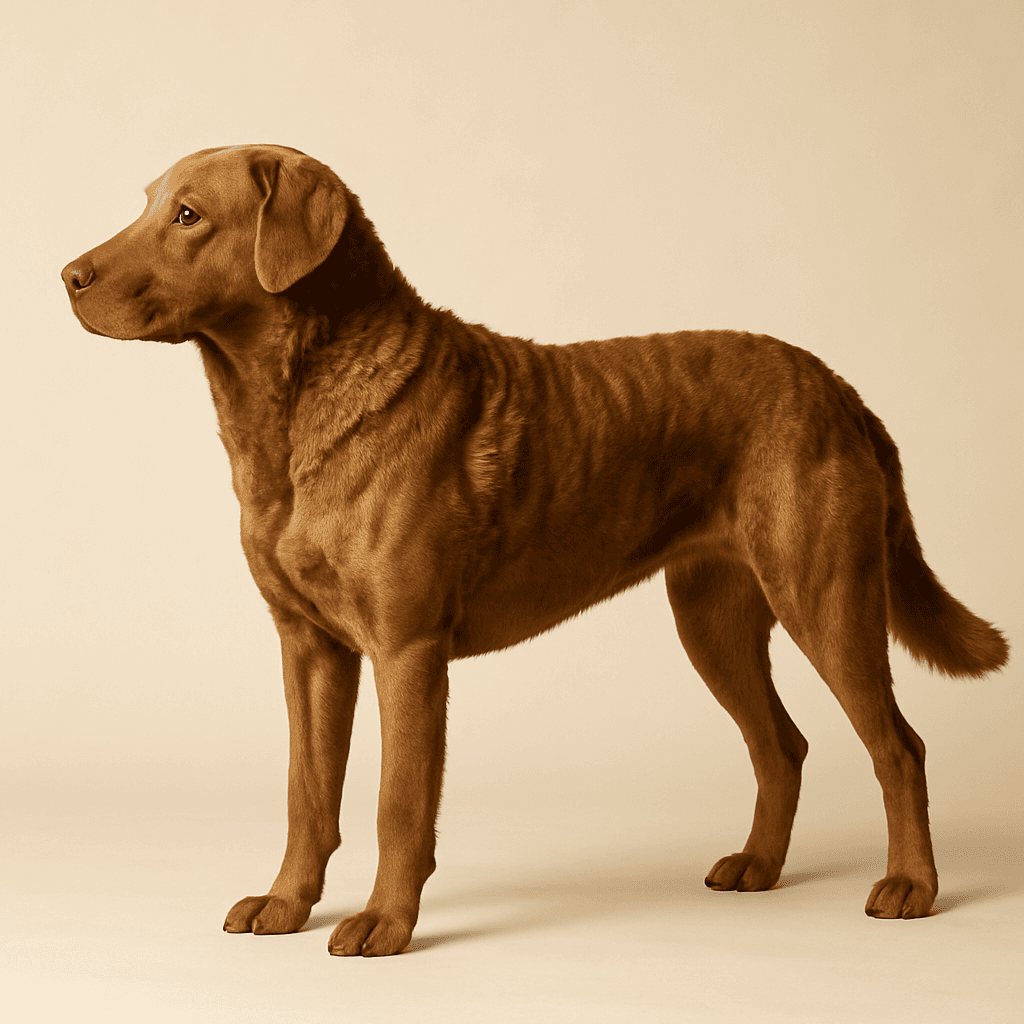
The Chesapeake Bay Retriever is a large, powerfully built and muscular dog with one of the most distinctive coats in the retriever family. The coat is short, wavy and dense, with a thick, woolly, oil-producing undercoat that gives the outer coat its characteristic oily feel and provides exceptional waterproofing and insulation during sustained water work. The colour ranges from dark brown to sedge (straw or deadgrass colour), specifically designed to blend with the waterfowl hunting environment. Adults typically stand 53 to 66 centimetres at the shoulder and weigh 25 to 36 kilograms.
The character is loyal, tenacious and deeply devoted to its own family, but it differs notably from the Labrador Retriever or Golden Retriever in its temperament and approach to training. The Chesapeake Bay Retriever is more independent, more assertive and more self-reliant - a working dog that was developed to make decisions in challenging field conditions without constant handler guidance. It can be reserved or selective with strangers rather than instantly sociable, has a protective instinct that surfaces with its own household, and requires confident, experienced handling from an early age to develop into a reliable companion.
Training rewards consistent positive reinforcement combined with clear, early-established boundaries. The breed responds well to capable, patient handling and is highly capable in the field, in obedience and in dog sports when properly trained. It will, however, test unclear leadership and an inexperienced owner may find the assertive character challenging.
Health considerations include Hip and Elbow Dysplasia testing. Progressive Retinal Atrophy and Exercise-Induced Collapse (EIC) DNA testing of parents are recommended.
Purchase prices from KC-registered, health-tested breeders range from £800 to £1,800. Monthly running costs average £90 to £160. The Chesapeake Bay Retriever Club of Great Britain is the primary resource for breed information, health testing requirements, responsible breeders and rescue contact.
Temperament & Personality
Tenacious, loyal and deeply devoted to its own family. Affectionate with those it trusts but not typically as instantly sociable with strangers as the Labrador. Independent and confident. Protective instinct can surface. An excellent working and companion dog for the right owner - demanding but deeply rewarding.
Training
Highly intelligent and capable but more independent and strong-willed than many retriever breeds. Requires consistent, confident handling and positive reinforcement from puppyhood. Can be assertive and will test boundaries if leadership is unclear. Rewards patient, experienced training with considerable capability and loyalty.
Exercise Needs
Needs at least 90 minutes of vigorous daily exercise. Swimming is natural and excellent exercise - the breed was developed for sustained water retrieval work. The working background produces real stamina and drive that must be met with adequate physical and mental challenge.
Health & Vet Costs
Hip and Elbow Dysplasia testing of both parents is strongly recommended. Progressive Retinal Atrophy has been documented and DNA testing is recommended. Exercise-Induced Collapse (EIC) is documented in retriever breeds and DNA testing of parents is recommended. The Chesapeake Bay Retriever Club of Great Britain maintains health testing requirements.
Protect your Retriever (Chesapeake Bay) with the right insurance
Vet costs are rising. Lifetime cover means long-term conditions stay covered for life -- not just 12 months.
Feeding & Nutrition
Feed a high-quality complete food for a large active breed. Two meals daily to reduce bloat risk. Monitor weight. The oily coat should not be disrupted by excessive bathing or supplements that alter coat condition.
Feeding your Retriever (Chesapeake Bay)
How much to feed, which food types suit this breed, and what to avoid.
Grooming & Care
The distinctive oily, wavy double coat provides exceptional waterproofing and insulation but should not be bathed frequently as this strips the natural oils. Brushing twice weekly is sufficient. The coat repels mud and water effectively. Nails require regular trimming.
Costs of Ownership
Purchase price from a KC-registered, health-tested breeder: £800 to £1,800. Monthly running costs: £90 to £160.
Is a Retriever (Chesapeake Bay) Right for You?
Suits active, experienced owners who appreciate a working retriever character with more independence than the Labrador or Golden. Good with children in a family that understands the breed. Confident, consistent handling from an early age is important. Strong-willed and assertive - requires an owner who commands respect through consistency rather than force.
Related Guides
Free newsletter
Get the weekly guide for UK dog owners
Breed spotlights, training tips and health advice delivered every week.