Russian Black Terrier
Complete UK breed guide
Quick answer
The Russian Black Terrier (Chornyi Terrier) is a large, powerfully built Soviet-era working breed developed by the Red Army in the late 1940s from crosses between Giant Schnauzers, Rottweilers and Airedale Terriers. Confident, loyal and highly trainable. Requires experienced handling. KC Working Group.
Quick Facts
- Size
- Large
- Weight
- 36–65 kg
- Lifespan
- 10–12 years
- Breed Group
- Working
- Exercise
- 75–90 mins/day
- Activity Level
- High
- Grooming
- High
- Monthly Cost
- £150–£240/month
- Temperament
- —
- Good with Children
- Yes
- Good with Dogs
- Yes
- Good for First Timers
- No
- Suits Flats
- No
Breed Overview
The Russian Black Terrier, known in Russia as the Chornyi Terrier (Black Terrier), is a large, powerfully built and impressive working breed with a relatively brief but deliberate and well-documented history - it was created by Soviet military scientists and breeders at the Red Star Kennel in Moscow in the late 1940s and early 1950s as a purpose-built military and service dog for use by the Soviet army and security services in the demanding conditions of the Soviet Union, including its extreme cold, vast territory and the specific requirements of military patrol and guard work. The breed was created from a carefully designed programme of crosses between Giant Schnauzers, Rottweilers, Airedale Terriers and other breeds, combining the Giant Schnauzer's intelligence and trainability, the Rottweiler's power and guard instinct, and the Airedale's weather resistance and terrier versatility. The breed was kept within the military establishment and unavailable to civilian ownership in the Soviet Union until 1957. The Russian Black Terrier is registered by the Kennel Club in the Working Group.
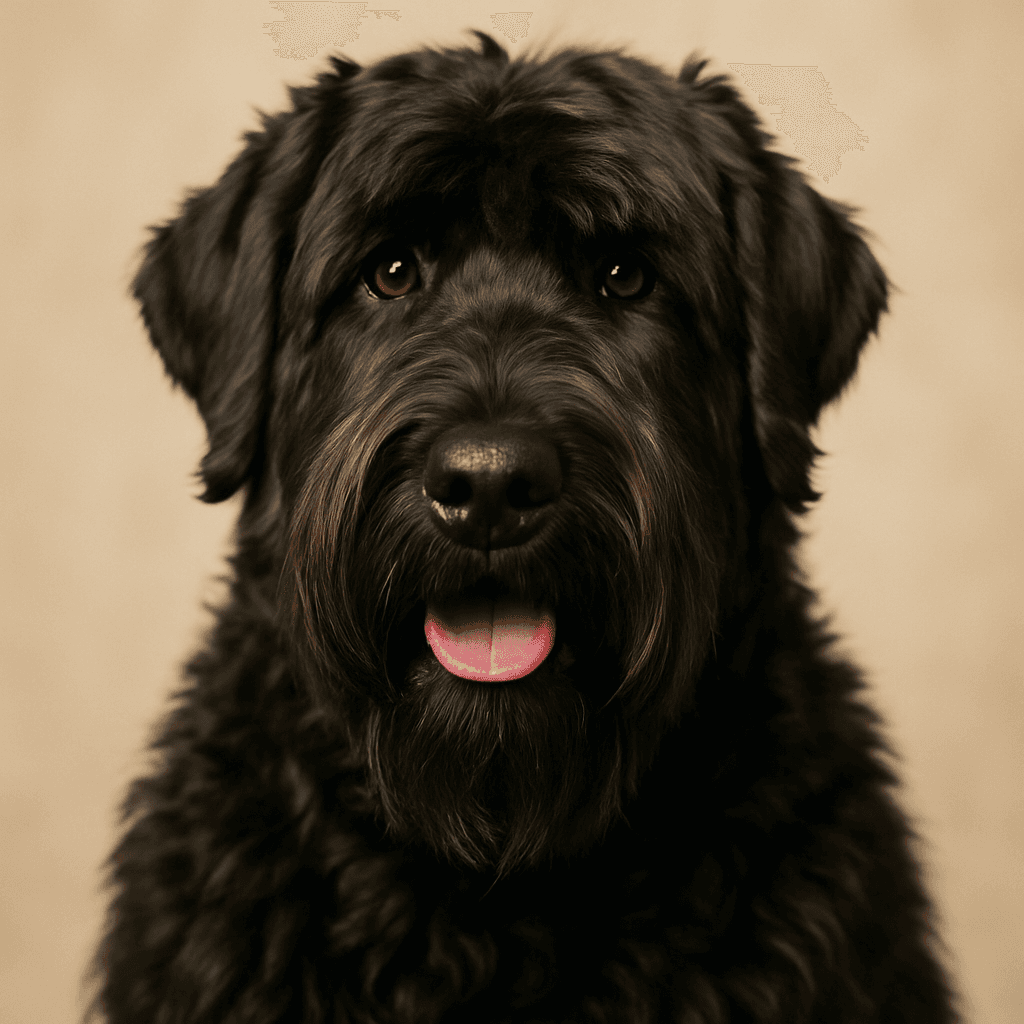
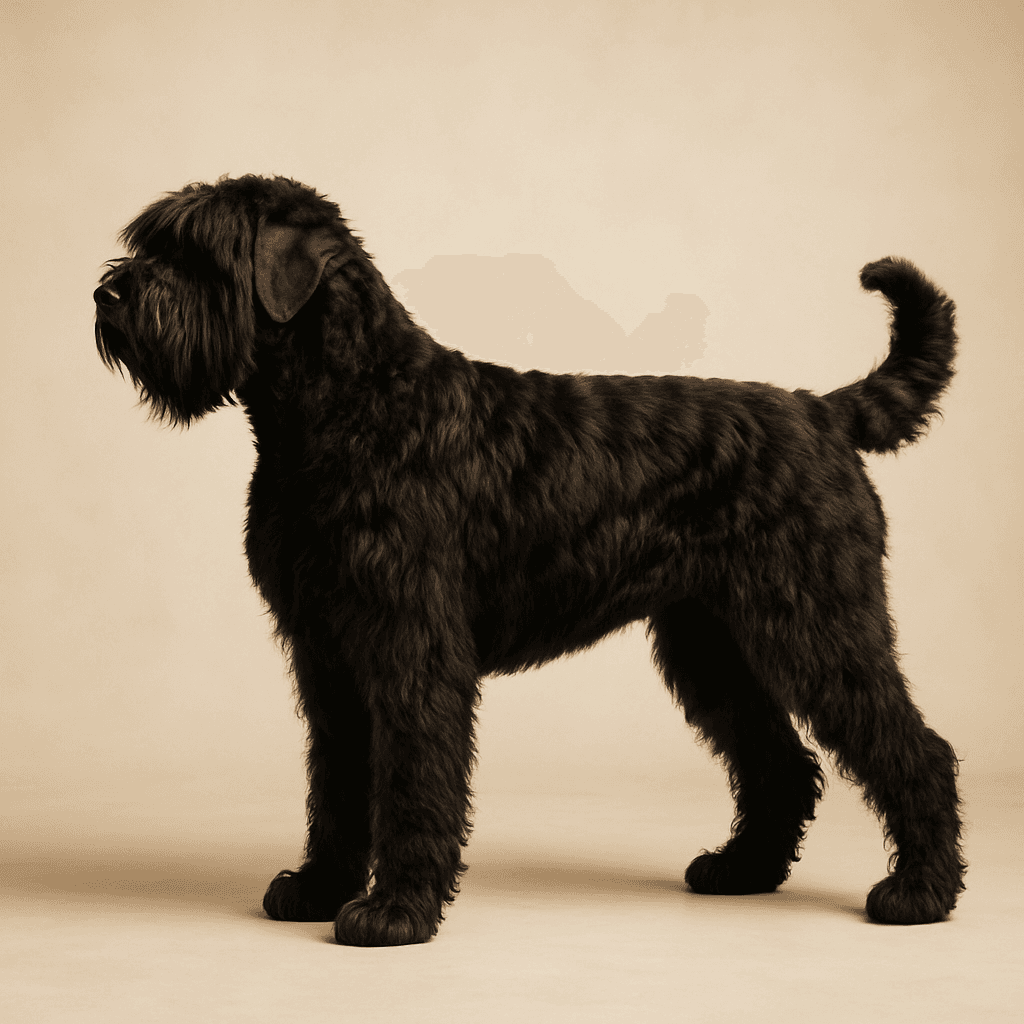
The Russian Black Terrier is a very large, strongly built and imposing dog with a thick, wiry and slightly wavy black double coat, a characteristic full beard and moustache, and the powerful, capable bearing of a serious working dog. The coat is weather-resistant and provides insulation against extreme cold. Adults typically stand 64 to 74 centimetres at the shoulder and weigh 36 to 65 kilograms - substantial even by large breed standards.
The character is confident, calm and deeply loyal to its own family - the character of a dog bred specifically for reliability, trainability and guardian instinct under demanding conditions. The Russian Black Terrier is good with children within its own household when raised from puppyhood with appropriate socialisation, but its size, strength and natural protectiveness make it a breed that requires and deserves experienced, confident ownership. It is not aggressive by nature but it is a serious working dog with a genuine guardian instinct and the physical capability to match.
Training is highly rewarding for owners equipped to handle the breed. The Russian Black Terrier is among the most capable and intelligent of large working breeds, excelling in obedience, tracking, protection work and dog sports when given consistent, positive and experienced training from an early age. Early and thorough socialisation is essential.
Health considerations include Hip and Elbow Dysplasia testing. Hyperuricosuria DNA testing of parents is recommended. Bloat is a risk in large, deep-chested breeds.
Purchase prices from KC-registered, health-tested breeders range from £1,200 to £2,500. Monthly running costs average £110 to £190. The Black Russian Terrier Club of Great Britain is the primary resource for breed information, health testing requirements, responsible breeders and rescue contact.
Temperament & Personality
Confident, loyal and deeply devoted to its own family. Calm and self-possessed rather than reactive. Naturally watchful and protective - a classic guardian working dog character. Good with children in its own household when raised correctly. Reserved with strangers. An impressive, capable and loyal working companion for experienced owners.
Training
Highly intelligent and very trainable - one of the most capable of all large working breeds. Responds well to positive, consistent training and excels in obedience, tracking and protection work. The large size and working drive require confident handling. Early socialisation is essential. Rewards investment in training with exceptional capability and loyalty.
Exercise Needs
Needs at least 60 to 90 minutes of vigorous daily exercise. The working breed background produces a dog that benefits from purposeful activity and mental challenge alongside physical exercise. Training, protection sports, tracking and obedience all suit the breed well.
Health & Vet Costs
Hip and Elbow Dysplasia testing of both parents is strongly recommended. Progressive Retinal Atrophy has been documented. Hyperuricosuria has been documented and DNA testing of parents is recommended. Bloat is a risk in large, deep-chested breeds. The Black Russian Terrier Club of Great Britain maintains health testing guidance.
Protect your Russian Black Terrier with the right insurance
Vet costs are rising. Lifetime cover means long-term conditions stay covered for life -- not just 12 months.
Feeding & Nutrition
Feed a high-quality complete food for a large active breed. Large breed puppy food is important during growth to manage bone development. Two meals daily. Monitor weight.
Feeding your Russian Black Terrier
How much to feed, which food types suit this breed, and what to avoid.
Grooming & Care
The thick, wiry double coat requires brushing twice weekly to prevent matting. The beard and facial furnishings collect food and water and require daily attention. Professional grooming every 8 to 10 weeks to maintain coat length and condition. Hand-stripping can be used to maintain the correct wiry texture.
Costs of Ownership
Purchase price from a KC-registered, health-tested breeder: £1,200 to £2,500. Monthly running costs: £110 to £190.
Is a Russian Black Terrier Right for You?
Suits experienced owners with a confident, consistent approach to training large working breeds. Good with children within its own family when socialised from puppyhood. The working dog character and large size make it unsuitable for inexperienced owners. Requires substantial exercise and mental engagement.
Related Guides
Free newsletter
Get the weekly guide for UK dog owners
Breed spotlights, training tips and health advice delivered every week.