Russian Toy
Complete UK breed guide

Quick answer
The Russian Toy (Russkiy Toy) is a tiny, elegant Russian companion breed in smooth and long-coated varieties, one of the world's smallest dogs. Alert, lively and deeply devoted. Fragile - requires careful handling. Health testing of parents essential. KC Toy Group.
Quick Facts
- Size
- Small
- Weight
- 1–3 kg
- Lifespan
- 10–12 years
- Breed Group
- Toy
- Exercise
- 20–30 mins/day
- Activity Level
- Moderate
- Grooming
- Moderate
- Monthly Cost
- £80–£130/month
- Temperament
- —
- Good with Children
- No
- Good with Dogs
- Yes
- Good for First Timers
- Yes
- Suits Flats
- Yes
Breed Overview
The Russian Toy, known in Russia as the Russkiy Toy, is one of the world's smallest dog breeds, a tiny, elegant and spirited companion developed in Russia over several centuries as an aristocratic lapdog and companion, achieving considerable popularity in the Russian imperial court before the Revolution of 1917 nearly exterminated the breed as a symbol of the old aristocratic order. The breed survived in small numbers within Russia but was essentially unknown outside the country until the end of the Soviet era, when it was gradually exported to other European countries and eventually received international recognition from the FCI and subsequently registration with the Kennel Club in the Toy Group. The Russian Toy comes in two coat varieties - the smooth-coated (gladkosherstny) and the long-coated (dlinnoshresty) - both of which occur in the same litters.
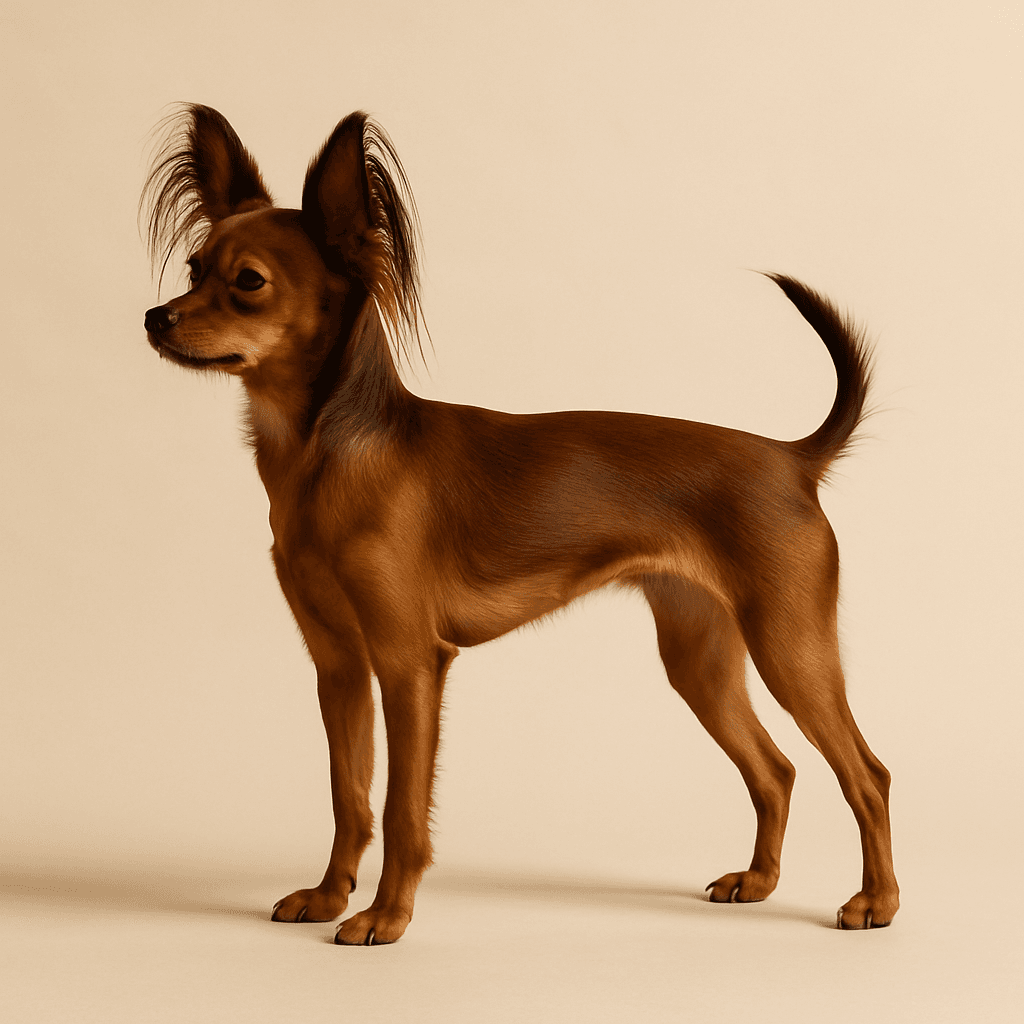
The Russian Toy is a very small, lightly built and graceful dog of considerable elegance. The smooth variety has a short, close coat; the long variety has a flat, silky coat with distinctive fringing on the long, mobile ears and light feathering on the back of the legs and tail. Both varieties come in black and tan, brown and tan, blue and tan, sable, or red in various shades. The large, expressive eyes and large, upright ears give the face a bright, alert and very characterful expression. Adults typically stand 20 to 28 centimetres at the shoulder and weigh 1 to 3 kilograms - genuinely tiny.
The character is lively, alert and deeply devoted to its own person or household - a classic small companion breed with a spirited personality and considerable personal attachment to its people. The Russian Toy forms very close bonds with its household, is active and playful for its size, and carries the alert, watchful quality typical of the toy breeds developed as companions and small guards for aristocratic households. It can be reserved with strangers and this tendency is managed most effectively through early and thorough socialisation.
The very small size is both part of the breed's appeal and its primary management challenge. The Russian Toy is genuinely fragile and requires a living environment where the risk of accidental injury from rough play, dropping or clumsy handling is actively managed. Harnesses rather than collars are standard management in all very small dogs.
Health considerations include Patellar Luxation, Leg Perthes Disease and dental disease. Hypoglycaemia is a management concern in very small individuals.
Purchase prices from KC-registered breeders range from £1,000 to £2,500. Monthly running costs average £50 to £90. The KC and Russian breed clubs are the primary resources for breed information, health testing guidance, responsible breeders and rescue contact.
Temperament & Personality
Lively, alert, devoted and affectionate. Deeply bonded to its own person. Can be reserved with strangers - a watchful quality typical of Russian toy breeds. Active for its size. Playful and engaging. Forms a very close bond with its household. A spirited and characterful tiny companion.
Training
Alert, quick-minded and responsive to positive reinforcement. More trainable than the diminutive size might suggest. Can be sensitive and responds poorly to harsh methods. Early socialisation is important given the breed's tendency to be cautious with strangers. Gentle, consistent training from puppyhood produces a well-mannered and engaging companion.
Exercise Needs
Low to moderate exercise needs - 20 to 30 minutes daily is sufficient. The breed is lively and energetic for its size but the very small body means exercise should be moderate. Mental stimulation through training and play is important. Harnesses rather than collars are recommended given the fragile neck.
Health & Vet Costs
Patellar Luxation is a primary concern in very small breeds and assessment of parents is strongly recommended. Leg Perthes Disease has been documented. Dental disease is a management concern in very small breeds with crowded dentition. Fragility means injury risk is a significant practical welfare consideration. The KC and breed clubs maintain health testing guidance.
Protect your Russian Toy with the right insurance
Vet costs are rising. Lifetime cover means long-term conditions stay covered for life -- not just 12 months.
Feeding & Nutrition
Feed a high-quality complete food formulated for a very small or toy breed. Dental health is a critical management concern in very small breeds. Hypoglycaemia is a risk in very small individuals, particularly as puppies. Two small meals daily.
Feeding your Russian Toy
How much to feed, which food types suit this breed, and what to avoid.
Grooming & Care
The smooth variety requires minimal grooming - a weekly wipe-down. The long-coated variety has distinctive fringing on the ears and feathering on the legs requiring brushing two to three times weekly to prevent matting. Both varieties are relatively low-maintenance for a toy breed.
Costs of Ownership
Purchase price from a KC-registered breeder: £1,000 to £2,500. The breed is relatively rare in the UK. Monthly running costs: £50 to £90.
Is a Russian Toy Right for You?
Suits calm, experienced households and owners who appreciate a very small, alert and devoted companion. Fragile given the very small size - not suited to households with very young children or boisterous environments. Adaptable to smaller living spaces. Devoted and engaging for the right owner.
Related Guides
Free newsletter
Get the weekly guide for UK dog owners
Breed spotlights, training tips and health advice delivered every week.