Saint Bernard
Complete UK breed guide
Quick answer
The Saint Bernard is one of the world's most recognisable giant breeds, developed by the monks of the Great St Bernard Hospice in the Swiss Alps as a mountain rescue dog. Gentle, patient and devoted. Significant drool and large food requirements. Hip testing essential. KC Working Group.
Quick Facts
- Size
- Giant
- Weight
- 64–120 kg
- Lifespan
- 8–10 years
- Breed Group
- Working
- Exercise
- 60–75 mins/day
- Activity Level
- Moderate
- Grooming
- High
- Monthly Cost
- £200–£340/month
- Temperament
- —
- Good with Children
- Yes
- Good with Dogs
- Yes
- Good for First Timers
- No
- Suits Flats
- No
Breed Overview
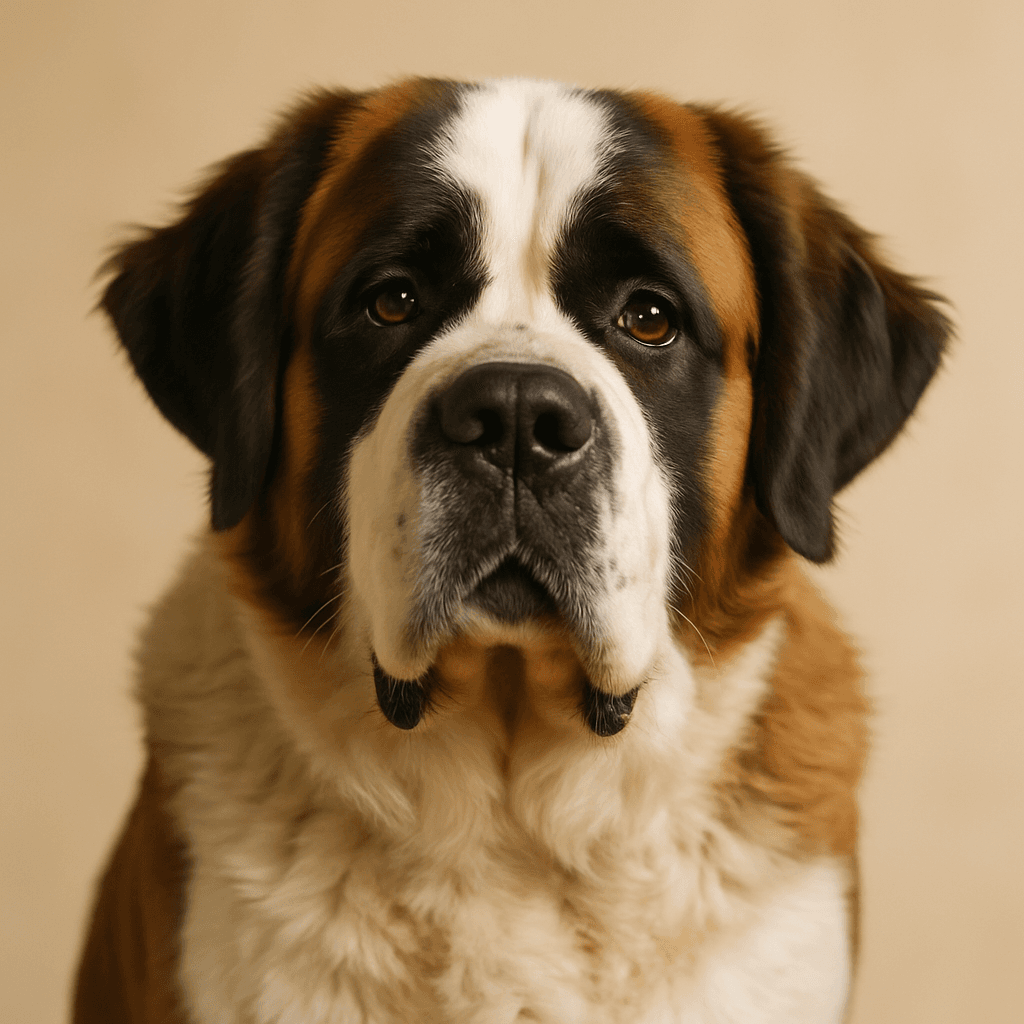
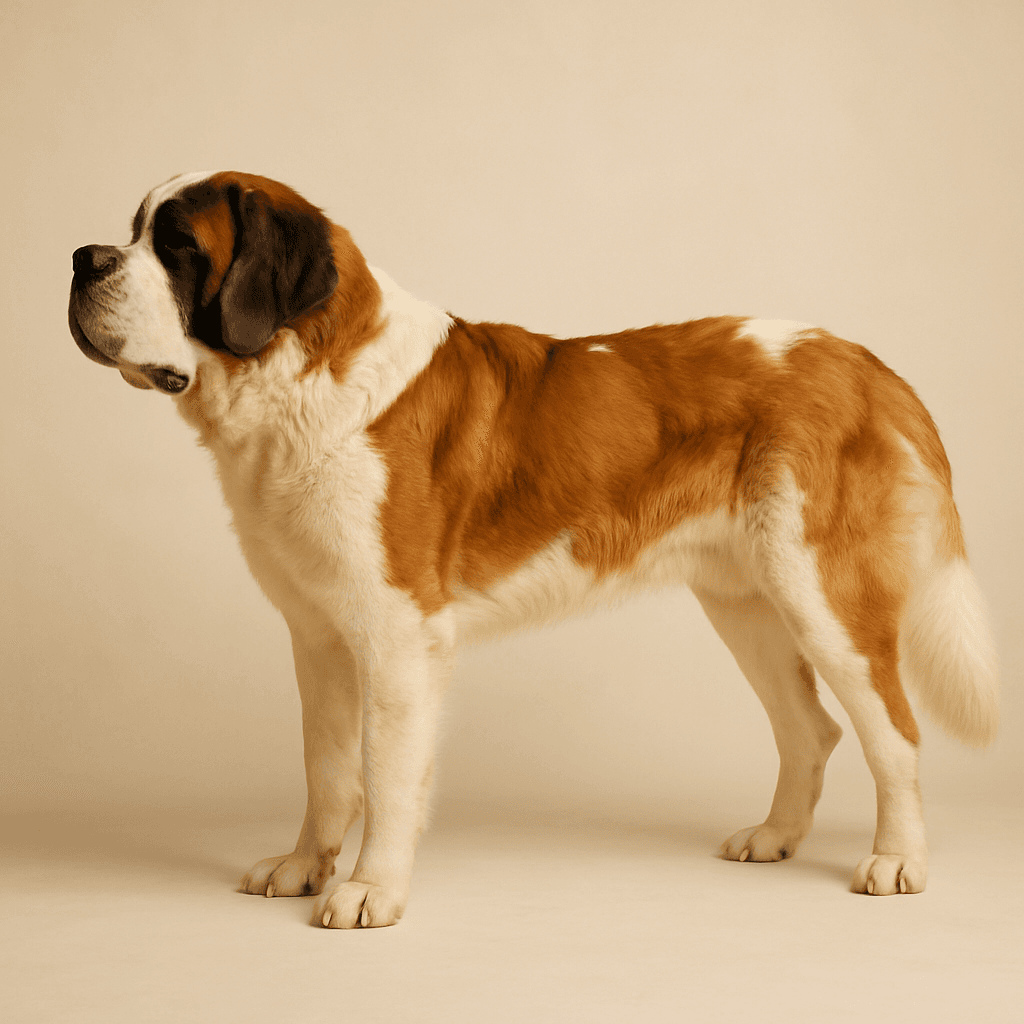
The Saint Bernard is one of the world's most instantly recognisable and beloved dog breeds, a giant, powerfully built and magnificently gentle Swiss dog developed by the Augustinian monks of the Great St Bernard Hospice, a monastery and refuge located at the Great St Bernard Pass in the Swiss Alps at an altitude of 2,469 metres, over several centuries as a mountain rescue dog to locate and save travellers lost or buried in the snow on the perilous alpine passes. The breed's heroic history of alpine rescue - the legendary individual Barry (1800-1814) is credited with saving more than forty lives - made it one of the most famous dogs in the world by the nineteenth century. The breed was formally standardised and registered with the Swiss Kennel Club in the 1880s and subsequently registered by the Kennel Club in the Working Group.
The Saint Bernard exists in two coat varieties: the rough-coated, with a long, thick and slightly wavy outer coat, and the smooth-coated, with a short, dense and close-lying coat. Both varieties are white with red or brown and white markings. The head is massive, broad and expressive, with the kindly, intelligent and slightly concerned expression that has made it one of the most universally recognised of all dog faces. Adults typically stand 65 to 90 centimetres at the shoulder and weigh 54 to 82 kilograms - one of the largest of all recognised breeds.
The character entirely justifies the breed's legendary reputation for gentleness. The Saint Bernard is calm, patient, affectionate and deeply devoted to its own family, with a particular and well-documented affinity for children - tolerant, protective and genuinely fond of the young in a way that is entirely characteristic of the breed. It is good-natured with other dogs and generally open and pleasant with people it meets.
The practical realities of Saint Bernard ownership should not be minimised. The drool is substantial, unavoidable and is an inseparable feature of the breed's brachycephalic tendencies and pendulous lips. The food requirements of a giant breed are significant in both volume and cost. The grooming commitment of the rough-coated variety is real. Space requirements are considerable.
Health considerations are serious. Bloat is a life-threatening risk that must be managed actively. Hip and Elbow Dysplasia testing is essential. Osteosarcoma has a higher documented incidence in giant breeds.
Purchase prices from KC-registered, health-tested breeders range from £1,000 to £2,500. Monthly running costs average £150 to £250. The Saint Bernard Club of Great Britain is the primary resource for breed information, health testing requirements, responsible breeders and rescue contact.
Temperament & Personality
Gentle, patient, calm and devoted. One of the most reliably gentle and good-natured of all giant breeds. Excellent with children - patient, tolerant and affectionate. Good with other dogs. The famous gentleness and kindly expression are genuine characteristics, not myth. Devoted to its household and deeply loyal.
Training
Intelligent and willing but slow-maturing - patience in training is required. Responds well to positive reinforcement and gentle, consistent handling. The large size and steady character mean early training in lead manners is important - a fully grown Saint Bernard that pulls on the lead is a serious management challenge. Early socialisation is important and typically straightforward.
Exercise Needs
Moderate exercise needs relative to size - 45 to 60 minutes daily for an adult is typically sufficient. Over-exercising puppies during the extended growth phase is harmful to joint development. Adult dogs are steady and calm but benefit from regular exercise to maintain condition. Not a breed for demanding endurance activities.
Health & Vet Costs
Hip and Elbow Dysplasia are primary concerns in giant breeds and testing of both parents is essential. Bloat (Gastric Dilatation Volvulus) is a very significant risk in this large, deep-chested breed and is a life-threatening emergency - two meals daily and avoiding vigorous exercise around feeding times are standard precautions. Osteosarcoma (bone cancer) has a higher incidence in giant breeds. Entropion and ectropion (eyelid conditions) are documented. The Saint Bernard Club of Great Britain maintains comprehensive health testing guidance.
Protect your Saint Bernard with the right insurance
Vet costs are rising. Lifetime cover means long-term conditions stay covered for life -- not just 12 months.
Feeding & Nutrition
Feed a high-quality complete food for a giant breed. Large breed puppy food is essential during growth to manage skeletal development. Two meals daily to reduce bloat risk. Monitor weight carefully - excess weight is very harmful to giant breed joints. Food costs are substantial given the size.
Feeding your Saint Bernard
How much to feed, which food types suit this breed, and what to avoid.
Grooming & Care
The rough-coated variety has a long, thick coat requiring thorough brushing two to three times weekly and professional grooming several times yearly. The smooth-coated variety is lower maintenance but still requires weekly brushing. Both varieties shed significantly. The jowls and mouth area require regular wiping given the significant drool.
Costs of Ownership
Purchase price from a KC-registered, health-tested breeder: £1,000 to £2,500. Monthly running costs: £150 to £250 given the food and size requirements. Veterinary costs at giant breed scale are above average.
Is a Saint Bernard Right for You?
Suits experienced owners with space and a genuine commitment to managing a giant breed. Good with children and gentle in temperament. The drool is significant and unavoidable - owners must accept this. Requires a home with space for a very large dog. Food costs are substantial. Not suited to small homes or apartments.
Related Guides
Free newsletter
Get the weekly guide for UK dog owners
Breed spotlights, training tips and health advice delivered every week.