
Spaniel (English Springer)
Complete UK breed guide

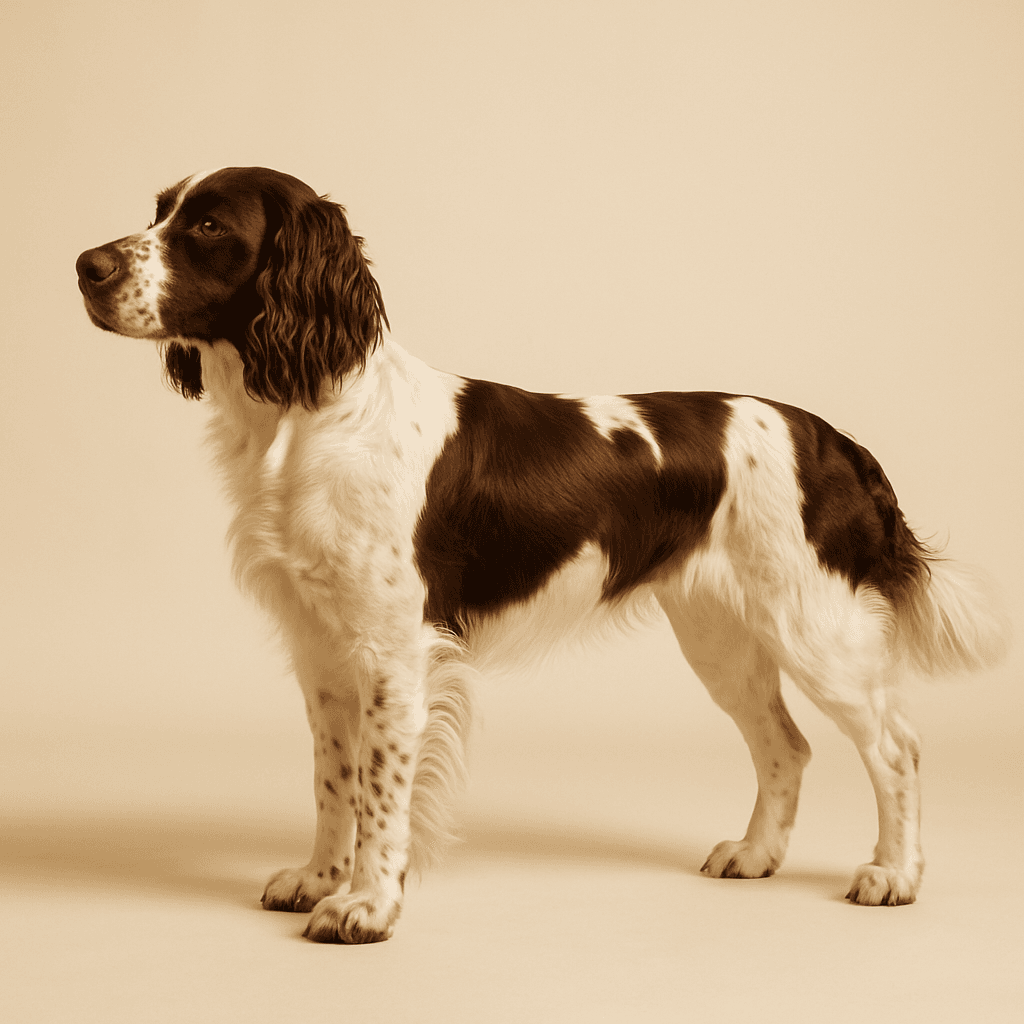
Quick answer
The English Springer Spaniel is an energetic gundog in the KC Gundog Group, available in show and working types. Fucosidosis DNA testing of both parents is mandatory. They need at least two hours of daily exercise. Expect monthly costs of £115 to £200, with a lifespan of 12 to 14 years.
Quick Facts
- Size
- Medium
- Weight
- 18–25 kg
- Lifespan
- 12–14 years
- Breed Group
- Gundog
- Exercise
- 75–90 mins/day
- Activity Level
- High
- Grooming
- Moderate
- Monthly Cost
- £110–£170/month
- Temperament
- —
- Good with Children
- Yes
- Good with Dogs
- Yes
- Good for First Timers
- Yes
- Suits Flats
- No
Breed Overview
The English Springer Spaniel is one of the UK's most popular and versatile gun dogs, registered by the Kennel Club in the Gundog Group and valued for centuries as a working flushing and retrieving dog. In a family home, the breed is energetic, affectionate and deeply sociable, with a joyful character that makes it excellent company for active owners.
One of the most important things to understand before choosing an English Springer Spaniel is the significant difference between the two types that exist within the breed. Show-type Springers are heavier-boned, with longer, silkier coats and a more moderate energy level. Working or field-type Springers are lighter, shorter-coated, and carry a level of energy and drive that is genuinely extreme by most pet dog standards. Both types are registered under the same KC breed standard, but they have diverged considerably in character. Choosing the wrong type for your lifestyle is the most common mistake new owners make.
Health testing is essential when buying an English Springer Spaniel puppy. The breed carries Fucosidosis, a fatal progressive neurological storage disorder specific to the English Springer Spaniel, for which a DNA test is available. This is a mandatory test: both parents of any litter should be DNA tested and at least one should be Clear. Progressive Retinal Atrophy (gPRA) and Phosphofructokinase Deficiency (PFK) also have DNA tests available and responsible breeders screen for all three. Hip dysplasia is assessed through the KC/BVA Hip Scoring scheme.
Exercise needs are substantial: most adult Springers need at least two hours of activity per day, and working-type dogs considerably more. They are not suited to sedentary owners or households where they would be under-exercised: an under-occupied Springer will create its own entertainment, reliably in ways the owner will find frustrating.
In the right home, English Springer Spaniels are outstanding family dogs. They are warm, sociable, good with children and generally excellent with other dogs. They respond enthusiastically to positive training and are highly motivated by both food and approval. Purchase prices from KC-registered, health-tested breeders typically range from £800 to £1,500. Typical lifespan is 12 to 14 years.
The distinction between show and working types also extends to health testing priorities: working breeders have historically focused less on hip scoring than show breeders. When buying either type, ensure Fucosidosis, PRA and PFK testing is in place. These tests protect against the breed's most significant heritable conditions and are the baseline for responsible breeding.
Temperament & Personality
English Springer Spaniels are joyful, warm and deeply engaged with the world around them. They are tail-waggers by nature: their default is enthusiasm, affection and a readiness to participate in whatever is happening. This makes them excellent family dogs and genuinely pleasant companions to spend time with.
They are good with children and tend to be sociable with other dogs, particularly when well socialised from an early age. Their gentle mouth and retriever instinct means many Springers will greet you with a toy or object, particularly when excited.
The distinction between show-type and working-type temperament cannot be overstated. Show-bred Springers are moderate in energy and manageable for active family owners. Working-bred Springers have been selected over generations for relentless drive, stamina and nose-down intensity. In the field, these are extraordinary animals. In a suburban home with two hour-long walks per day, they are often profoundly under-occupied. Working Springers belong with owners who can match their drive.
A rare condition sometimes called Springer Rage, more accurately described as epileptoid aggression or idiopathic aggression, has been associated with certain show-type Springer lines. It is a genuine but uncommon neurological condition, not typical aggression or bad temperament. The vast majority of Springers are reliably even-tempered. Buyers should ask about aggression history in the lines they are considering.
Springers bond closely with their families and do not do well with extended isolation. They need company, activity and mental stimulation to thrive. A bored, isolated Springer may become destructive, vocal or anxious.
Training
English Springer Spaniels are highly trainable dogs with an eagerness to please that makes them a genuine pleasure to work with. They are motivated by both food and praise and pick up new behaviours readily. The main training considerations are their energy, their scent drive and the significant difference in trainability between show and working types.
Four priorities for a new Springer owner:
- Recall. The Springer's nose-down hunting instinct is powerful. Building a reliable recall with high-value rewards in low-distraction environments before extending off-lead freedom is essential. A Springer that has locked onto a scent can cover ground quickly. Take recall training seriously from day one.
- Impulse control. Springers are enthusiastic and their natural state is exuberance. Teaching a reliable wait, leave it and calm greeting prevents a bouncy, overwhelming adult dog. Start this work in puppyhood when habits are still forming.
- Independence tolerance. Springers are sociable and bond closely. Establishing short positive periods of independence from puppyhood prevents separation anxiety from developing. Use a crate positively and build alone time gradually.
- Mental stimulation. Springers need to use their brains as well as their legs. Scent work, retrieve games and structured training sessions provide the engagement this breed needs to be settled at home.
Common mistakes: Choosing a working-bred Springer for a pet home is the most significant error. The second is under-exercising. An under-occupied Springer becomes increasingly difficult to manage: meet the exercise commitment first.
Exercise Needs
English Springer Spaniels need at least two hours of exercise per day, and working-type dogs need considerably more. This is a breed built for stamina: they can sustain activity for long periods and rarely tire in the way some other breeds do.
Exercise should include both physical activity and mental engagement. Off-lead running in safe areas, retrieve games, swimming and scent work are all excellent outlets. Activities that engage the nose and retriever instinct provide the most satisfaction for this breed.
Show-type Springers are somewhat more moderate than working types but still require committed exercise provision. Working-type Springers should only be owned by people who can provide genuinely demanding physical and mental activity every day.
Puppies should follow the five minutes per month of age guideline, twice daily, to protect developing joints. Free play in a garden supplements formal walks appropriately at this stage. Springers love swimming and most will enter water enthusiastically, which is excellent low-impact exercise.
Health & Vet Costs
English Springer Spaniels have several hereditary conditions with DNA tests available. Responsible breeders test for all of them.
Fucosidosis is the most serious. This is a fatal progressive neurological storage disorder that is specific to the English Springer Spaniel. It causes progressive neurological deterioration from around 18 months to four years of age, leading to loss of coordination, behavioural change, difficulty swallowing, and eventually death. There is no cure. A DNA test is available and all English Springer Spaniel breeders should test both parents. A dog can be Clear, Carrier or Affected. Carriers can be used in breeding provided they are paired only with Clear dogs: no Affected puppies should be produced. This test is non-negotiable when buying a puppy.
Progressive Retinal Atrophy (gPRA) causes gradual loss of vision, eventually leading to blindness. A DNA test is available and responsible breeders test breeding dogs. Ask to see the test results for both parents.
Phosphofructokinase Deficiency (PFK) is an enzyme deficiency causing exercise intolerance, muscle disease and sometimes haemolytic anaemia. A DNA test is available. Affected dogs may show weakness, muscle cramping or pale gums after exercise.
Hip dysplasia is assessed through the KC/BVA Hip Scoring scheme. The breed mean score is around 14 to 16: buyers should look for parents scoring below this.
Ear infections are very common in the breed due to the long, heavy ear flaps that restrict air circulation. Weekly cleaning and monitoring prevents most infections, but the breed is inherently prone. Treatment costs £80 to £200 per episode.
Monthly insurance typically costs £40 to £70. Lifespan is 12 to 14 years.
Protect your Spaniel (English Springer) with the right insurance
Vet costs are rising. Lifetime cover means long-term conditions stay covered for life -- not just 12 months.
Feeding & Nutrition
English Springer Spaniels are active dogs with good appetites. Feed a complete, high-quality food appropriate for medium breeds and adjust portions based on activity level: a highly active working Springer needs significantly more calories than a show-bred pet dog doing two daily walks.
Monitor body condition regularly. You should be able to feel the ribs without pressing hard and see a visible waist. Springers will overeat if given the opportunity: do not free-feed. Treats are valuable in training and should be counted within the daily calorie allowance.
Some Springers are prone to food sensitivities and skin conditions. If persistent digestive upset or skin irritation occurs, a vet or veterinary nutritionist can advise on an appropriate diet. Fresh water should always be available, particularly for dogs doing significant physical work.
Feeding your Spaniel (English Springer)
How much to feed, which food types suit this breed, and what to avoid.
Grooming & Care
Grooming requirements differ significantly between show and working types.
Show-type English Springer Spaniels have a longer, silkier coat with more pronounced feathering on the ears, legs, chest and belly. This requires brushing two to three times per week to prevent matting, particularly in the feathering areas. Professional grooming every six to eight weeks for trimming keeps the coat manageable. The feathering picks up mud, burrs and debris on walks and needs checking after every outing.
Working-type Springers have a shorter, denser coat that is considerably easier to maintain. A weekly brush is usually sufficient, with professional grooming only occasionally needed.
Ear care is critical for all Springers. The long ear flaps create a warm, moist environment prone to bacterial and yeast infections. Check and clean ears weekly with a veterinary ear cleaner. Signs of infection include odour, redness, discharge or persistent head-shaking.
Nails should be trimmed every three to four weeks. Teeth should be brushed regularly. Baths every four to six weeks or as needed using a dog shampoo appropriate for the coat type.
Costs of Ownership
Purchase price: A KC-registered, health-tested English Springer Spaniel puppy (Fucosidosis, PRA and PFK tested) typically costs £800 to £1,500 in 2025 to 2026. Working-bred dogs from proven field or sport lines may cost more. Rescue rehoming fees range from £100 to £350.
Setup costs: Crate, bedding, harness, bowls, initial vet check, vaccinations, microchip and neutering typically total £400 to £700.
Monthly running costs:
- Food (medium breed): £35 to £65
- Insurance (comprehensive lifetime): £40 to £70
- Professional grooming (show type, averaged): £20 to £35
- Routine vet care and parasite prevention: £20 to £30
- Total monthly estimate: £115 to £200
Annual estimate: approximately £1,380 to £2,400, before unexpected vet costs.
Lifetime costs: With a lifespan of 12 to 14 years, total lifetime ownership costs typically range from £17,000 to £29,000 including purchase. Working-type dogs may have higher activity and training costs; show-type dogs may have higher grooming costs.
Is a Spaniel (English Springer) Right for You?
Well suited to: active owners who can commit to two or more hours of daily exercise; families with children who enjoy outdoor activity; owners who want to take up dog sport such as working trials, agility or scent work; show-type owners with active lifestyles.
Not suited to: sedentary owners or those unable to meet the exercise commitment; owners who choose a working-bred Springer for a pet home without field or sport outlets; those who want a low-energy companion.
Flat suitability: possible for a show-type Springer with a very committed owner who provides two-plus hours of daily exercise and off-lead time. Not recommended for working-type Springers under any circumstances.
The English Springer Spaniel is an outstanding breed in the right home. Choose the type that matches your lifestyle, buy from a breeder who tests for Fucosidosis, PRA and PFK, and commit to the exercise the breed needs.
Related Guides
Free newsletter
Get the weekly guide for UK dog owners
Breed spotlights, training tips and health advice delivered every week.