Tibetan Mastiff
Complete UK breed guide
Quick answer
The Tibetan Mastiff is an ancient Himalayan guardian dog. Extremely powerful, independent and loyal. Requires experienced ownership. One of the largest and most impressive dog breeds.
Quick Facts
- Size
- Large
- Weight
- 45–82 kg
- Lifespan
- 10–14 years
- Breed Group
- Working
- Exercise
- 45–60 mins/day
- Activity Level
- Moderate
- Grooming
- High
- Monthly Cost
- £170–£280/month
- Temperament
- —
- Good with Children
- No
- Good with Dogs
- No
- Good for First Timers
- No
- Suits Flats
- No
Breed Overview
The Tibetan Mastiff is one of the most ancient and imposing of all dog breeds, a massive, heavily built and profusely coated guardian dog developed over many thousands of years on the high Tibetan Plateau and throughout the Himalayan mountain regions to guard the livestock, property and nomadic encampments of Tibetan and Himalayan peoples against predators including wolves, leopards and bears in some of the most extreme terrain and climate on earth. The breed was known to Western observers from the nineteenth century onwards but remained little known in Europe until the mid-twentieth century, when careful breeding programmes began to establish the breed outside its homeland. It is registered by the Kennel Club in the Working Group.
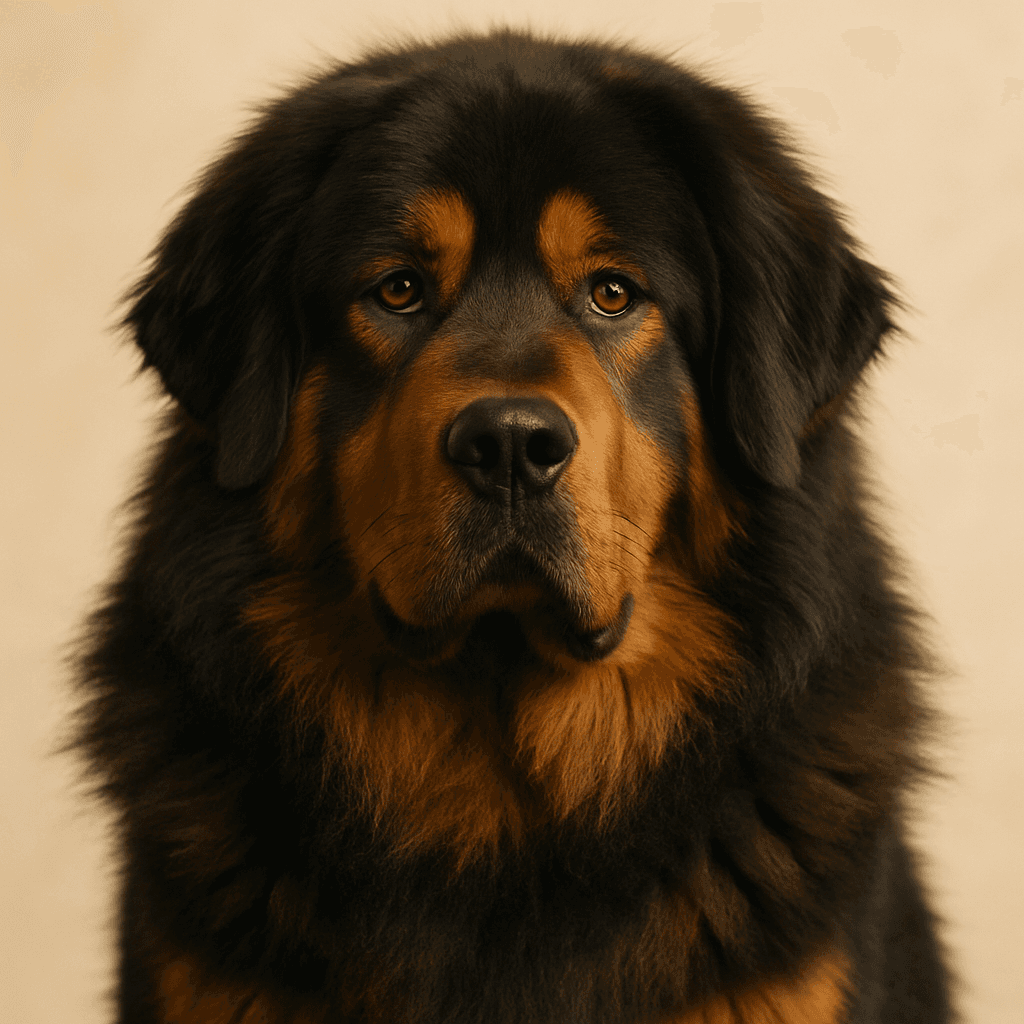
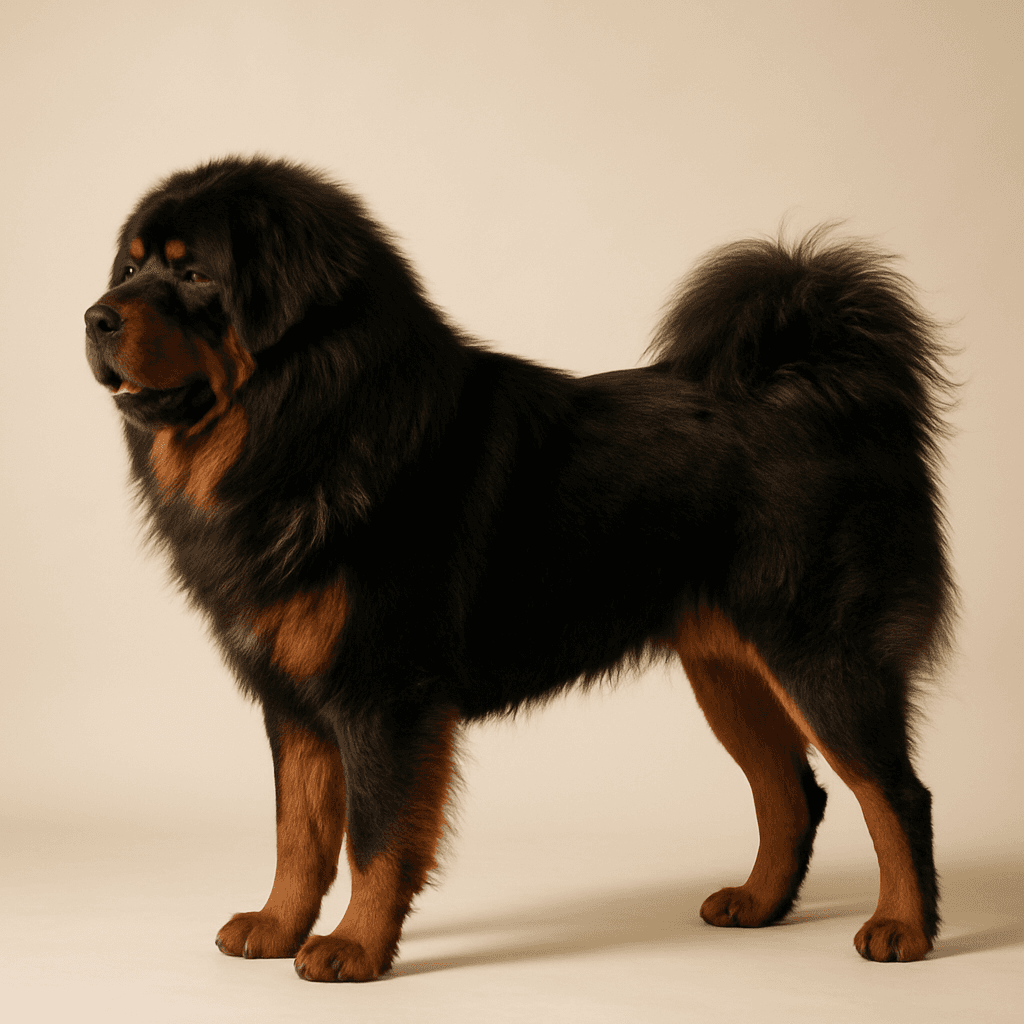
The Tibetan Mastiff is a very large to giant, heavily built and powerfully constructed dog of massive physical presence. The coat is one of the most impressive in the dog world - a dense, heavy double coat with a hard, straight outer coat and a very thick, woolly undercoat that stands away from the body and creates the characteristic lion-like mane around the neck and shoulders. The coat colour ranges from black, black and tan, various shades of gold and red, and blue-grey, all with or without tan markings. Adults typically stand 61 to 71 centimetres at the shoulder and weigh 45 to 75 kilograms, though individuals outside these ranges exist.
The character is deeply loyal to its own household while remaining aloof, watchful and suspicious toward strangers and unfamiliar animals. This is a breed of ancient and strongly bred guardian instinct - the Tibetan Mastiff does not warm quickly to new people and takes its own time to accept those outside its core household circle. The guardian instinct is genuine and can manifest in territorial behaviour, barking particularly at night (a deeply ingrained trait from the livestock guardian role of alerting to nighttime predators), and wariness or hostility toward unfamiliar dogs. These are not behavioural problems in themselves but management requirements that must be understood before acquiring the breed.
Training requires patience, respect and early establishment of consistent boundaries using positive reinforcement. The Tibetan Mastiff is intelligent but not eager to please in the manner of a Labrador - it is an independent thinker that has been bred to make its own guardianship decisions over centuries. Force and dominance methods produce resistance and are counterproductive. Early and thorough socialisation is the single most important investment a Tibetan Mastiff owner can make.
Health testing is essential. Hip and Elbow Dysplasia assessment, Inherited Demyelinating Neuropathy DNA testing and thyroid function assessment are the primary requirements.
Purchase prices from KC-registered breeders range from £1,500 to £5,000 or more. Monthly running costs average £150 to £300. The Tibetan Mastiff Club of Great Britain is the primary resource for breed information, health testing, responsible breeders and rescue contact. This breed is entirely unsuited to novice ownership.
Temperament & Personality
Deeply loyal to family but aloof and reserved with strangers. Natural guardian instinct is strong. Can be aggressive toward unfamiliar dogs and people if not well socialised. Nocturnal and vocal.
Training
Independent and not naturally biddable. Training must start early with consistent, patient positive methods. The breed will not respond to force. Socialisation is critical from puppyhood.
Exercise Needs
Moderate exercise sufficient - 45-60 minutes daily. Not a high-endurance dog. Secure, large garden essential. Do not over-exercise young dogs to protect developing joints.
Health & Vet Costs
Hip and Elbow Dysplasia testing essential. Autoimmune Hypothyroidism is a known breed concern. Inherited Demyelinating Neuropathy DNA test available and should be confirmed. Large breed veterinary costs apply.
Protect your Tibetan Mastiff with the right insurance
Vet costs are rising. Lifetime cover means long-term conditions stay covered for life -- not just 12 months.
Feeding & Nutrition
High-quality large breed complete food twice daily. Adults typically 500-700g per day but individual needs vary significantly. Despite size, breed can thrive on less than expected. Monitor condition.
Feeding your Tibetan Mastiff
How much to feed, which food types suit this breed, and what to avoid.
Grooming & Care
Dense double coat sheds significantly during annual or biannual coat blow. Brush weekly, daily during shed. Bathing is a significant undertaking given the coat volume.
Costs of Ownership
Purchase price £1,500-£5,000 or more from KC-registered breeders. Monthly costs £150-£300 including large breed food, insurance and veterinary care. Vet costs can be substantial.
Is a Tibetan Mastiff Right for You?
Highly experienced dog owners only. Requires secure property with high fencing. Not suited to first-time owners, families with very young children, or urban environments. Needs space.
Related Guides
Free newsletter
Get the weekly guide for UK dog owners
Breed spotlights, training tips and health advice delivered every week.