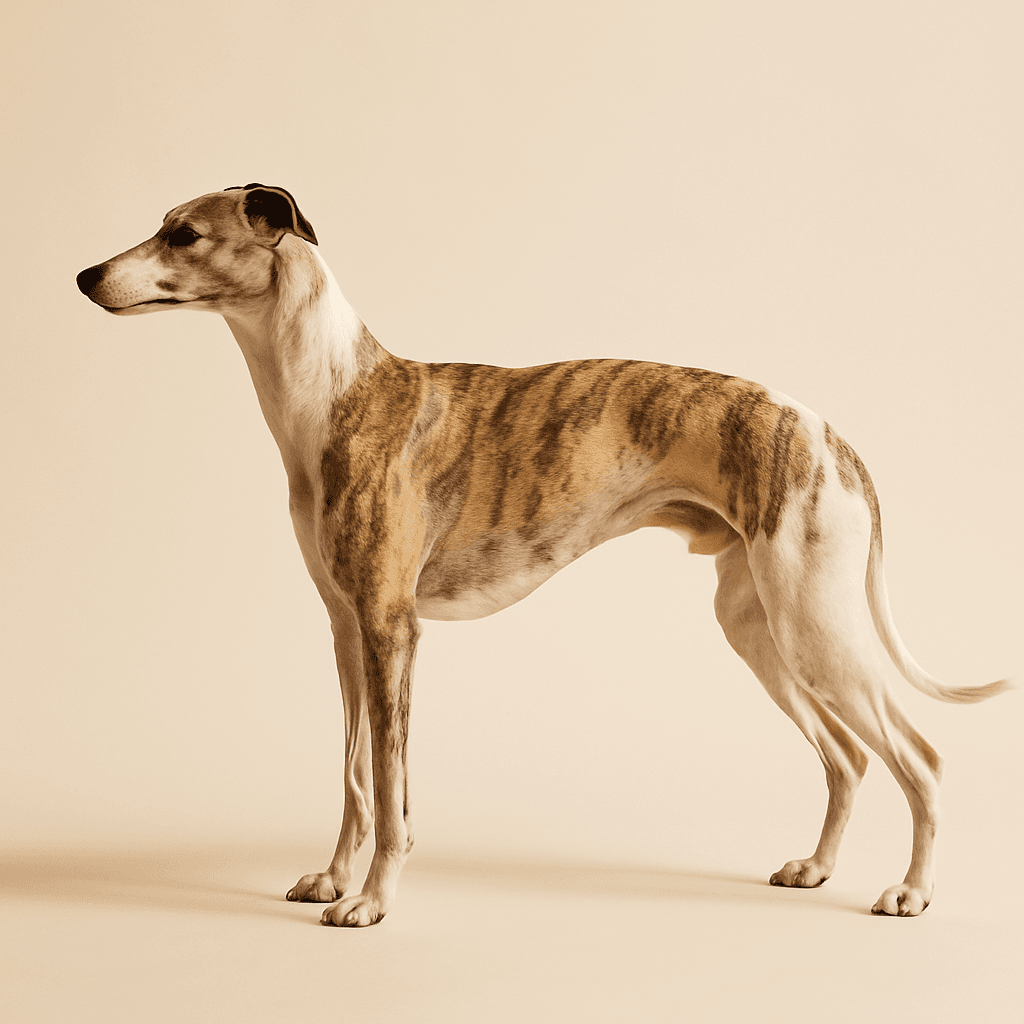
Whippet
Complete UK breed guide

Quick answer
The Whippet is a gentle, affectionate sighthound with a strong prey drive and moderate exercise needs. It is one of the healthier pedigree breeds. Off-lead exercise requires enclosed spaces due to chasing instinct. Good with families.
Quick Facts
- Size
- Medium
- Weight
- 13–18 kg
- Lifespan
- 12–15 years
- Breed Group
- Hound
- Exercise
- 60–75 mins/day
- Activity Level
- High
- Grooming
- Low
- Monthly Cost
- £100–£160/month
- Temperament
- —
- Good with Children
- Yes
- Good with Dogs
- Yes
- Good for First Timers
- Yes
- Suits Flats
- Yes
Breed Overview
The Whippet is an elegant, gentle and athletic sighthound registered by the Kennel Club in the Hound Group. Developed in northern England in the 19th century as a racing dog for working-class owners, the modern Whippet combines the speed and instincts of a sighthound with a temperament that makes it one of the most adaptable and affectionate medium-sized breeds available.
In the home, Whippets are calm, affectionate and often described as ideal indoor dogs despite their athletic build. They are content to rest for long periods, are not destructive when properly exercised, and form close bonds with their family. Their low-shedding short coat, minimal grooming needs and relatively good health make them one of the lower-maintenance medium-sized pedigree breeds.
The prey drive, however, is the defining management consideration and must be understood before acquiring a Whippet. Sighthounds are built to chase visually-triggered prey at high speed, and the Whippet is no exception. Once a chase is initiated, recall and distraction become largely ineffective. Off-lead exercise must take place in securely fenced areas. Gardens must be properly enclosed: Whippets can clear fences below 1.5 metres. Owners with cats or small animals need to manage introductions carefully and maintain vigilance permanently.
Whippets are sensitive dogs that feel cold acutely. A well-fitted coat is a welfare requirement in cold or wet weather, not an affectation. Soft bedding is equally important: a Whippet forced to lie on hard floors has minimal body fat for comfort or insulation.
Health-wise, Whippets compare very favourably with many pedigree breeds. Serious inherited conditions occur at relatively low rates. Vets should be informed the dog is a sighthound before any anaesthetic procedure due to different drug metabolism in the breed.
Purchase prices from KC-registered breeders typically range from £800 to £1,500. Monthly insurance is £25 to £50. Lifespan is 12 to 15 years. Whippet Rescue UK and Just Whippets Rescue rehome dogs nationally.
For owners who want a gentle, healthy and adaptable medium-sized companion with a manageable grooming commitment, the Whippet is an outstanding choice. Respect the prey drive, provide enclosed off-lead exercise, and this is one of the most rewarding breeds in the Hound Group.
Whippet rescue is accessible and straightforward. Adoption provides a fully assessed dog rather than the uncertainties of a puppy. For owners committed to the enclosed-exercise requirement, a rescue Whippet is an excellent choice.
Temperament & Personality
Whippets are gentle, affectionate and typically calm dogs in the home. They form close bonds with their family and are sensitive to household atmosphere. They are not boisterous or hyperactive: a Whippet that has had its exercise needs met is content to rest quietly for most of the day.
They are sociable dogs that tend to get on well with other dogs and with people generally. Their default is friendly curiosity rather than wariness. They are typically good with children who interact appropriately, though their sensitivity means they may choose to remove themselves from rough handling rather than tolerate it indefinitely.
Outside the home, the sighthound prey drive is the dominant characteristic. A Whippet that spots something worth chasing will pursue it with a focus and speed that overrides recall, distraction and most other responses. This is not a training failure: it is the breed's fundamental characteristic. Environment management is the appropriate response.
They are sensitive dogs that respond poorly to tension, harsh handling or raised voices. They read household atmosphere well and can become anxious in unpredictable environments.
Overall, the Whippet is one of the most affectionate and easy-going medium-sized breeds. Their combination of gentleness at home and athleticism outdoors makes them excellent companions for owners who manage their prey drive sensibly.
Training
Whippets are gentle, responsive dogs that learn well with positive reinforcement. They are sensitive and do not respond well to harsh methods. Training works best when sessions are short, varied and reward-based.
Four priorities for a new Whippet owner:
- Recall management. Accept from the start that a Whippet cannot be recalled once a chase is triggered. Build a strong reward-based recall for use before a trigger appears. Off-lead exercise happens in enclosed spaces only.
- Prey drive awareness. Cats and small animals must be introduced carefully and the situation managed permanently. Do not assume that co-existence with one cat means safety with all cats.
- Separation tolerance. Build positive alone time from puppyhood. Crate training and gradual departures prevent separation anxiety from becoming established.
- Basic obedience. Sit, stay, down, come and leave it using reward-based methods. Whippets are responsive when motivated but can be independent. Short, engaging sessions work best.
Common mistakes: Allowing off-lead exercise in unfenced areas before recall is tested and confirmed reliable. This typically results in a chase and the potential for serious injury or death on roads.
Exercise Needs
Whippets are athletic sighthounds capable of impressive speed over short distances but are not high-endurance distance dogs. Their exercise pattern typically reflects this: a burst of running followed by extended rest.
Adult Whippets: One hour of exercise per day is sufficient for most. This should include at least some opportunity to run freely in a safely enclosed area. Whippets can gallop at up to 35mph and covering ground at speed is important for their physical wellbeing.
Off-lead safety: This is the critical management issue. Whippets will pursue any moving prey at speed and cannot be reliably recalled once a chase has been triggered. Off-lead exercise should only happen in securely fenced areas. Check fencing height: Whippets can clear fences lower than 1.5 metres. They will also bolt under or through gaps.
Mental stimulation: Scentwork and gentle training sessions complement physical exercise. Whippets are not as mentally driven as working breeds but benefit from engagement.
Cold weather: Whippets feel cold acutely due to their thin coat and minimal body fat. A well-fitted dog coat is not optional in cold or wet weather: it is a genuine welfare consideration for this breed.
Puppies: Short play sessions and brief walks, increasing gradually. Do not over-exercise growing joints.
Health & Vet Costs
Whippets are one of the healthier pedigree breeds, with a relatively low incidence of the serious inherited conditions that affect many popular breeds. Their longevity and general robustness are genuine advantages.
Cardiac conditions: Whippets can be affected by dilated cardiomyopathy (DCM) and mitral valve disease at lower rates than some other breeds. Annual veterinary health checks should include cardiac auscultation.
Eye conditions: Progressive Retinal Atrophy (PRA) and other hereditary eye conditions occur in the breed. The BVA/KC Eye Scheme tests breeding dogs. Ask breeders for current eye test certificates.
Sensitivity to anaesthetic: Sighthounds including Whippets metabolise certain anaesthetic agents differently from other breeds due to their low body fat and lean muscle mass. It is important that your vet is aware the dog is a sighthound before any anaesthetic procedure. Most experienced vets adjust dosing appropriately, but this should be confirmed.
Skin cuts and wounds: The Whippet's thin skin means minor abrasions are more common than in thicker-coated breeds. Monitor after exercise in rough terrain.
Hypothyroidism occurs in some lines, causing weight gain, lethargy and coat changes.
Monthly insurance typically costs £25 to £50. Lifespan is 12 to 15 years.
Protect your Whippet with the right insurance
Vet costs are rising. Lifetime cover means long-term conditions stay covered for life -- not just 12 months.
Feeding & Nutrition
Whippets are lean, athletic dogs with a fast metabolism. They should look lean: visible outline of the last two or three ribs is normal and healthy for a sighthound. Do not overfeed based on a non-sighthound visual standard.
Daily feeding: Adult Whippets typically need 200 to 280g of a good quality dry complete food per day, split into two meals. Quantities depend on the food's caloric density, the dog's activity level and build.
Weight management: Whippets should be lean but not underweight. Ribs visible but not protruding sharply; a clear waist; muscle over the back and hindquarters. An overweight Whippet puts unnecessary strain on joints and cardiovascular fitness.
Bloat awareness: Like all deep-chested breeds, Whippets have some bloat (gastric dilatation-volvulus) risk. Avoid intensive exercise immediately before and after meals. Signs of bloat include unproductive retching, distended abdomen and rapid deterioration: this is an emergency.
Cold weather and food: Whippets use more energy maintaining body temperature in cold weather due to their thin coat and low body fat. Slightly increasing food in winter if the dog is very active is appropriate.
Puppy feeding: Three to four times daily until 12 weeks, then three times until six months, then twice daily.
Feeding your Whippet
How much to feed, which food types suit this breed, and what to avoid.
Grooming & Care
The Whippet has one of the easiest coats to maintain of any breed. The short, fine coat requires minimal grooming and sheds relatively lightly.
Brushing: Once weekly with a rubber grooming mitt or soft bristle brush to remove loose hair and maintain coat condition. This takes a few minutes.
Bathing: Every six to eight weeks or when dirty. The short coat dries quickly. Use a gentle dog-specific shampoo.
Skin care: The Whippet's thin skin is more prone to cuts and abrasions than that of thicker-coated breeds. Check the dog after off-lead exercise in undergrowth. Minor cuts should be cleaned and monitored; deeper wounds may need veterinary attention.
Ear care: Check weekly for redness, discharge or smell. Clean with a vet-recommended ear cleaner if needed.
Nails: Clip every four to six weeks or as needed. Active Whippets that exercise on hard surfaces will wear nails down between clips.
Dental care: Daily toothbrushing with dog-safe toothpaste reduces dental disease risk.
Dog coats: Whippets need a well-fitted coat in cold or wet weather. Measure carefully as the Whippet's deep chest and narrow waist mean standard sizing often fits poorly.
Costs of Ownership
Whippets are a relatively affordable pedigree breed to own, combining good health with low grooming costs.
Purchase price: £800 to £1,500 from a KC-registered breeder.
Monthly insurance: £25 to £50 for comprehensive lifetime cover. The Whippet's relative health hardiness keeps premiums moderate.
Food: £30 to £50 per month for a good quality complete dry food.
Routine veterinary care: Annual vaccination and health check approximately £60 to £80.
Grooming: Minimal professional grooming needed. Occasional bathing and nail clips manageable at home with basic equipment.
Dog coats: Budget for one or two well-fitted coats. Quality sighthound-specific coats cost £30 to £80 each and last several years.
Soft bedding: Whippets require comfortable, padded beds or sofa access. This is a welfare consideration rather than a luxury for a breed with minimal body fat.
Total estimated monthly cost: £100 to £180 when insurance, food and routine care are combined. The Whippet is one of the lower-cost medium-sized pedigree breeds to maintain.
Is a Whippet Right for You?
Best suited to: Active families and individuals who want a calm, affectionate companion; owners who can access securely fenced areas for off-lead exercise; those who want a relatively healthy medium-sized breed.
Can work with: First-time dog owners willing to research sighthound characteristics; flat dwellers provided daily exercise needs are met and the dog has soft resting areas; households with older children.
Not ideal for: Owners with rabbits, guinea pigs, cats or similar small animals unless raised together from puppyhood; those wanting a breed that can be safely exercised off lead in open countryside; owners seeking a breed with no chase instinct.
Size and living situation: Whippets are medium dogs (12 to 18kg) that adapt surprisingly well to flat living. Despite their athletic build they are calm indoors and enjoy long periods of rest. They do need a soft bed or sofa access as their low body fat makes hard floors uncomfortable.
Children and other pets: Generally good with children who interact appropriately. Sociable with other dogs as a rule. Their prey drive means cats and small animals require careful managed introductions and ongoing vigilance.
Alone time: Whippets can develop separation anxiety. Build independence positively from puppyhood. They are often happier in pairs.
Related Guides
Free newsletter
Get the weekly guide for UK dog owners
Breed spotlights, training tips and health advice delivered every week.